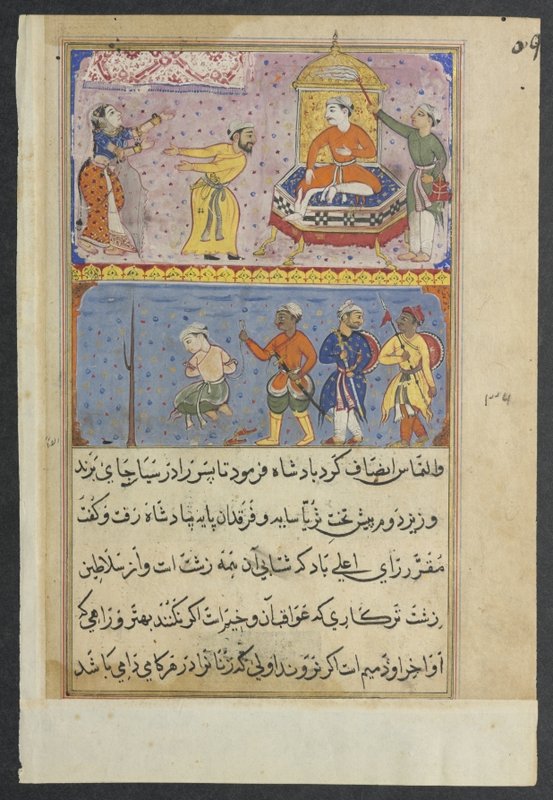
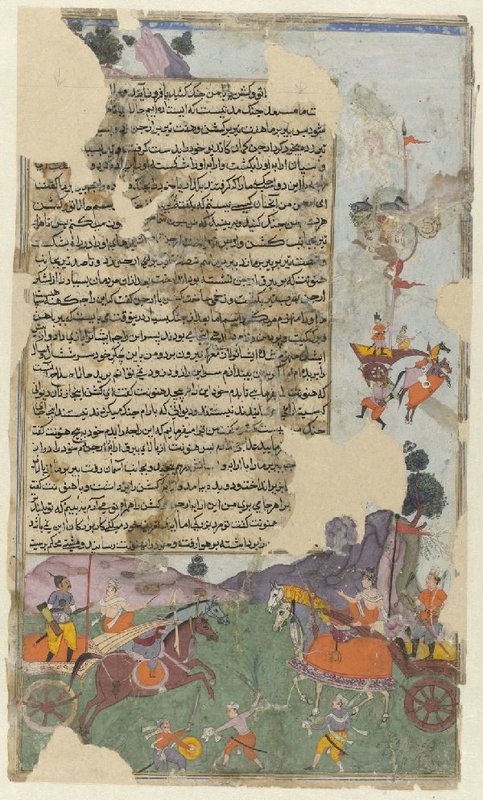
The prince, once reprieved, is returned to the palace of execution a second time on the plea of the king’s handmaiden, from a Tuti-nama (Tales of a Parrot): Eighth Night
Gujarati
1962.279.59.b
About this artwork
Similar artworks
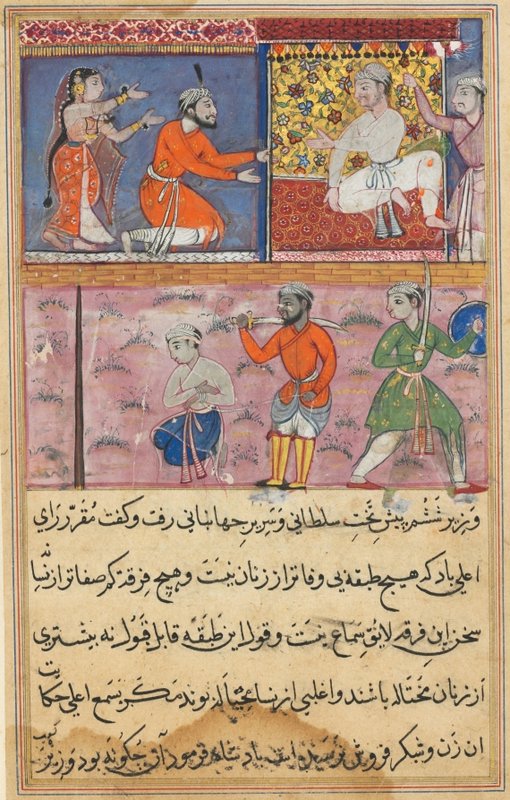
The prince sent back to the place of execution for the sixth time, from a Tuti-nama (Tales of a Parrot): Eighth Night
Suraju
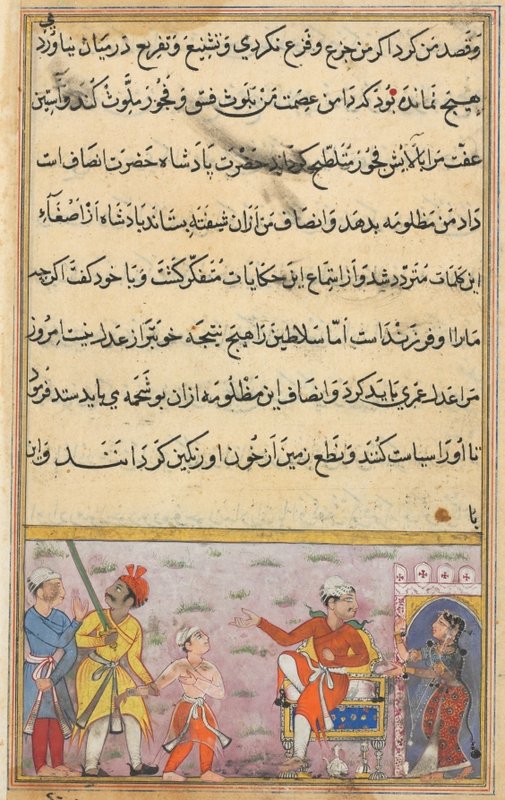
The prince being taken away for execution on the false complaint of the handmaiden, from a Tuti-nama (Tales of a Parrot): Eighth Night
Mughal India, court of Akbar (reigned 1556–1605)
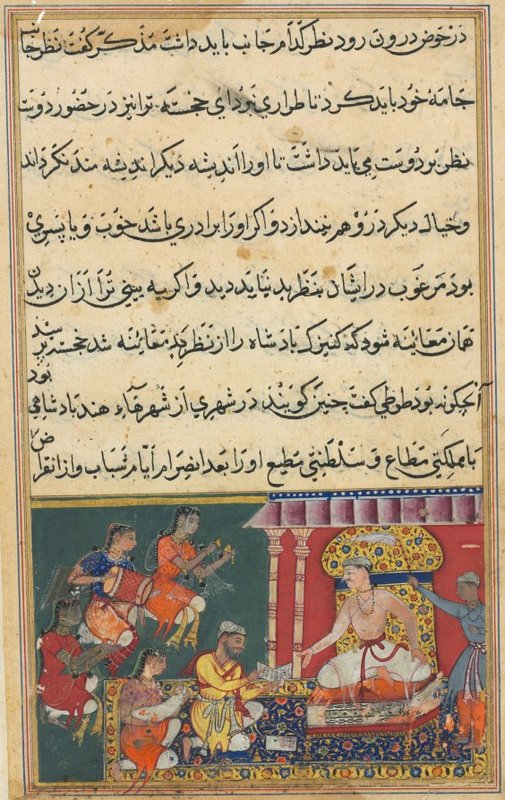
The astrologer predicts a calamity for the newly born prince in his thirteenth year, but one which he would be able to overcome, from a Tuti-nama (Tales of a Parrot): Eighth Night
Banavari 1
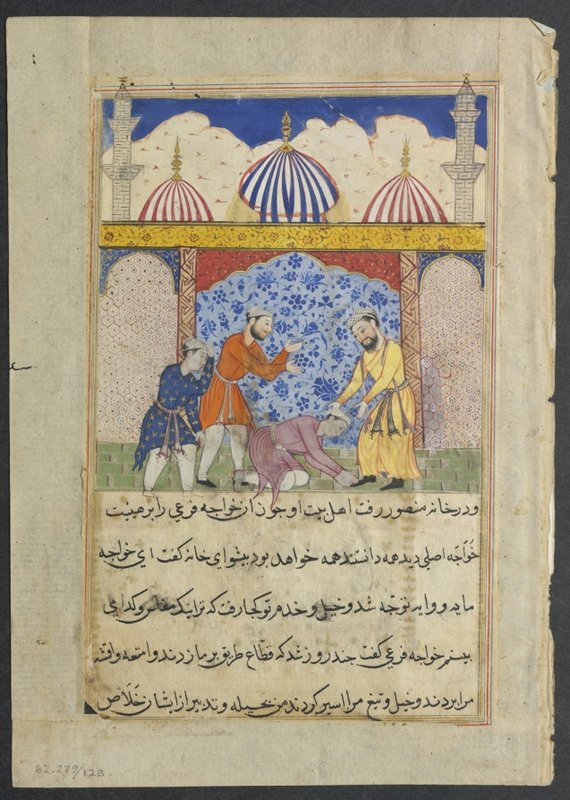
The young man, who has magically taken on the appearance of Mansur the merchant, arrives at his home, from a Tuti-nama (Tales of a Parrot): Seventeenth Night
Mughal India, court of Akbar (reigned 1556–1605)
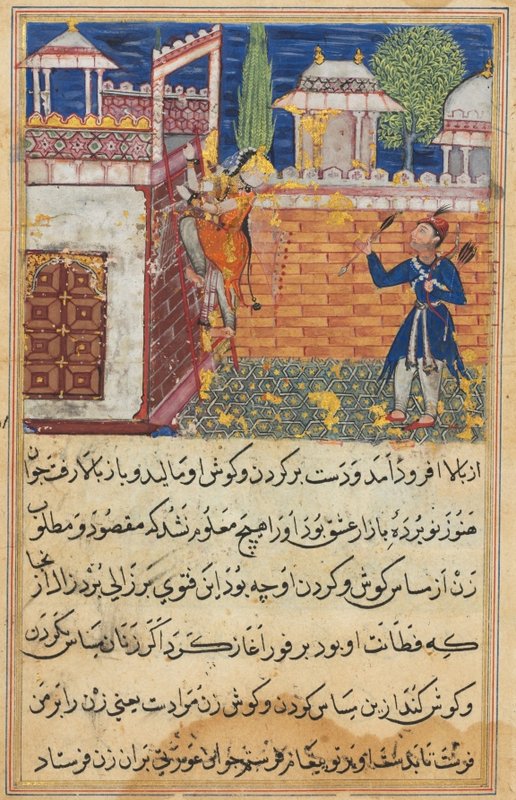
The deceitful wife returns to her terrace after caressing her lover, from a Tuti-nama (Tales of a Parrot): Eighth Night
Shravana
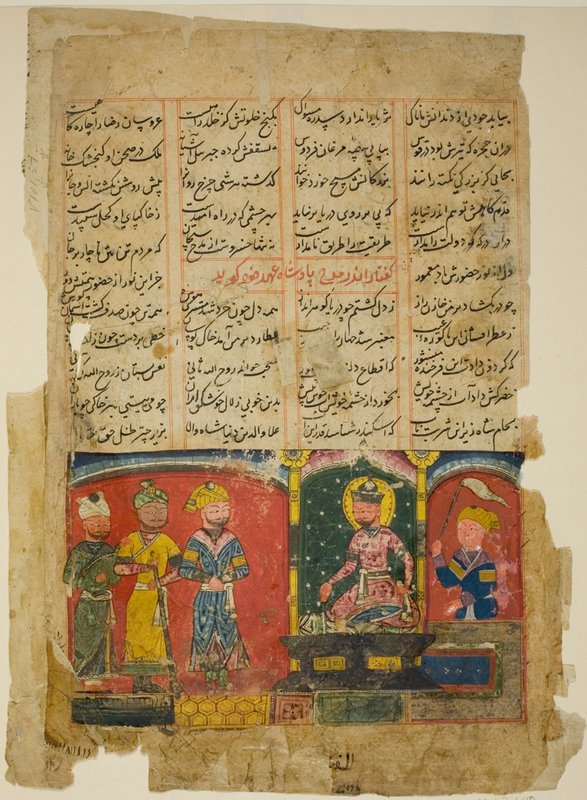
Amir Khusrau Dedicates His Poem to Sultan Ala al-Din Khalji, page from the Quintet (Khamsa) of Amir Khusraw Dehlavi
Unknown Artist
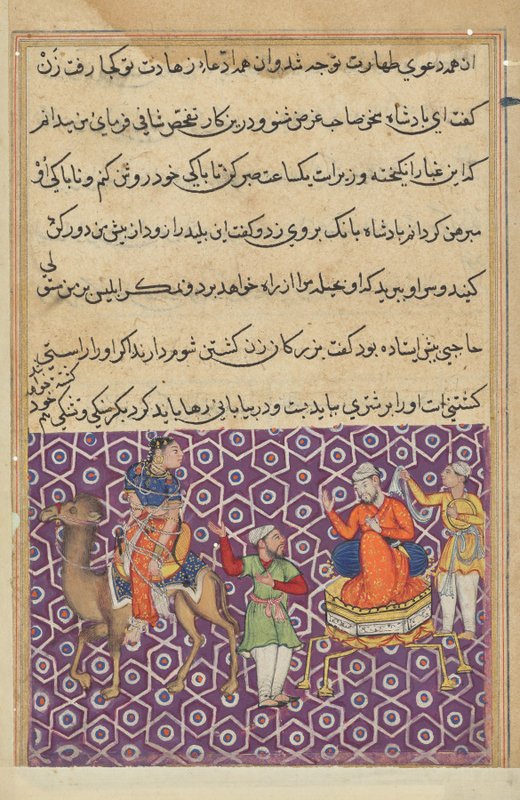
King Bahram, who has married Khassa’s daughter, has her tied to a camel to be abandoned in the desert as a result of false accusations made by Khulasa, from a Tuti-nama (Tales of a Parrot): Fifty-first Night
Mughal India, court of Akbar (reigned 1556–1605)
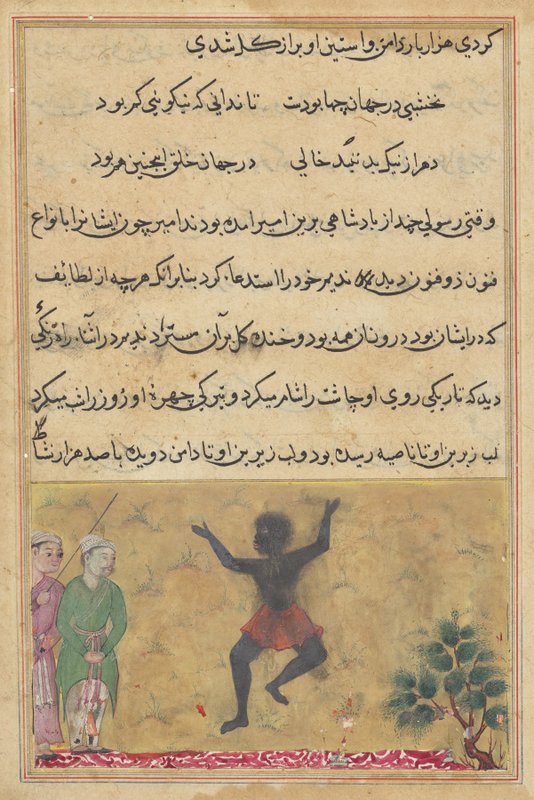
The court jester meets a Zangi dancing with joy, and learns from him that the cause of his happiness is his assignation with a woman who is the jester’s own wife, from a Tuti-nama (Tales of a Parrot): Twenty-second Night
Mughal India, court of Akbar (reigned 1556–1605)
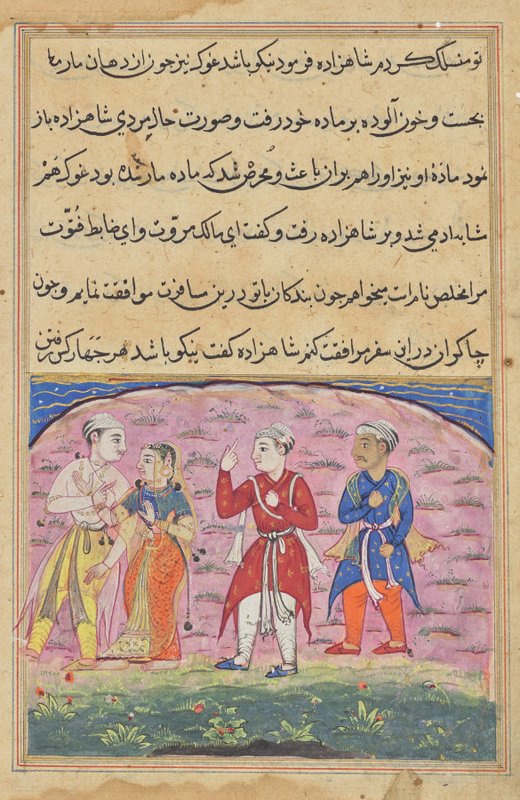
The prince and Nikfal are joined by Khalis and the Mukhlis who are the grateful snake and frog in human form, from a Tuti-nama (Tales of a Parrot): Eighteenth Night
Mughal India, court of Akbar (reigned 1556–1605)
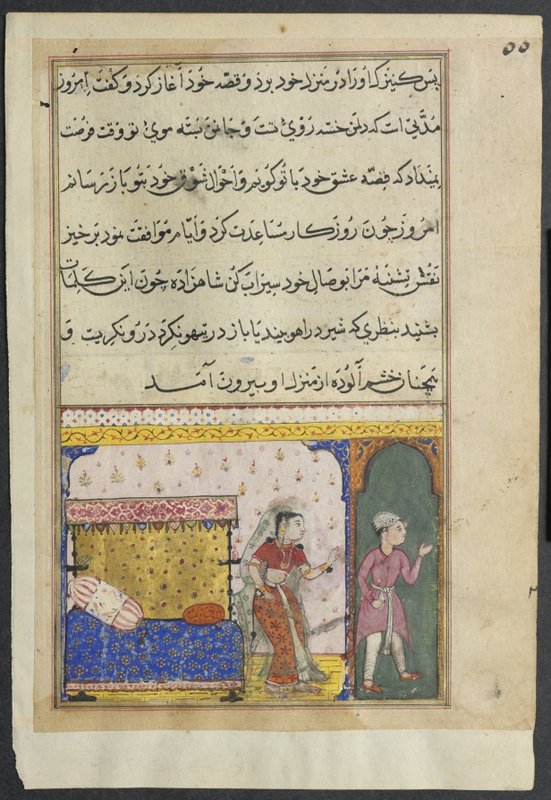
The prince rejects the amorous advances of the king’s handmaiden, from a Tuti-nama (Tales of a Parrot): Eighth Night
Mughal India, court of Akbar (reigned 1556–1605)
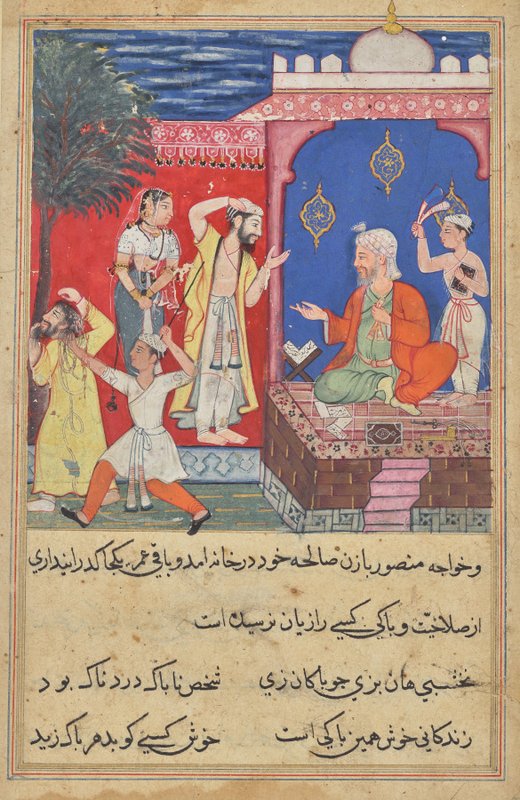
The false Mansur punished before the judge and expelled from the city, from a Tuti-nama (Tales of a Parrot): Seventeenth Night
Mughal India, court of Akbar (reigned 1556–1605)
Gevechtsscène, illustratie van de Razm Nama
anonymous