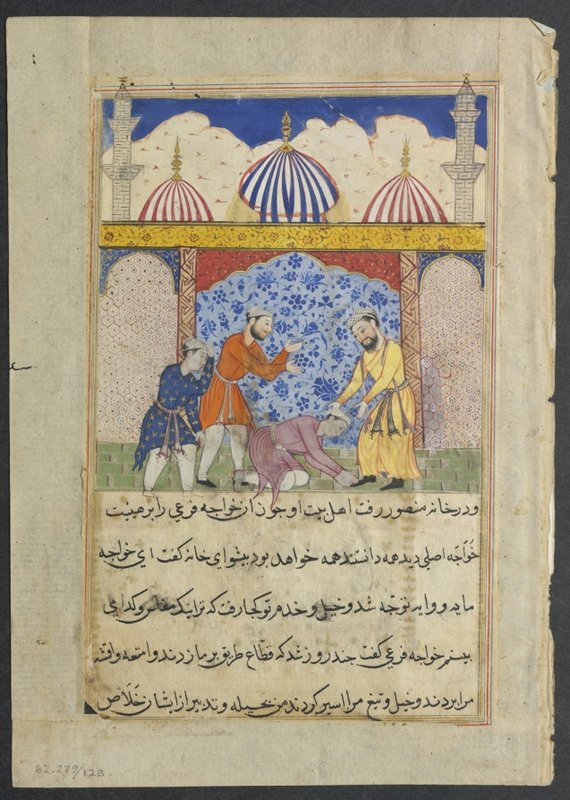
The young man, who has magically taken on the appearance of Mansur the merchant, arrives at his home, from a Tuti-nama (Tales of a Parrot): Seventeenth Night
Mughal India, court of Akbar (reigned 1556–1605)
1962.279.128.a
About this artwork
Similar artworks
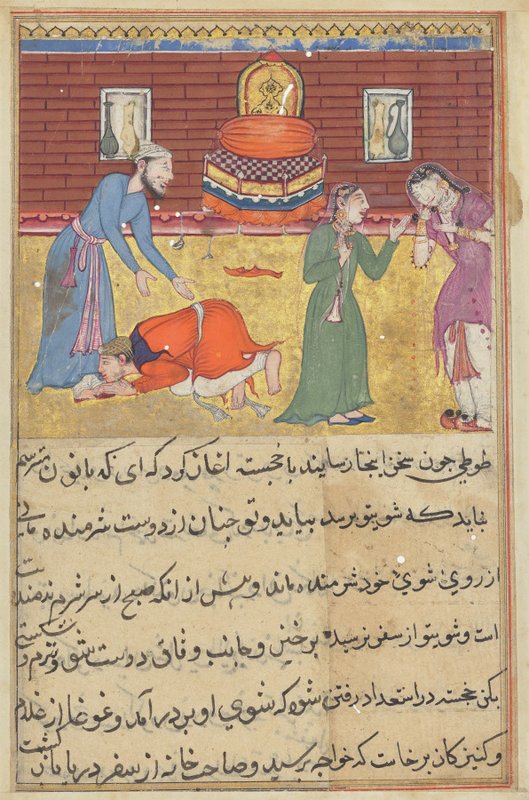
The pious man’s son, now a king, reveals himself to his father; his nurse upbraids his unfaithful mother, from a Tuti-nama (Tales of a Parrot): Fifty-second Night
Mughal India, court of Akbar (reigned 1556–1605)
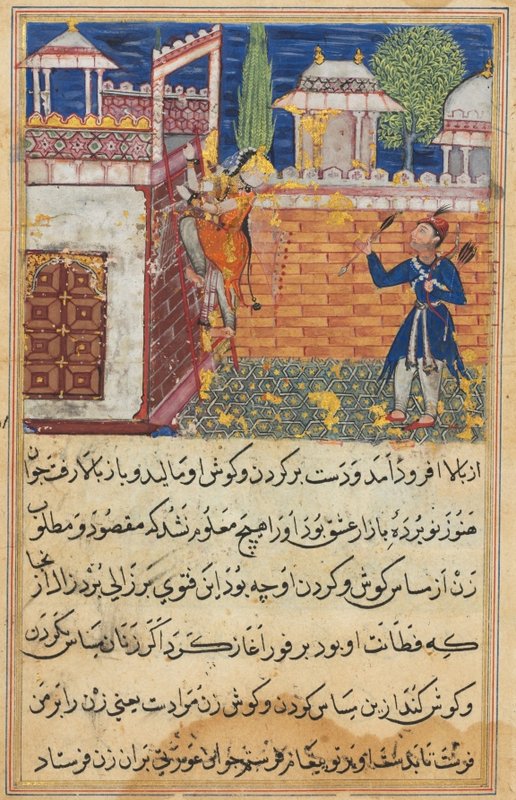
The deceitful wife returns to her terrace after caressing her lover, from a Tuti-nama (Tales of a Parrot): Eighth Night
Shravana
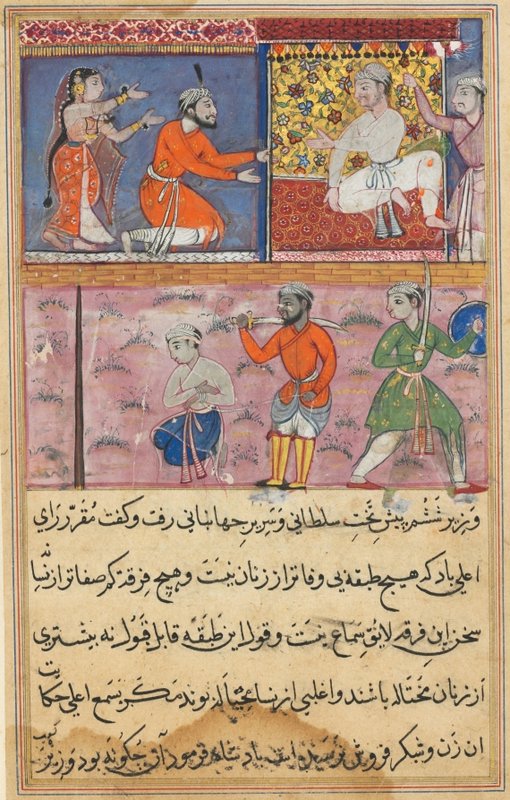
The prince sent back to the place of execution for the sixth time, from a Tuti-nama (Tales of a Parrot): Eighth Night
Suraju
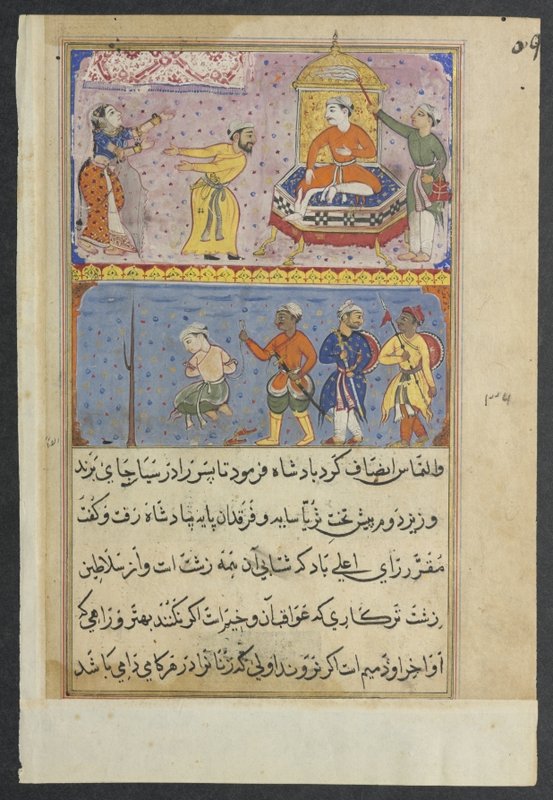
The prince, once reprieved, is returned to the palace of execution a second time on the plea of the king’s handmaiden, from a Tuti-nama (Tales of a Parrot): Eighth Night
Gujarati
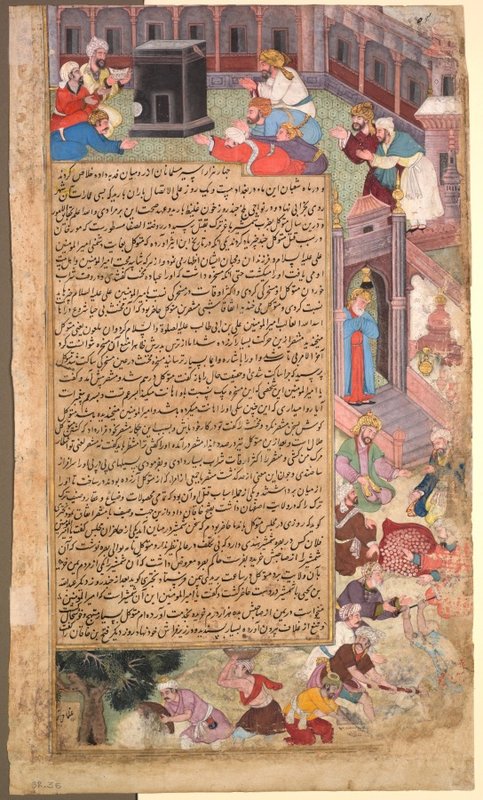
Page of disasters, from the Tarikh-i Alfi (History of a Thousand Years)
India, Mughal school, 16th century
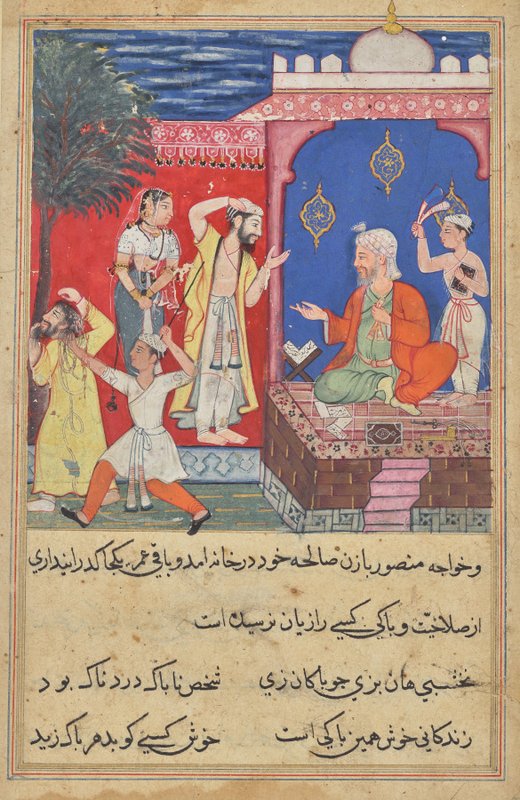
The false Mansur punished before the judge and expelled from the city, from a Tuti-nama (Tales of a Parrot): Seventeenth Night
Mughal India, court of Akbar (reigned 1556–1605)
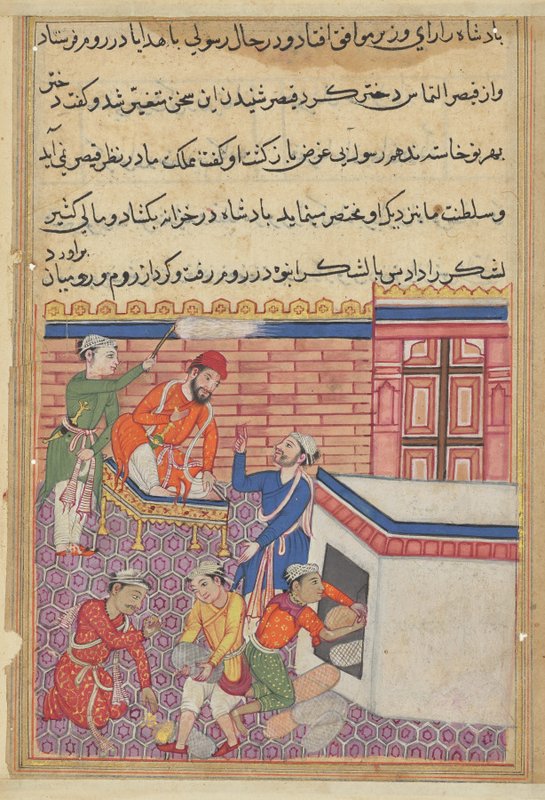
The king’s emissary being provided with gifts for his mission to Rum in order to seek the hand of the emperor’s daughter in marriage, from a Tuti-nama (Tales of a Parrot): Fiftieth Night
Mughal India, court of Akbar (reigned 1556–1605)
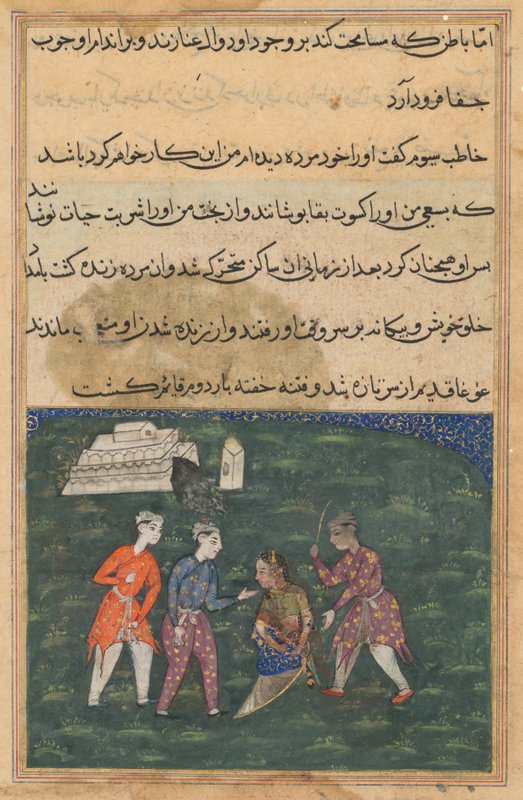
The third suitor strikes the devotee’s daughter and thus restores her to life, from a Tuti-nama (Tales of a Parrot): Twentieth Night
Mughal India, court of Akbar (reigned 1556–1605)
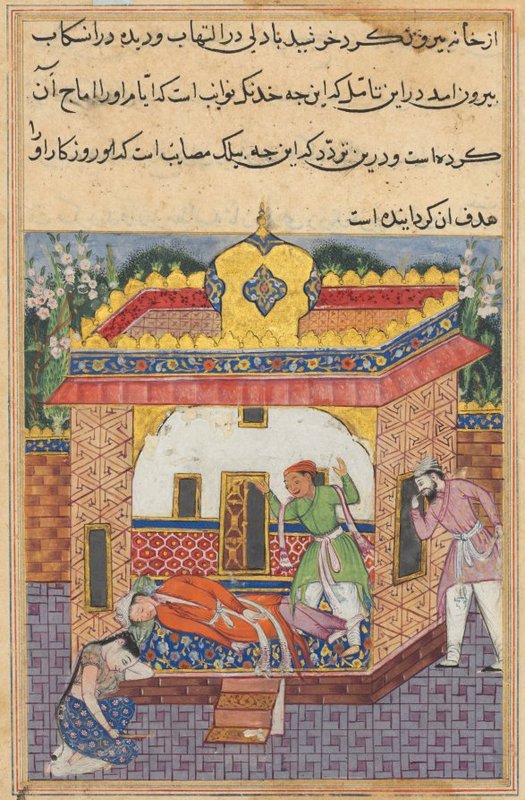
Latif, who has murdered his brother, falsely accuses Khurshid of the deed, from a Tuti-nama (Tales of a Parrot): Thirty-second Night
Mughal India, court of Akbar (reigned 1556–1605)
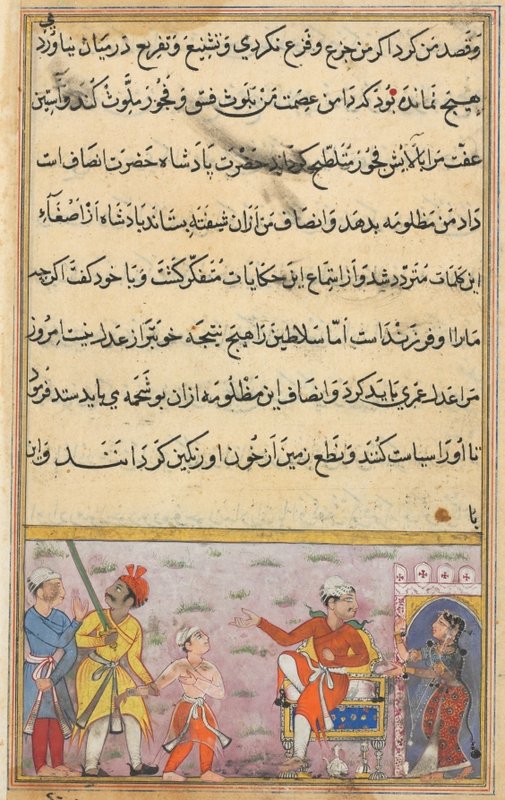
The prince being taken away for execution on the false complaint of the handmaiden, from a Tuti-nama (Tales of a Parrot): Eighth Night
Mughal India, court of Akbar (reigned 1556–1605)
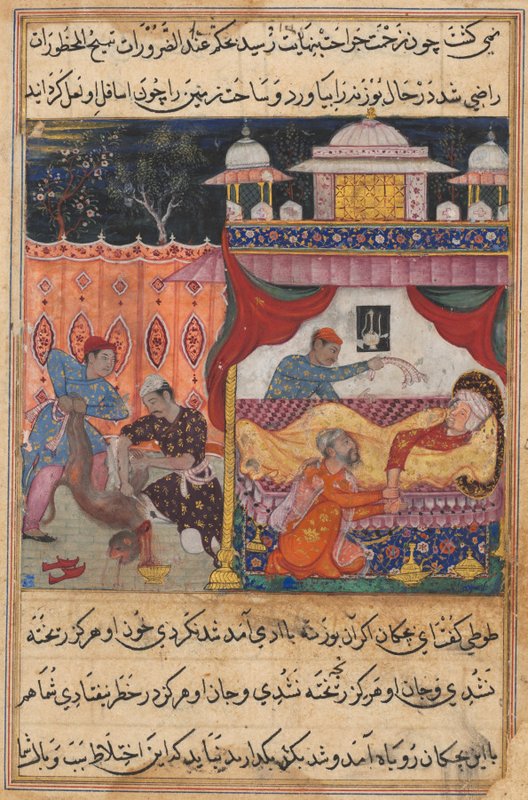
The monkey slain, his blood to be used as medicine for the ailing prince he has bitten, from a Tuti-nama (Tales of a Parrot): Fifth Night
Basawan
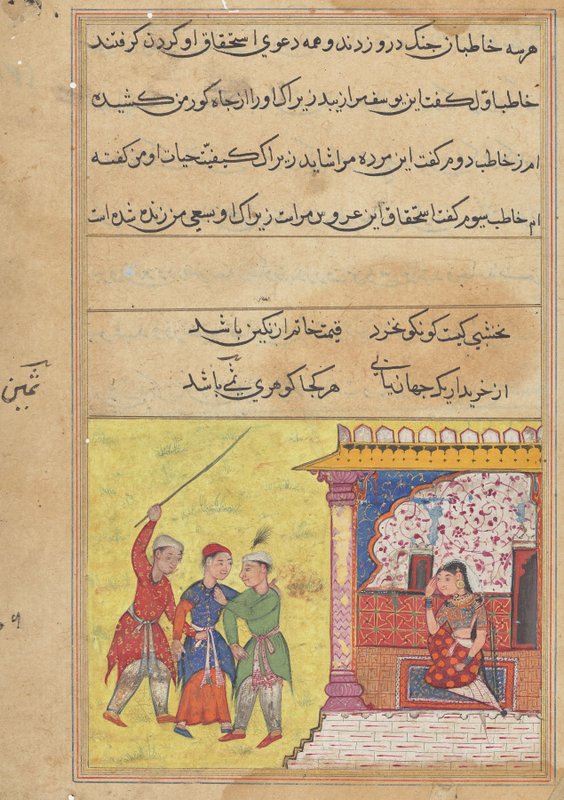
The three suitors again begin to quarrel among themselves for the hand of the devotee’s daughter, from a Tuti-nama (Tales of a Parrot): Twentieth Night
Mughal India, court of Akbar (reigned 1556–1605)