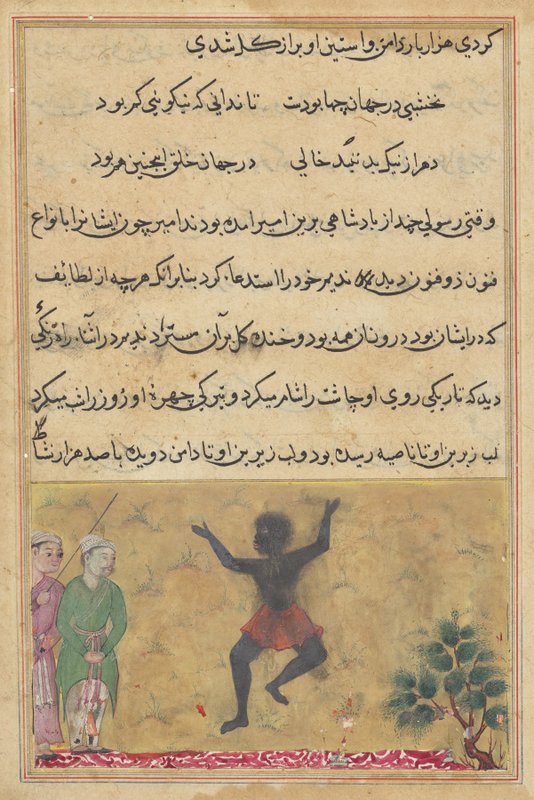
The court jester meets a Zangi dancing with joy, and learns from him that the cause of his happiness is his assignation with a woman who is the jester’s own wife, from a Tuti-nama (Tales of a Parrot): Twenty-second Night
Mughal India, court of Akbar (reigned 1556–1605)
1962.279.155.a
About this artwork
Similar artworks
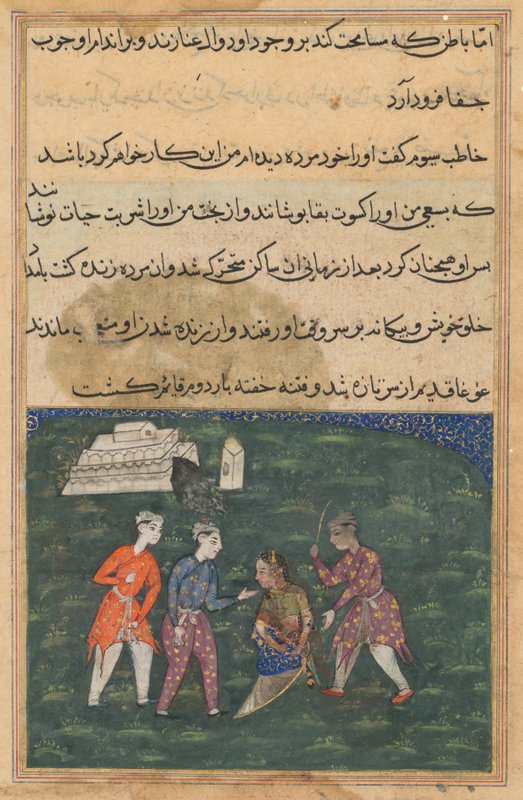
The third suitor strikes the devotee’s daughter and thus restores her to life, from a Tuti-nama (Tales of a Parrot): Twentieth Night
Mughal India, court of Akbar (reigned 1556–1605)
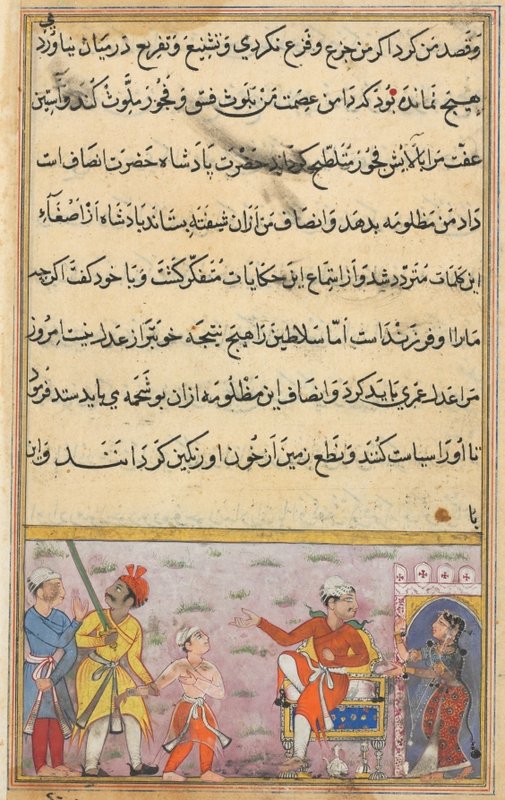
The prince being taken away for execution on the false complaint of the handmaiden, from a Tuti-nama (Tales of a Parrot): Eighth Night
Mughal India, court of Akbar (reigned 1556–1605)
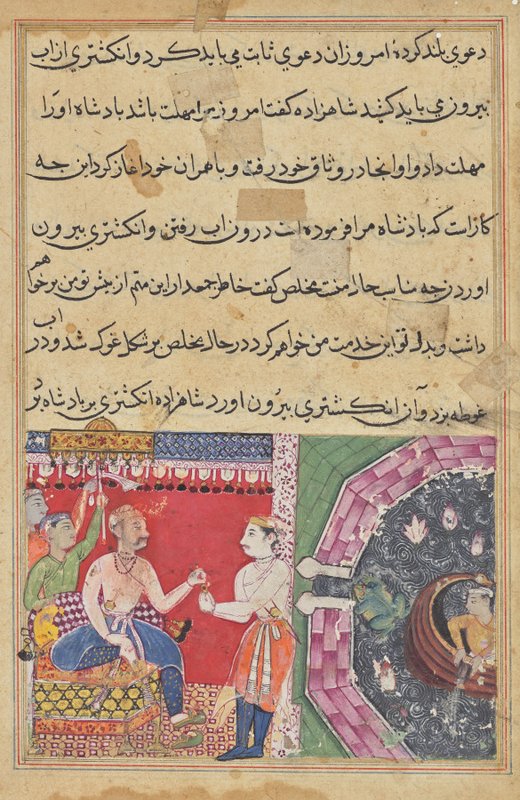
The prince, with the help of Mukhlis who changes into a frog, recovers the ring lost in the sea, and returns it to the king, from a Tuti-nama (Tales of a Parrot): Eighteenth Night
Mughal India, court of Akbar (reigned 1556–1605)
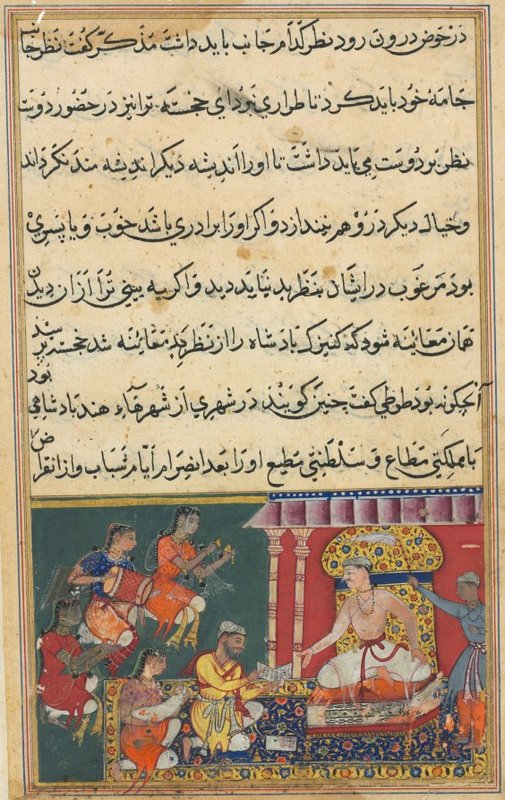
The astrologer predicts a calamity for the newly born prince in his thirteenth year, but one which he would be able to overcome, from a Tuti-nama (Tales of a Parrot): Eighth Night
Banavari 1
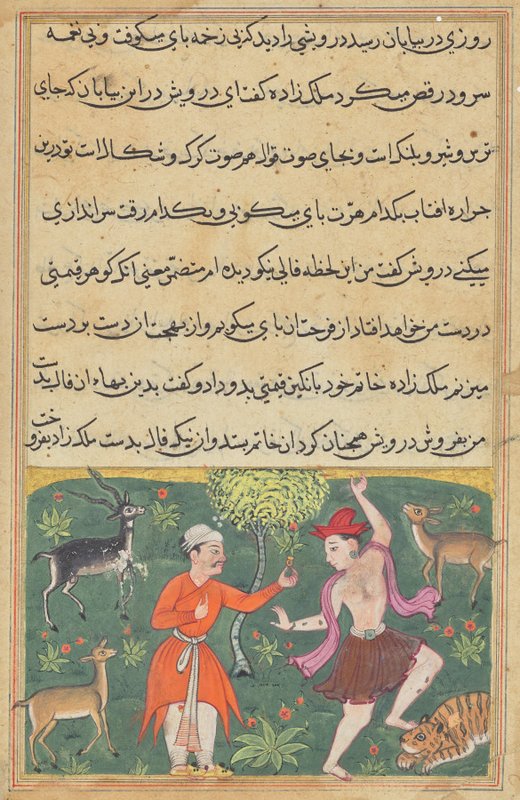
The prince meets a carefree dancing dervish whose good fortune he purchases for his ring, from a Tuti-nama (Tales of a Parrot): Eighteenth Night
Mughal India, court of Akbar (reigned 1556–1605)
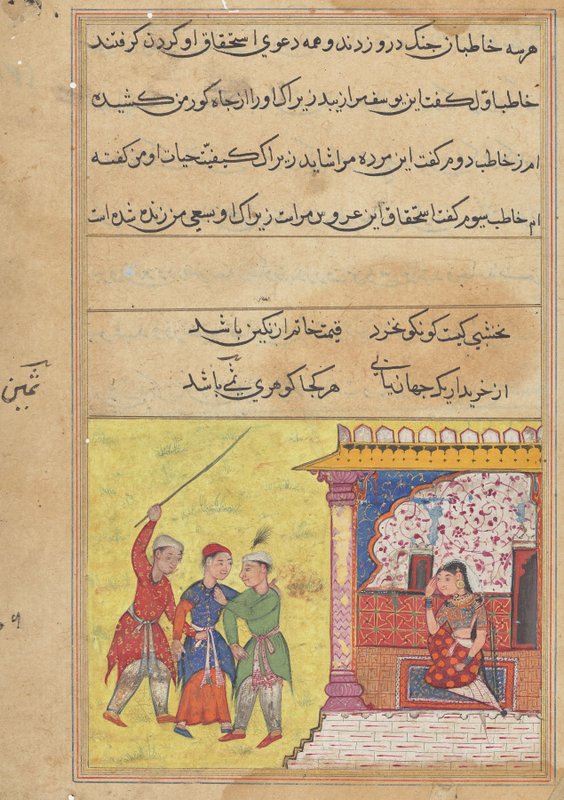
The three suitors again begin to quarrel among themselves for the hand of the devotee’s daughter, from a Tuti-nama (Tales of a Parrot): Twentieth Night
Mughal India, court of Akbar (reigned 1556–1605)
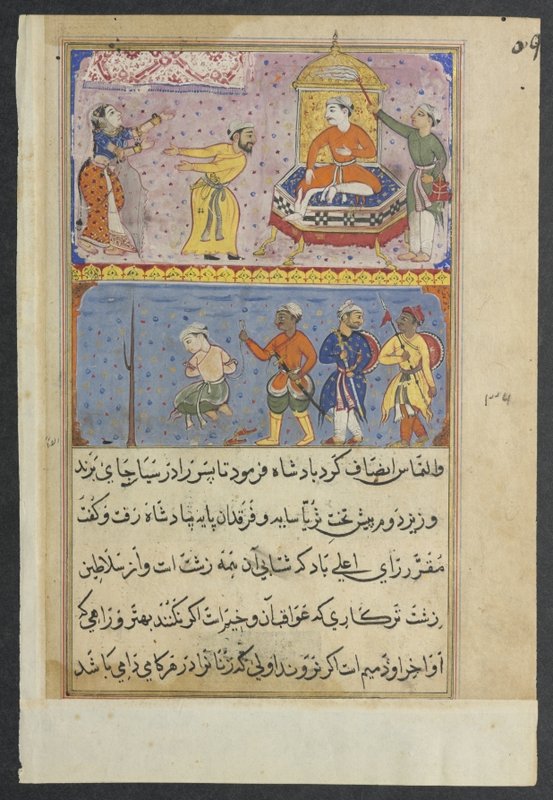
The prince, once reprieved, is returned to the palace of execution a second time on the plea of the king’s handmaiden, from a Tuti-nama (Tales of a Parrot): Eighth Night
Gujarati
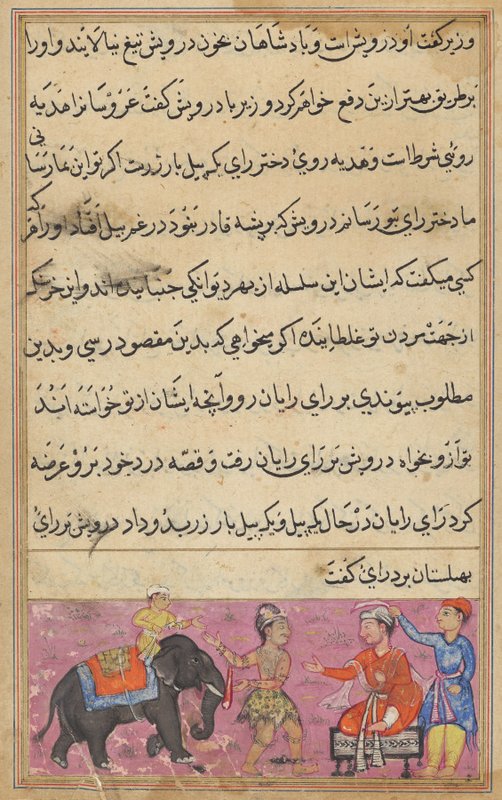
The dervish brings in as dowry an elephant laden with gold, from a Tuti-nama (Tales of a Parrot): Seventh Night
Mughal India, court of Akbar (reigned 1556–1605)
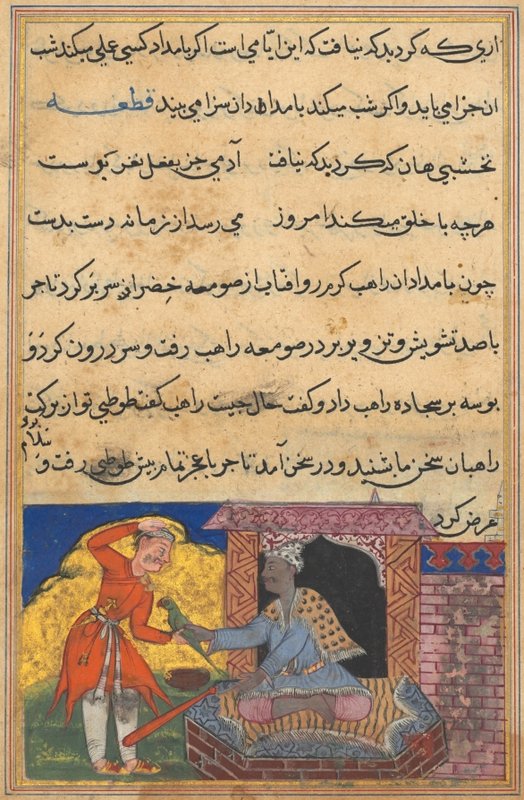
The monk returns the magic parrot to its rightful owner, the merchant, from a Tuti-nama (Tales of a Parrot): Tenth Night
Lalu
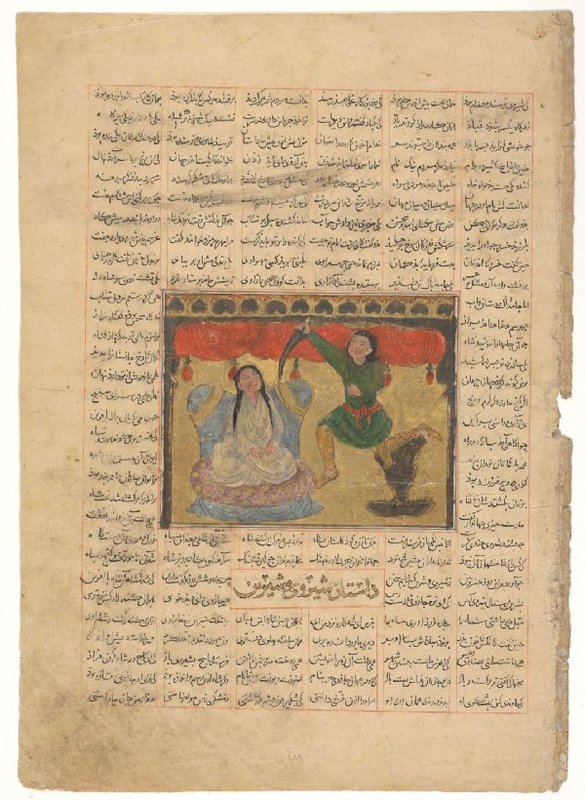
Dood van Khusran
anonymous
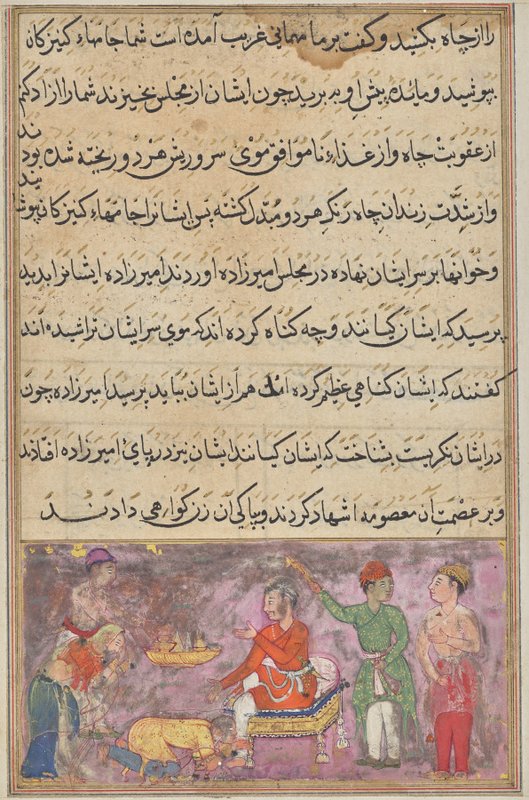
The two erring cooks, dressed as maidservants, fall at the prince’s feet and beg forgiveness, from a Tuti-nama (Tales of the Parrot): Fourth Night
Mughal India, court of Akbar (reigned 1556–1605)
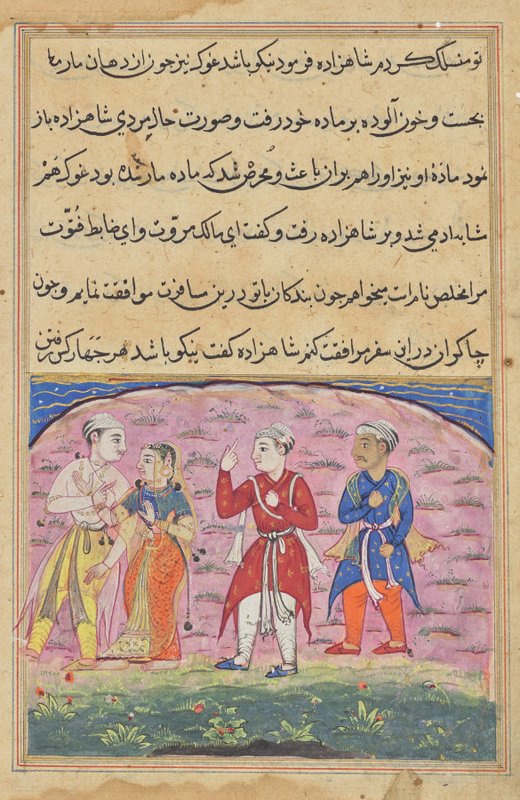
The prince and Nikfal are joined by Khalis and the Mukhlis who are the grateful snake and frog in human form, from a Tuti-nama (Tales of a Parrot): Eighteenth Night
Mughal India, court of Akbar (reigned 1556–1605)