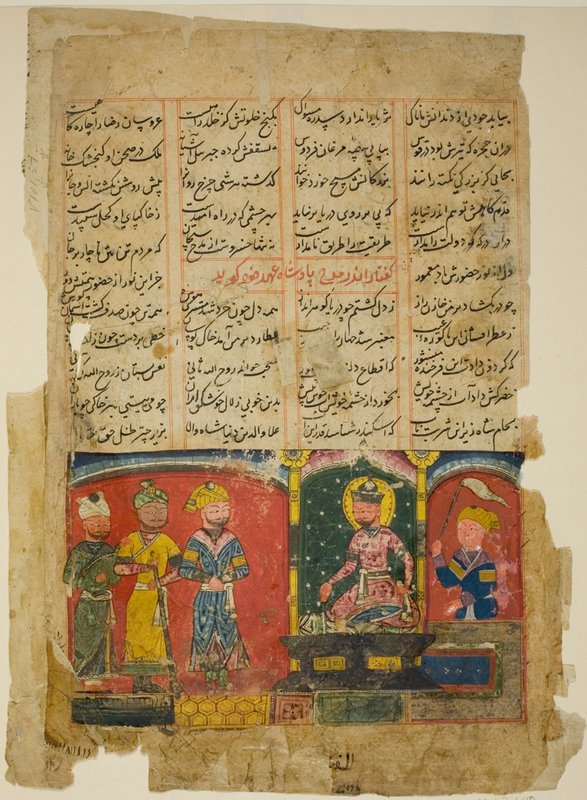
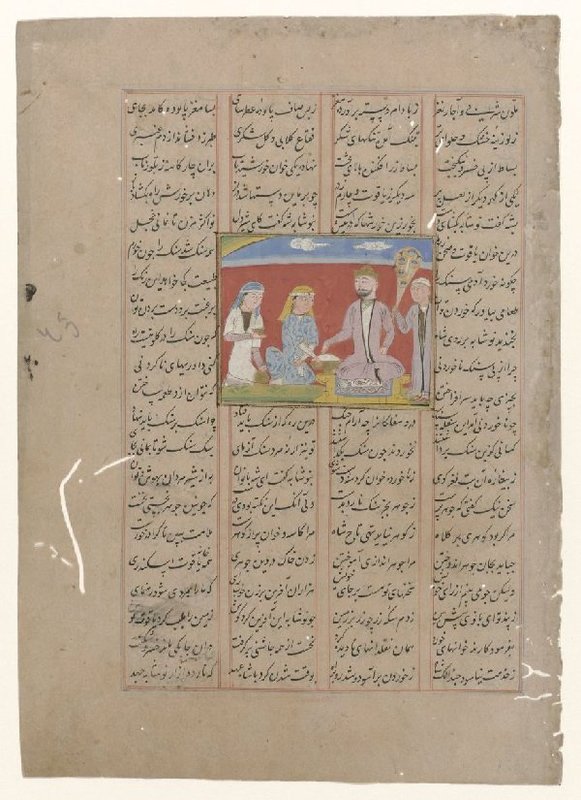
Amir Khusrau Dedicates His Poem to Sultan Ala al-Din Khalji, page from the Quintet (Khamsa) of Amir Khusraw Dehlavi
Unknown Artist
1962.640
About this artwork
Similar artworks
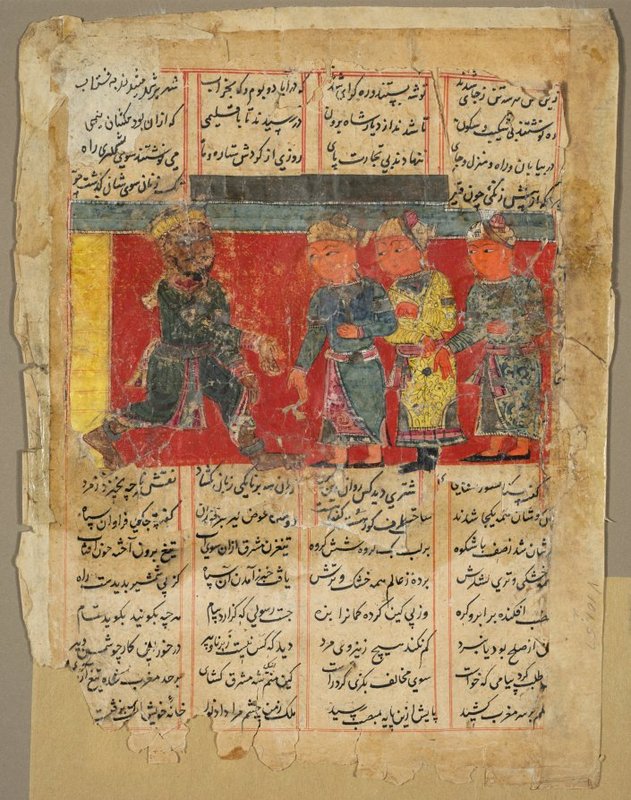
An East African King Receives Three Emissaries, from a Khamsa of Amir Khusrau Dihlavi
India, Sultanate period
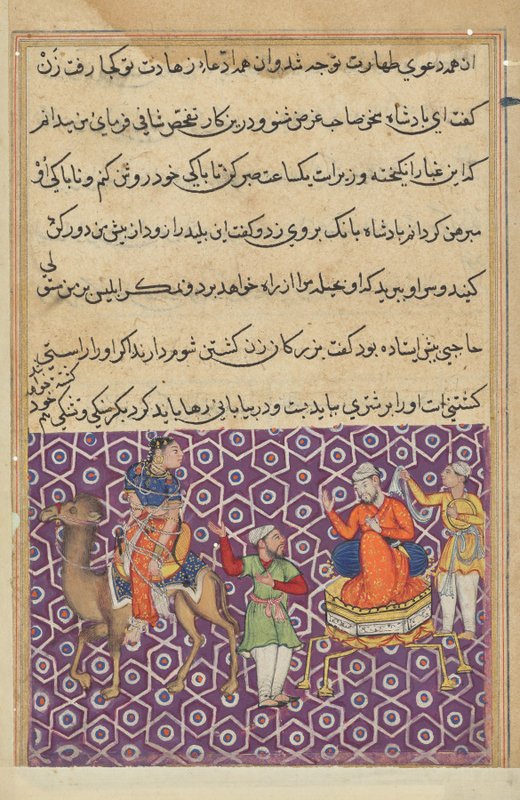
King Bahram, who has married Khassa’s daughter, has her tied to a camel to be abandoned in the desert as a result of false accusations made by Khulasa, from a Tuti-nama (Tales of a Parrot): Fifty-first Night
Mughal India, court of Akbar (reigned 1556–1605)
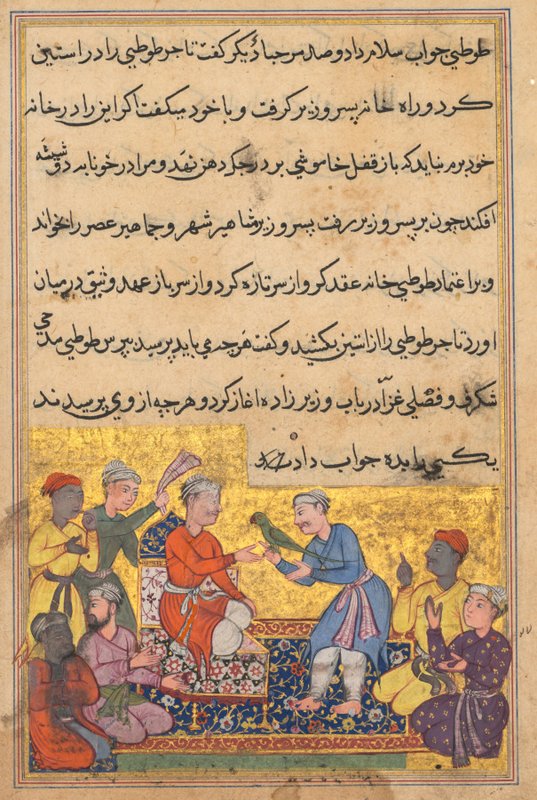
The magic parrot of the merchant talks to the vizier’s son, from a Tuti-nama (Tales of a Parrot): Tenth Night
Lalu
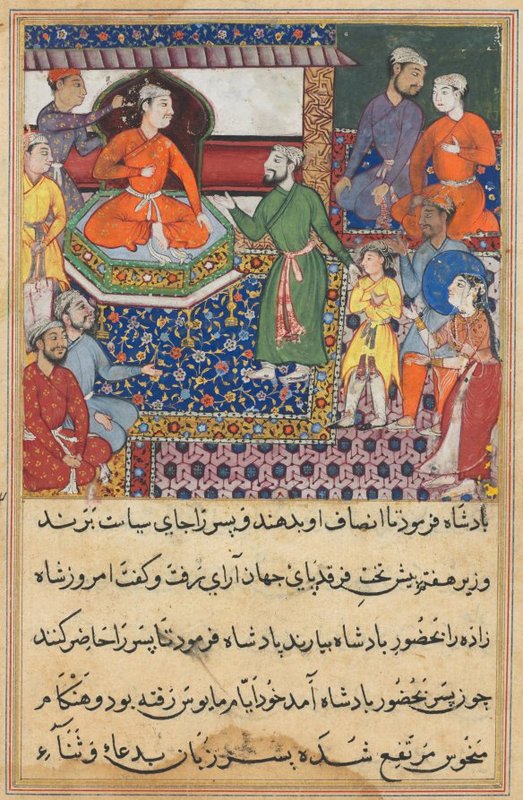
The handmaiden again pleads for the death of the prince, from a Tuti-nama (Tales of a Parrot): Eighth Night
Lalu
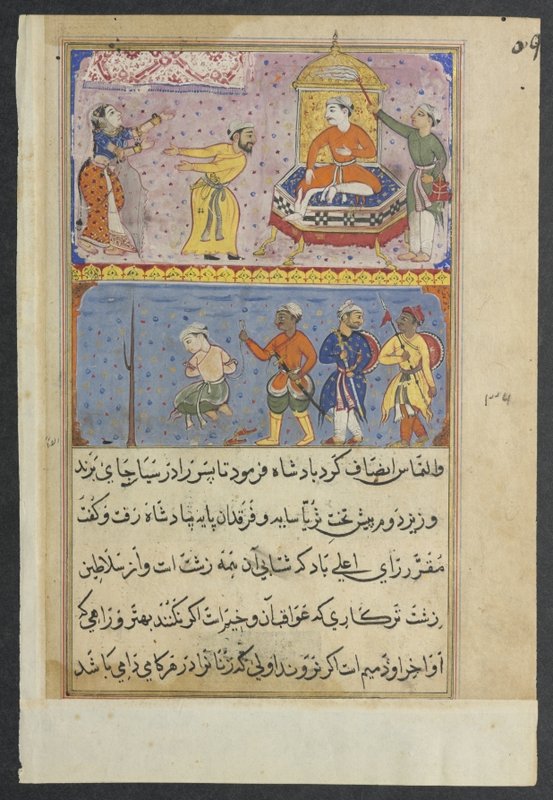
The prince, once reprieved, is returned to the palace of execution a second time on the plea of the king’s handmaiden, from a Tuti-nama (Tales of a Parrot): Eighth Night
Gujarati
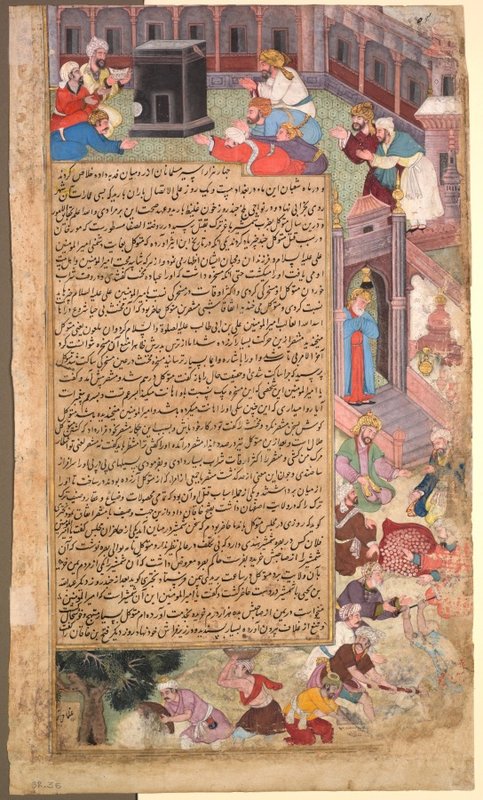
Page of disasters, from the Tarikh-i Alfi (History of a Thousand Years)
India, Mughal school, 16th century
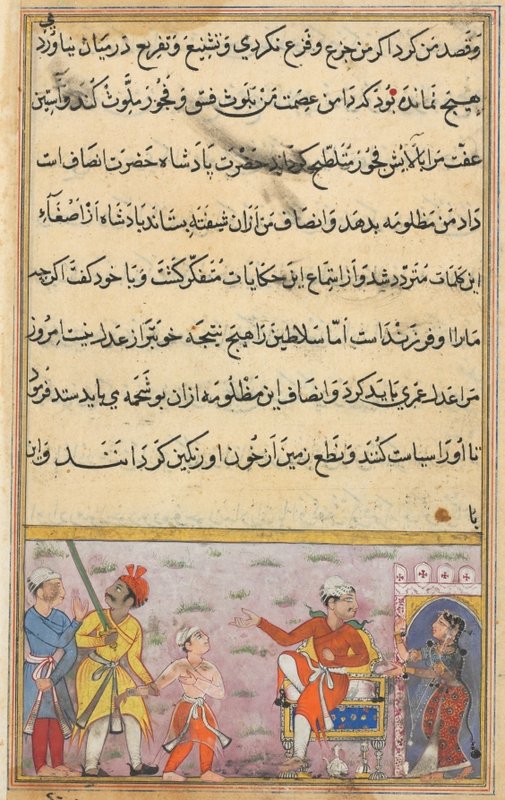
The prince being taken away for execution on the false complaint of the handmaiden, from a Tuti-nama (Tales of a Parrot): Eighth Night
Mughal India, court of Akbar (reigned 1556–1605)
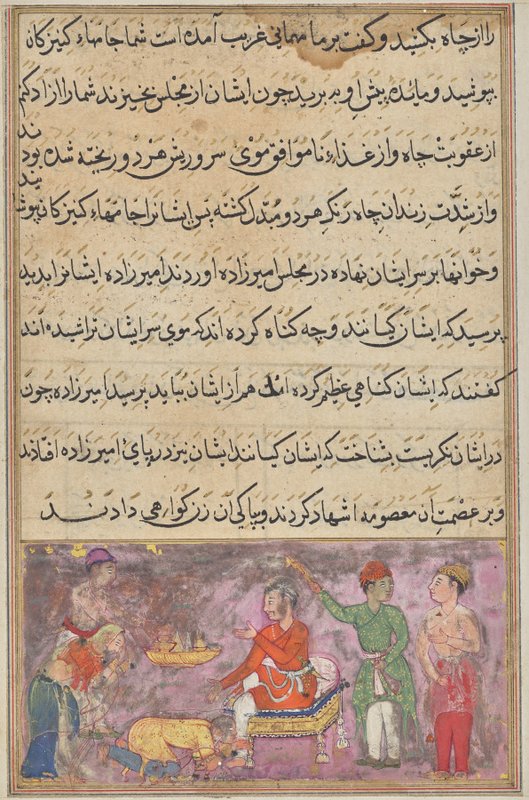
The two erring cooks, dressed as maidservants, fall at the prince’s feet and beg forgiveness, from a Tuti-nama (Tales of the Parrot): Fourth Night
Mughal India, court of Akbar (reigned 1556–1605)
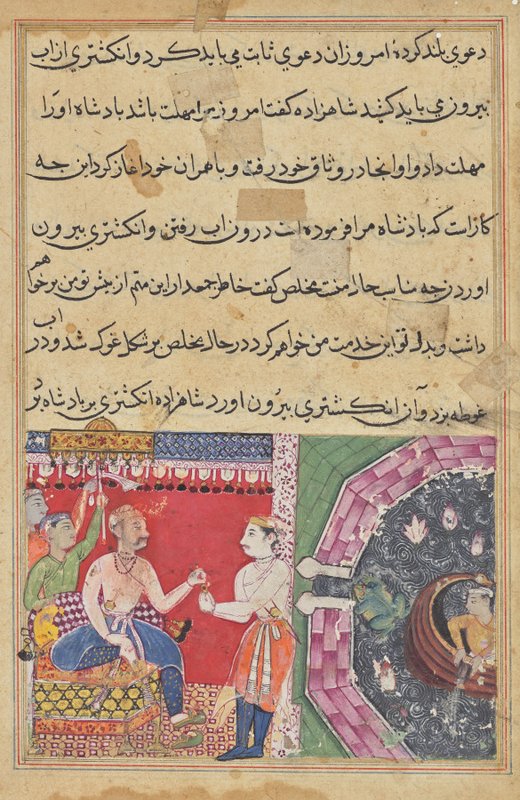
The prince, with the help of Mukhlis who changes into a frog, recovers the ring lost in the sea, and returns it to the king, from a Tuti-nama (Tales of a Parrot): Eighteenth Night
Mughal India, court of Akbar (reigned 1556–1605)
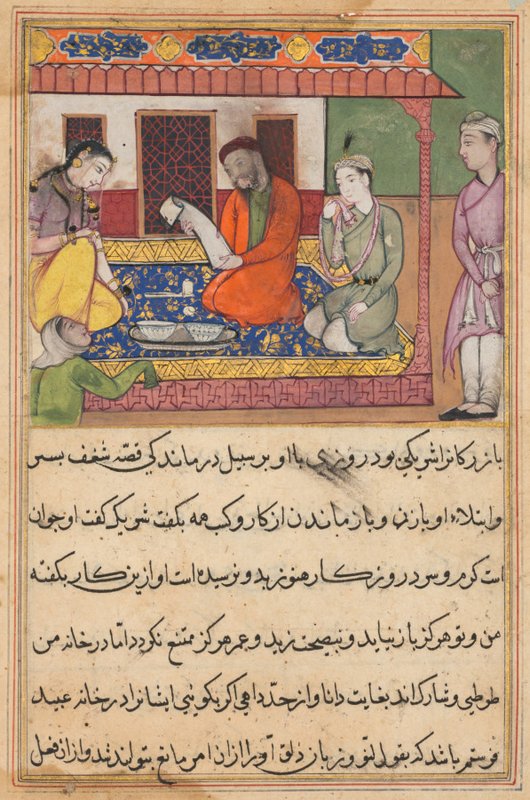
The marriage of ‘Ubaid, son of a merchant of Tirmiz, from a Tuti-nama (Tales of a Parrot): Forty-second Night
Mughal India, court of Akbar (reigned 1556–1605)
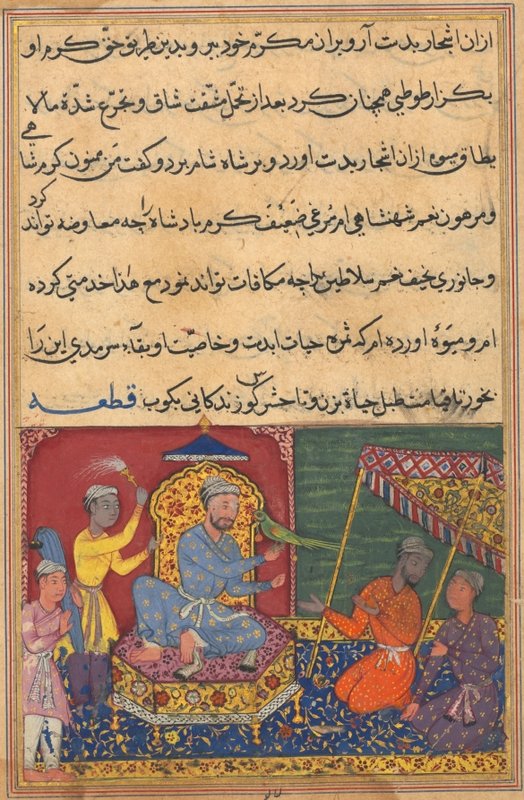
The parrot brings a fruit from the Tree of Life to the king of Syria, from a Tuti-nama (Tales of a Parrot): Ninth Night
Lalu
Iskander met twee dames
anonymous