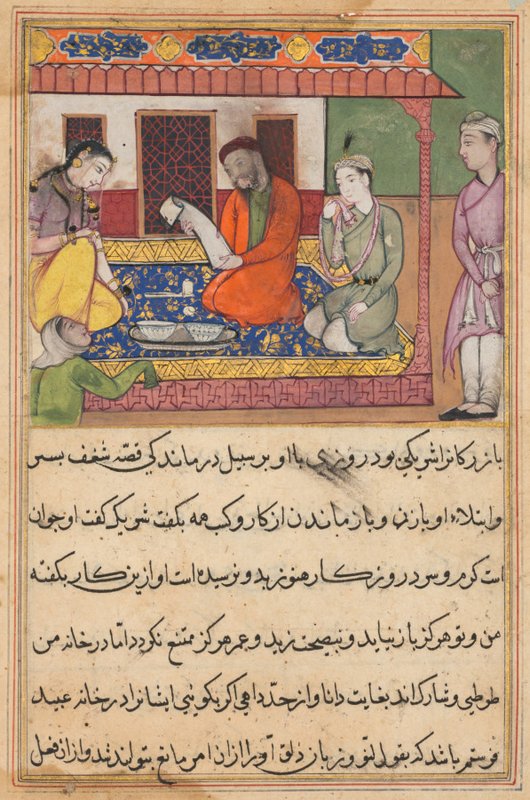
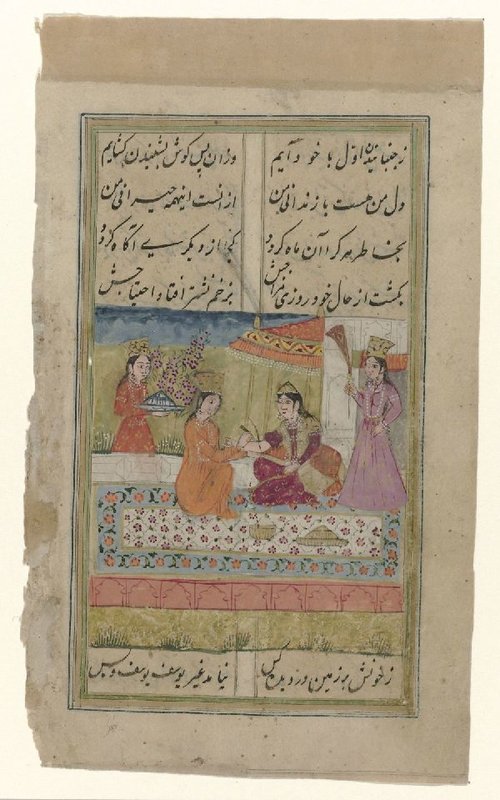
The marriage of ‘Ubaid, son of a merchant of Tirmiz, from a Tuti-nama (Tales of a Parrot): Forty-second Night
Mughal India, court of Akbar (reigned 1556–1605)
1962.279.268.b
About this artwork
Similar artworks
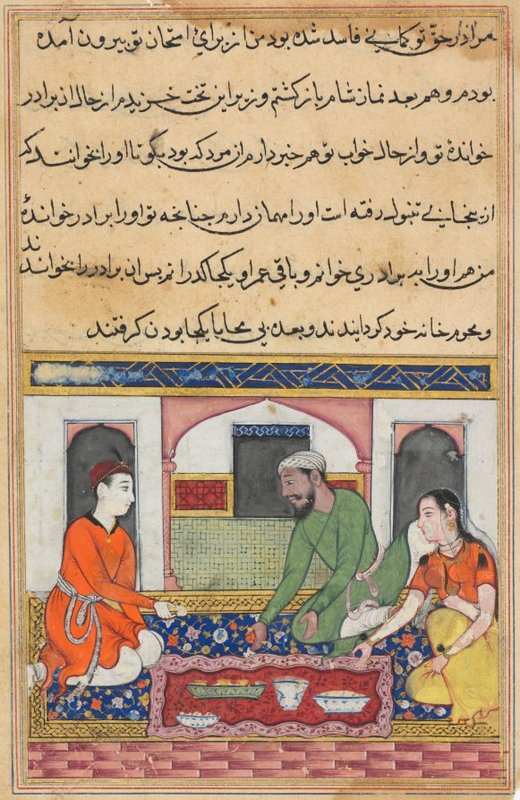
Shahr-Arai and her husband adopt her lover as a brother in the family, from a Tuti-nama (Tales of a Parrot): Fortieth Night
Mughal India, court of Akbar (reigned 1556–1605)
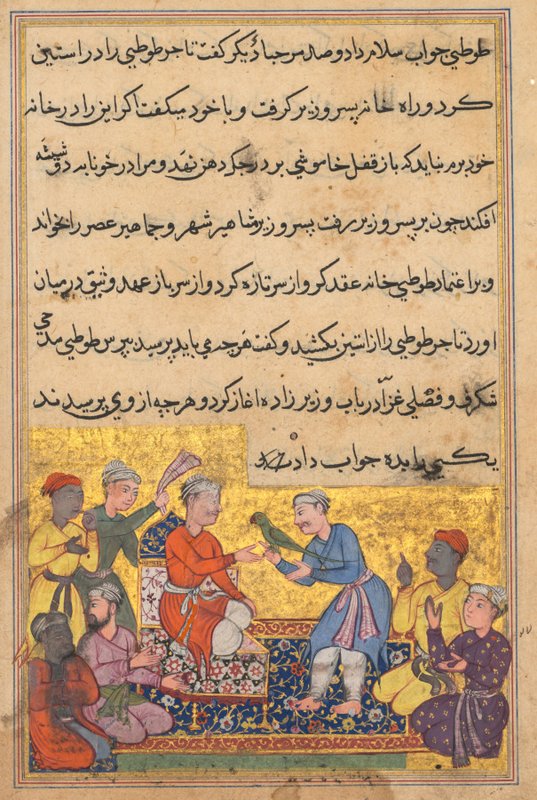
The magic parrot of the merchant talks to the vizier’s son, from a Tuti-nama (Tales of a Parrot): Tenth Night
Lalu
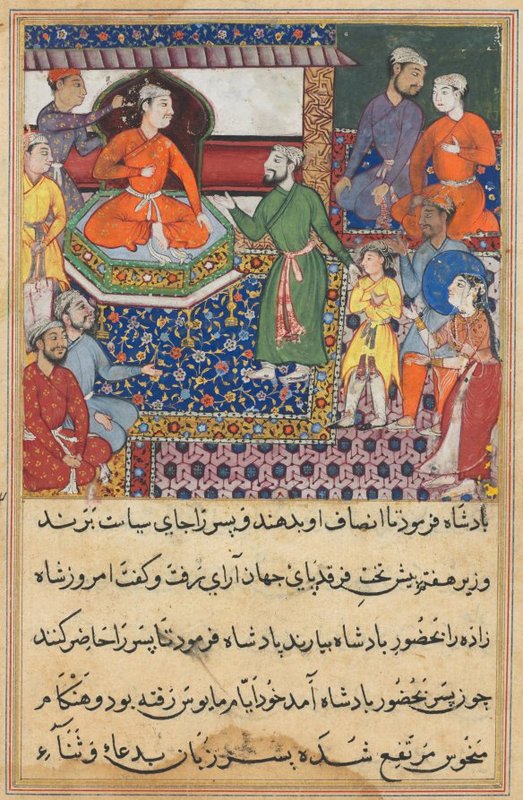
The handmaiden again pleads for the death of the prince, from a Tuti-nama (Tales of a Parrot): Eighth Night
Lalu
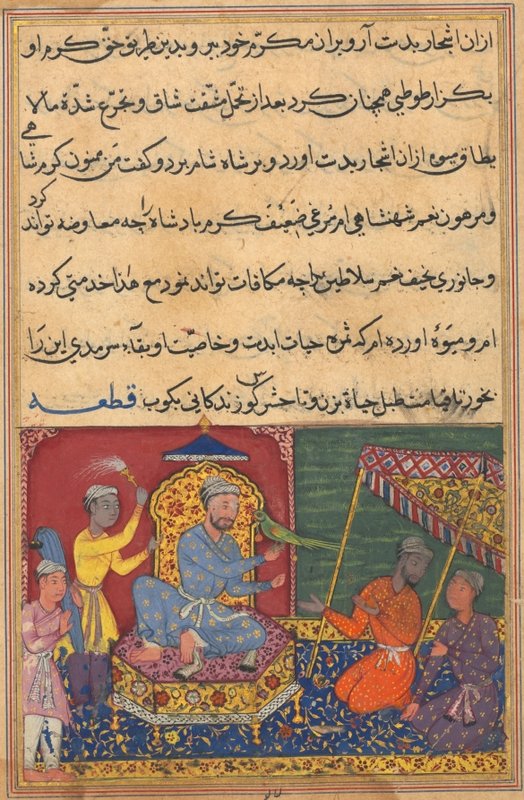
The parrot brings a fruit from the Tree of Life to the king of Syria, from a Tuti-nama (Tales of a Parrot): Ninth Night
Lalu
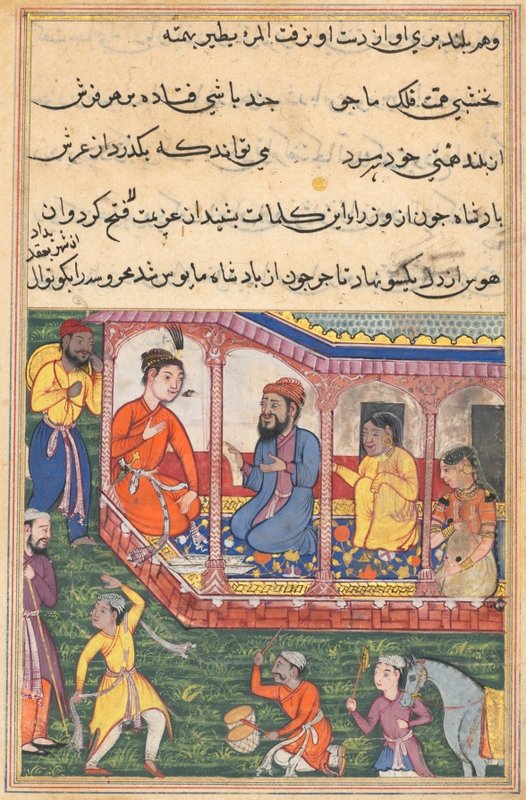
Mahrusa’s marriage to the prefect of the city, from a Tuti-nama (Tales of a Parrot): Thirty-sixth Night
Mughal India, court of Akbar (reigned 1556–1605)
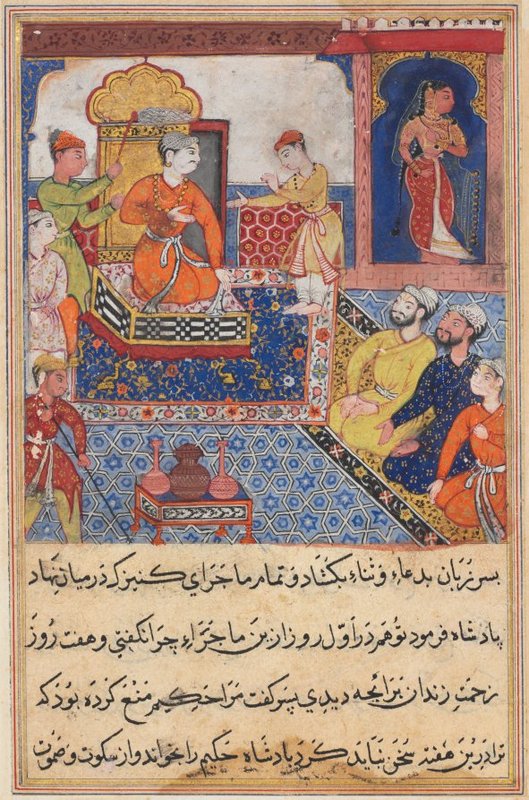
The young prince recounts his experiences to his father, the king, from a Tuti-nama (Tales of a Parrot): Eighth Night
Suraju
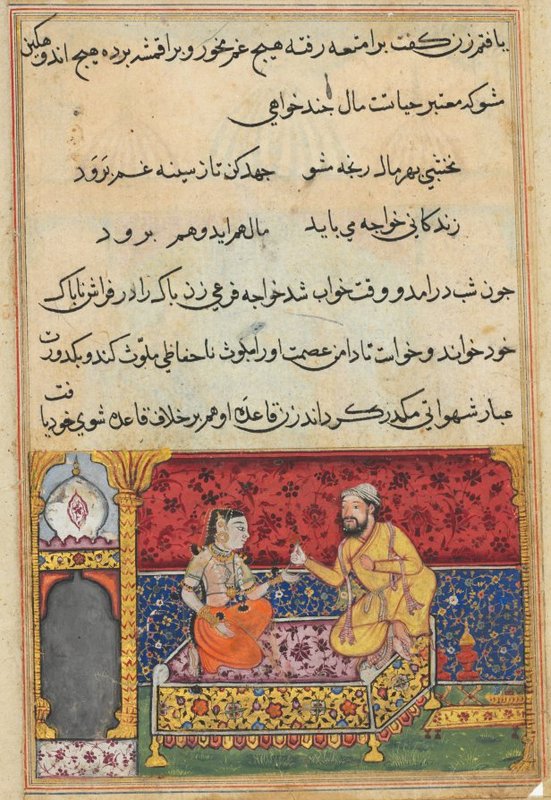
The young man changes himself to look like Mansur, and thus inveigles himself into the bed of Mansur’s wife, but is put off by her, from a Tuti-nama (Tales of a Parrot): Seventeenth Night
Mughal India, court of Akbar (reigned 1556–1605)
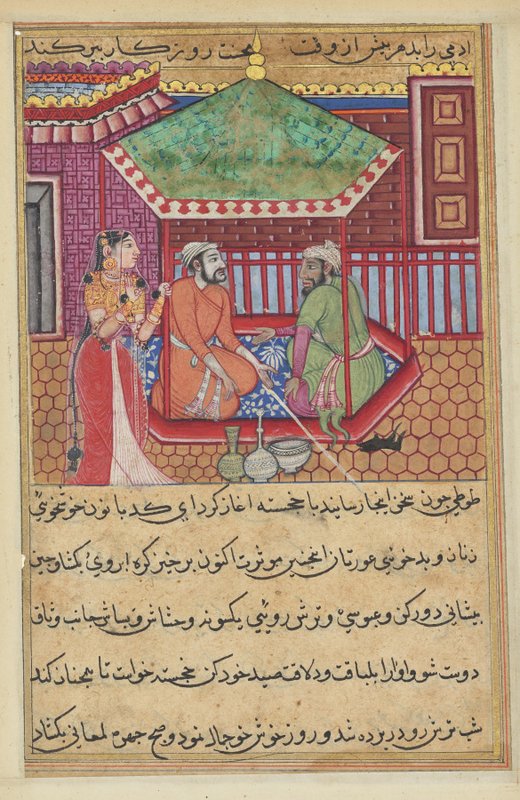
The eldest brother explains the reason for his youthful appearance, from a Tuti-nama (Tales of a Parrot): Forty-ninth Night
Mughal India, court of Akbar (reigned 1556–1605)
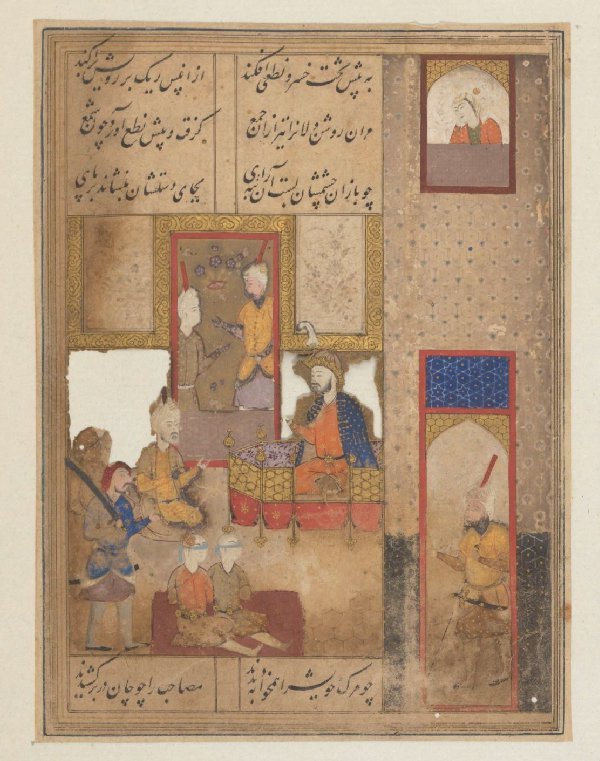
Picknick
anonymous
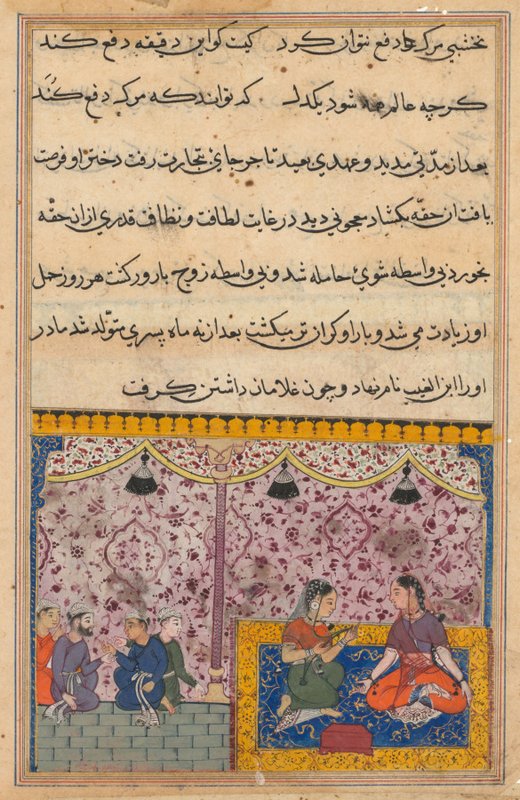
The merchant’s daughter gives birth to a son as a result of eating out of the box. The clever child recognizes the false gems from true, from a Tuti-nama (Tales of a Parrot): Twenty-third Night
Mughal India, court of Akbar (reigned 1556–1605)
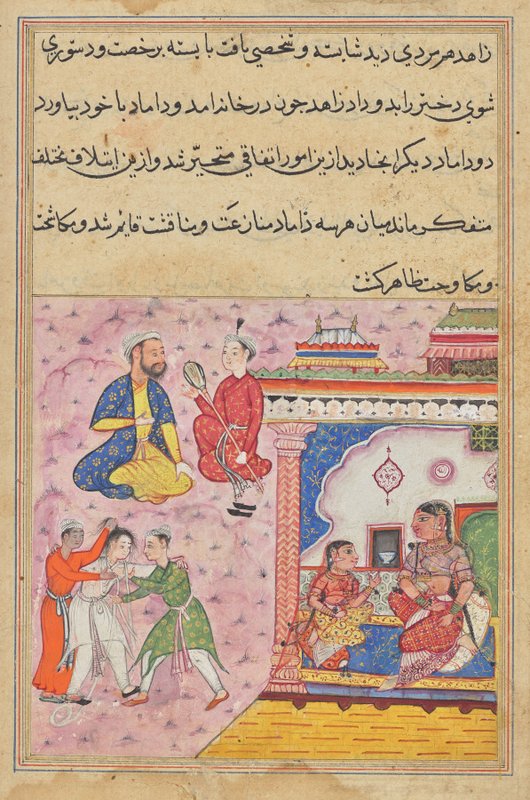
Three suitors fight amongst themselves for the hand of the devotee’s daughter, from a Tuti-nama (Tales of a Parrot): Twentieth Night
Mughal India, court of Akbar (reigned 1556–1605)
Twee dames met hun bedienden op een terras voor een paleis
anonymous