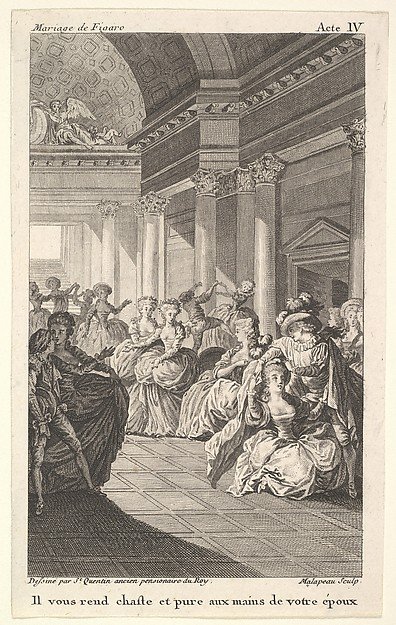
Dancing couples surround four standing women in a barrel-vaulted hall, from a series of five illustrations after Jacques Philippe Joseph de Saint-Quentin for 'The mad day, or the marriage of Figaro' (La Folle journée, ou le mariage de Figaro) by Pierre Augustin Caron de Beaumarchais
After Jacques Philippe Joseph de Saint Quentin, Claude Nicolas Malapeau
2012.136.58.4
About this artwork
Similar artworks
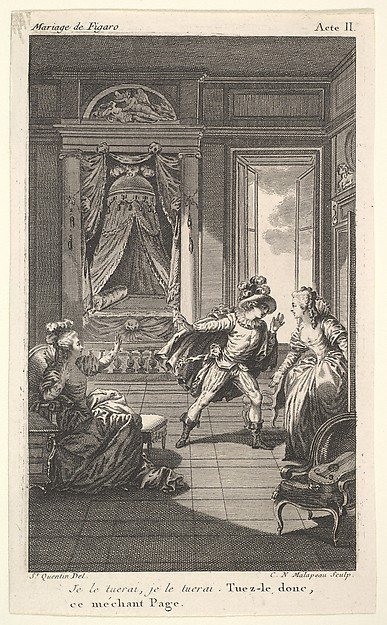
A man leans toward a woman standing in a doorway at right, at left a seated woman raises both hands, a canopied bed beyond, from a series of five illustrations after Jacques Philippe Joseph de Saint-Quentin for 'The mad day, or the marriage of Figaro' (La Folle journée, ou le mariage de Figaro) by Pierre Augustin Caron de Beaumarchais
After Jacques Philippe Joseph de Saint Quentin, Claude Nicolas Malapeau
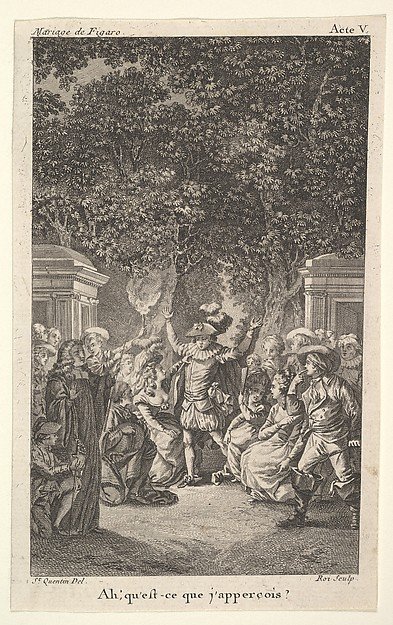
A young boy holds a torch under trees in a garden, at center a man raises both arms, surrounded by male and female figures, from a series of five illustrations after Jacques Philippe Joseph de Saint-Quentin for 'The mad day, or the marriage of Figaro' (La Folle journée, ou le mariage de Figaro) by Pierre Augustin Caron de Beaumarchais
After Jacques Philippe Joseph de Saint Quentin, Claude Nicolas Malapeau
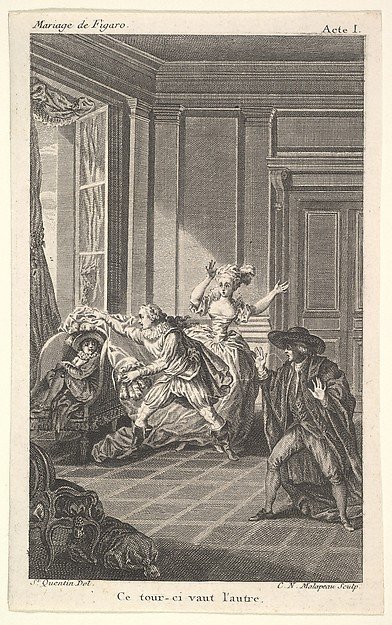
A man curled up in a chair looks toward another man who approaches him from the left in an interior setting, a woman and a man stand nearby with their hands raised, from a series of five illustrations after Jacques Philippe Joseph de Saint-Quentin for 'The mad day, or the marriage of Figaro' (La Folle journée, ou le mariage de Figaro) by Pierre Augustin Caron de Beaumarchais
After Jacques Philippe Joseph de Saint Quentin, Claude Nicolas Malapeau
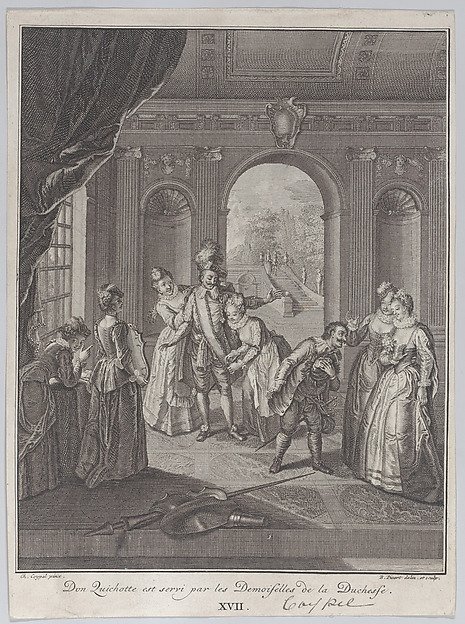
Plate 17: Don Quixote is served by the ladies of the Duchess (Don Quichotte est servi par les Demoiselles de la Duchesse)
Bernard Picart, After Charles Antoine Coypel
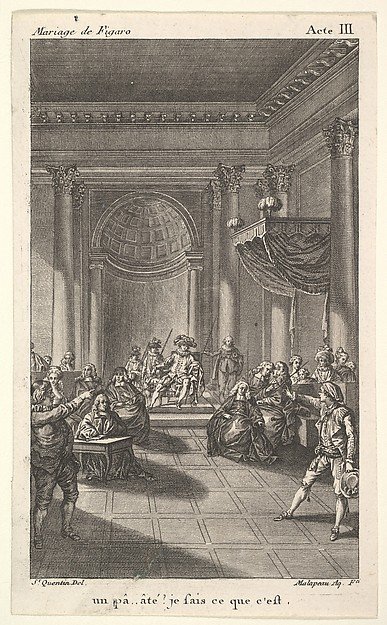
A man seated in a chair on a stepped platform holds an audience, two pointing men stand in the foreground, from a series of five illustrations after Jacques Philippe Joseph de Saint-Quentin for 'The mad day, or the marriage of Figaro' (La Folle journée, ou le mariage de Figaro) by Pierre Augustin Caron de Beaumarchais
After Jacques Philippe Joseph de Saint Quentin, Claude Nicolas Malapeau
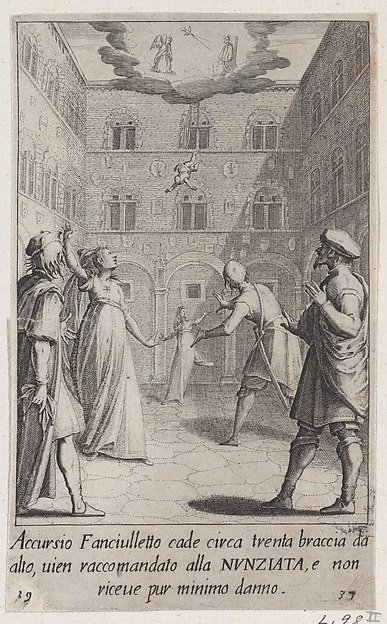
Accursio, from Scelta d'Alcuni Miracoli e Grazie della Santissima Nunziata di Firenze (Selection of Some Miracles and Graces that Occurred in the Church of the Annunziata in Florence)
Jacques Callot
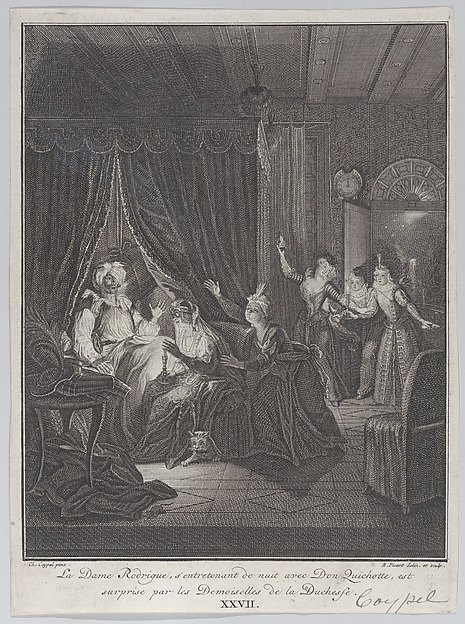
Plate 27: Doña Rodriguez, who is speaking at night with Don Quixote, is surprised by the ladies of the Duchess (La Dame Rodrigue, s'entretenant de nuit avec Don Quichotte, est suprise par les Demoiselles de las Duchesse)
Bernard Picart, After Charles Antoine Coypel
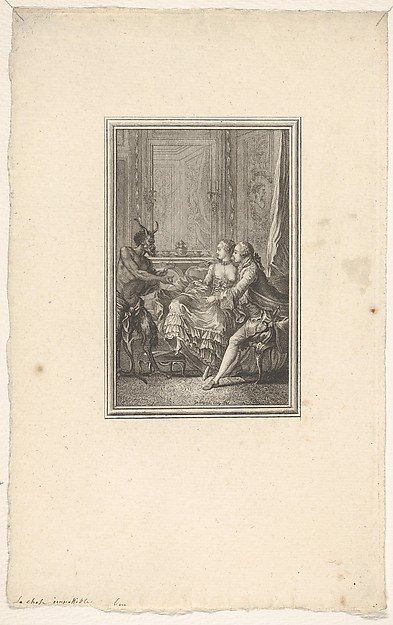
Lafontaine Tales, Amsterdam
Joseph de Longueil
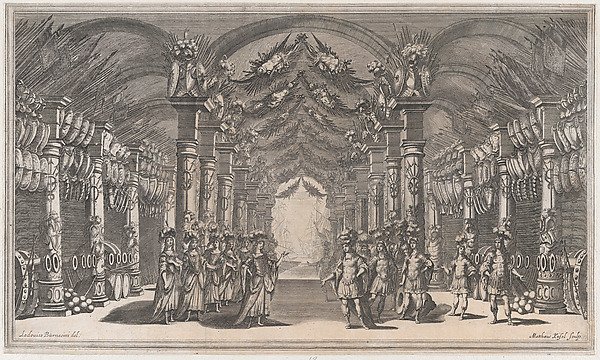
Arsenal of Mars; a group of soldiers standing across from a group of women in an arsenal; ships off in the distance; set design from 'Il Pomo D'Oro'
Mathäus Küsel, after Ludovico Ottaviano Burnacini
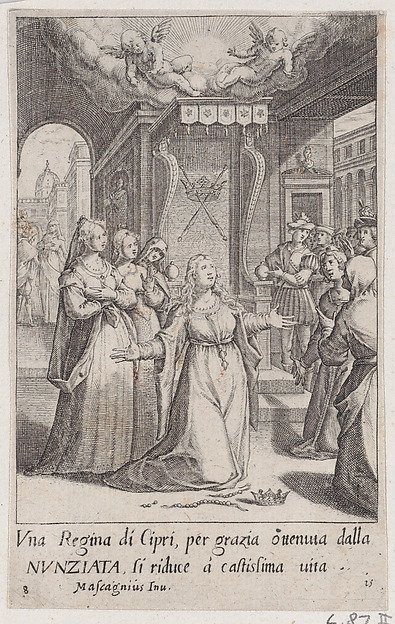
The Queen of Cyprus, from Scelta d'Alcuni Miracoli e Grazie della Santissima Nunziata di Firenze (Selection of Some Miracles and Graces that Occurred in the Church of the Annunziata in Florence)
Jacques Callot, After Donato Mascagni
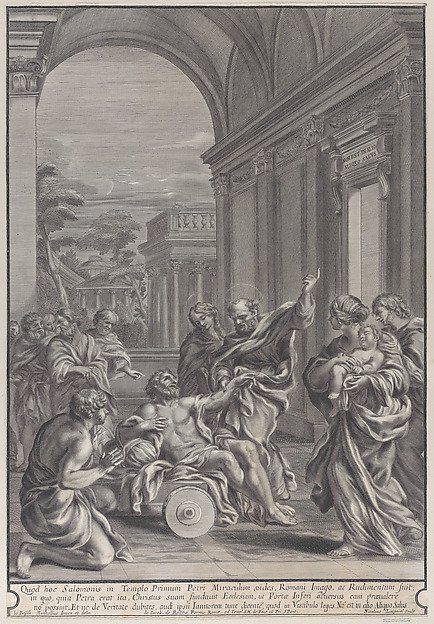
Saint Peter healing the sick, within a classical archway
Nicolas Laigniel, After Giovanni Battista Manelli, Giovanni Giacomo De Rossi
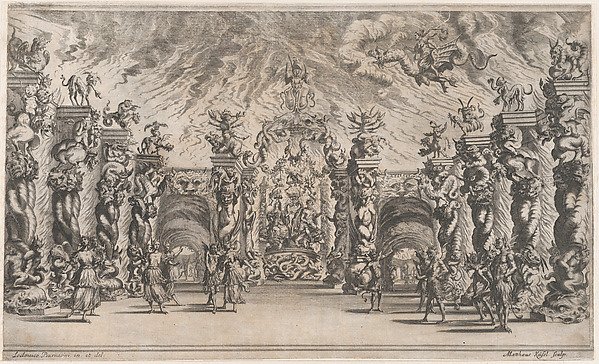
Kingdom of Pluto; a view of the underworld with Pluto and Proserpina enthroned at center, surrounded by demons; set design from 'Il Pomo D'Oro'
Mathäus Küsel, after Ludovico Ottaviano Burnacini