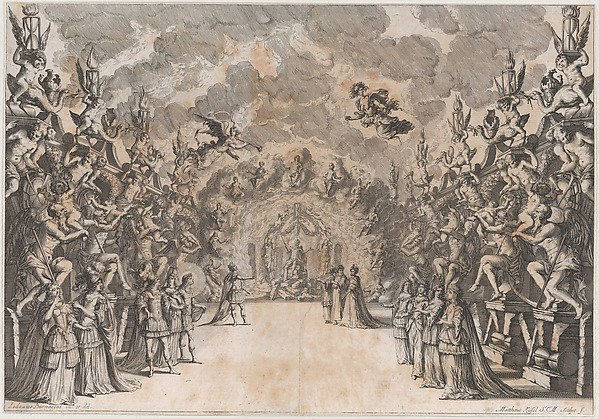
The Seat of Saturn; Saturn at center, seated on a throne of rubble, conversing with a king and three men who stand before him; lining the walls on each side are four figures of Saturn devouring children; set design from 'La Monarchia Latina Trionfante'
Mathäus Küsel, after Ludovico Ottaviano Burnacini
53.600.3579
About this artwork
Similar artworks
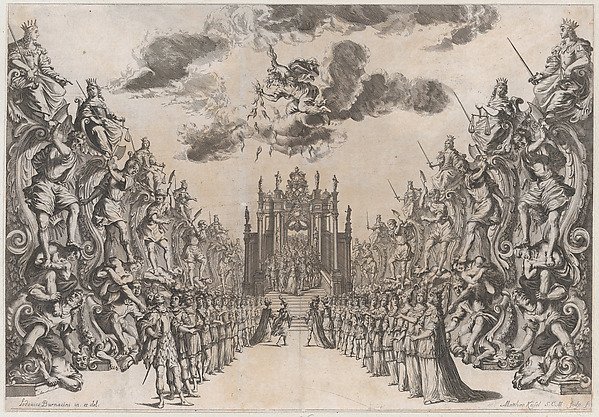
Magnificent Hall of Astrea; men and women gathered in the street to view a procession through a triumphal arch and down the stairs into the city; the procession is led by a female wearing a crown, she is followed by various figures in varying costume; set design from 'La Monarchia Latina Trionfante'
Mathäus Küsel, after Ludovico Ottaviano Burnacini
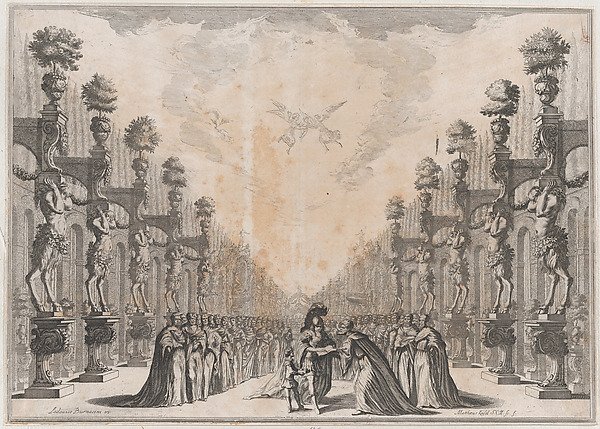
Three men at center, an old man who holding out an open book for a soldier to sign as a smaller man stands to the left holding ink; a large group of men surround them; set design from 'Il Fuoco Eterno'
Mathäus Küsel, after Ludovico Ottaviano Burnacini
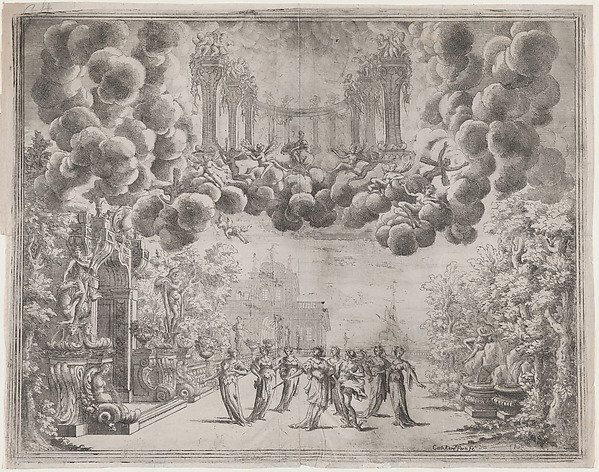
Stage design with allegorical figures; from 'L'Idea di tutti le perfezioni ... Piacenza'
Carlo Antonio Forti
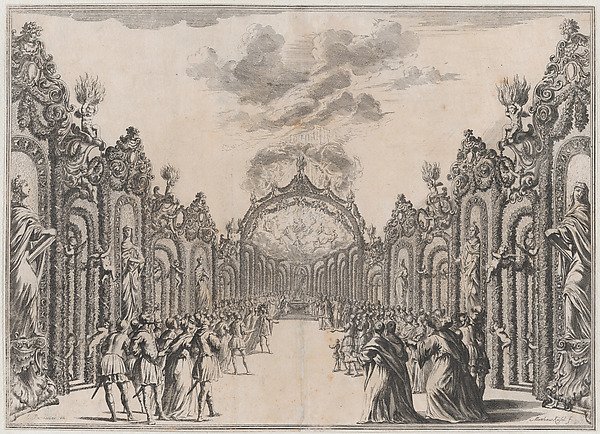
A sacrifice to the Olympian gods taking place at the end of a path lined with statues and foliage; set design from 'Il Fuoco Eterno'
Mathäus Küsel, after Ludovico Ottaviano Burnacini
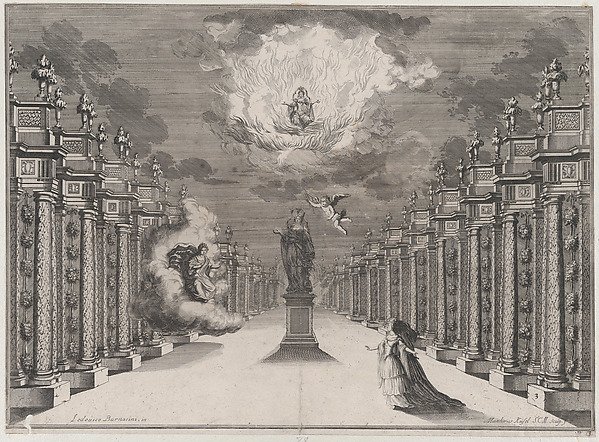
A woman standing on the right side of a road lined with columns; at center a statue of a female with cupid flying nearby; to the left, a woman emerging from the clouds as another sits among flames above; set design from 'Il Fuoco Eterno'
Mathäus Küsel, after Ludovico Ottaviano Burnacini
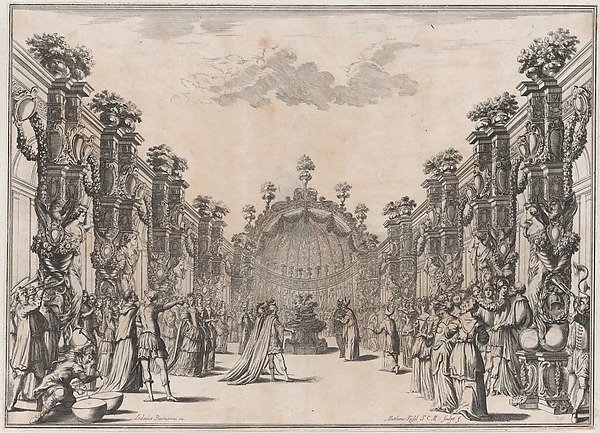
A large group gathered in a courtyard before a domed structure; musicians play at left; set design from 'Il Fuoco Eterno'
Mathäus Küsel, after Ludovico Ottaviano Burnacini
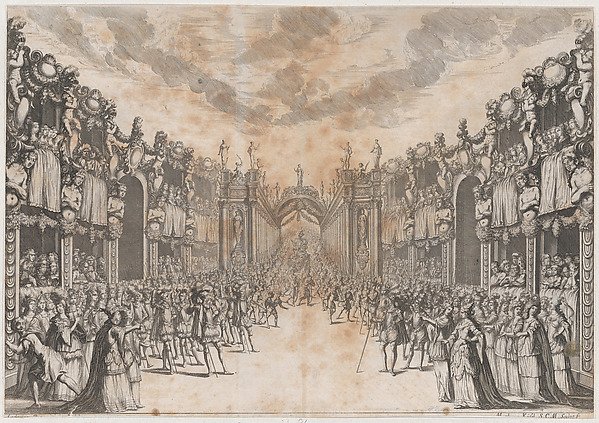
Men and women gathererd in the street to view the entrance of a royal figure, who is carried into the city on a throne; set design from 'La Monarchia Latina Trionfante'
Mathäus Küsel, after Ludovico Ottaviano Burnacini
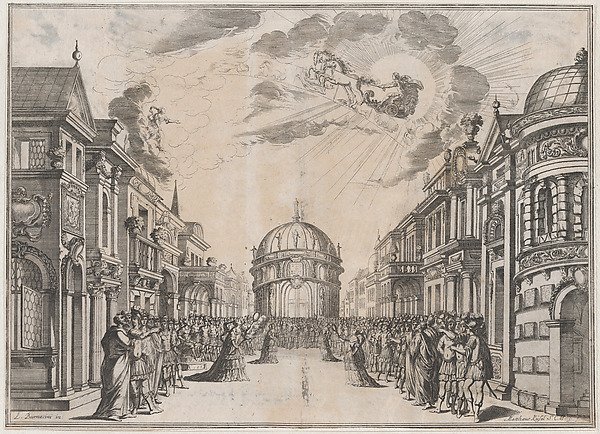
A large gathering of people in the street as a goddess races across the sky in a chariot led by four horses; set design from 'Il Fuoco Eterno'
Mathäus Küsel, after Ludovico Ottaviano Burnacini
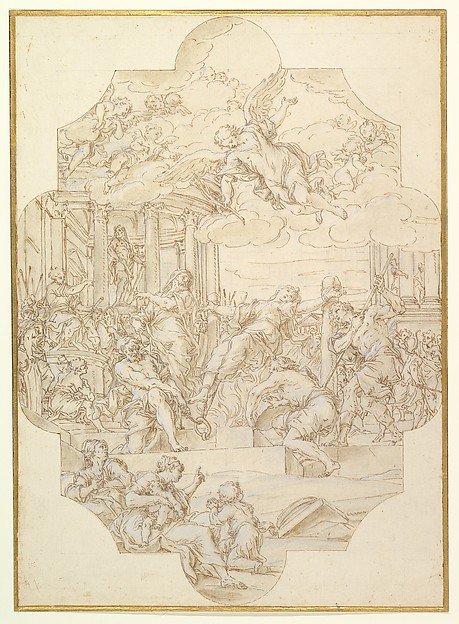
The Martyrdom of Saint Anastasia
Michelangelo Cerruti ("Il Candelottaro")
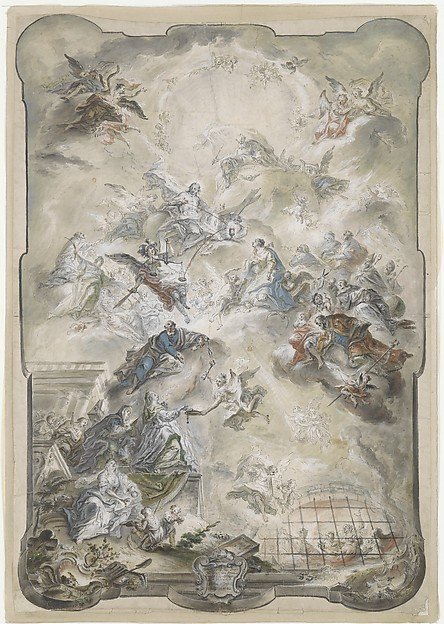
Design for a Wall Panel or Ceiling with The Virgin and Saints Interceding before Christ for the Souls of the Lost
Johann Baptist Enderle
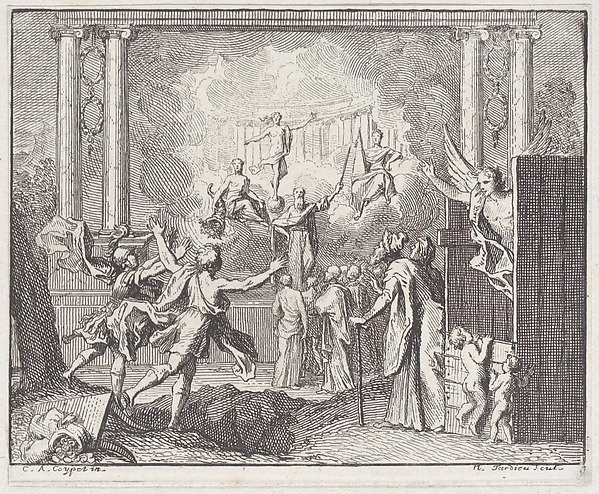
Book 5, Fable 14: the present and the future (Le present et l'avenir), from "Fables Nouvelles"
Nicolas Henry Tardieu, After Charles Antoine Coypel, Jean de La Fontaine, Lamotte-Houdar
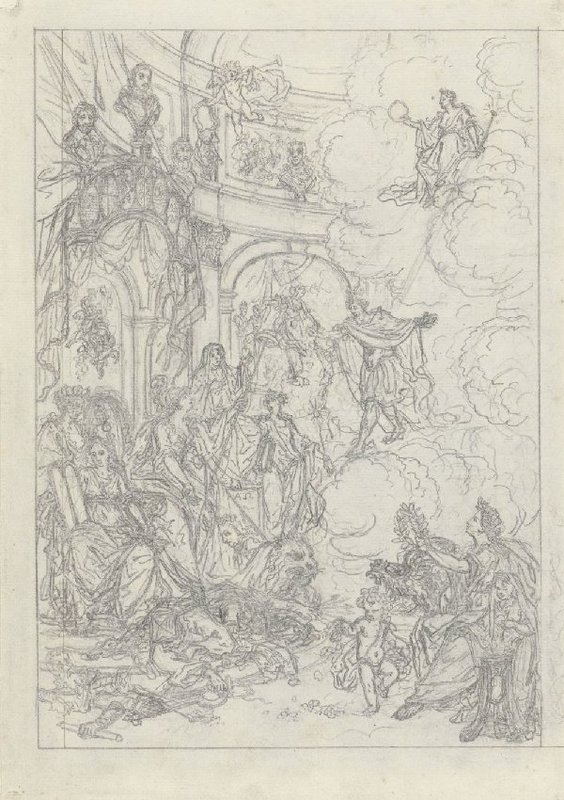
Allegorie op het jubileum van Nederlands Vrijheid, 1648-1748
Simon Fokke