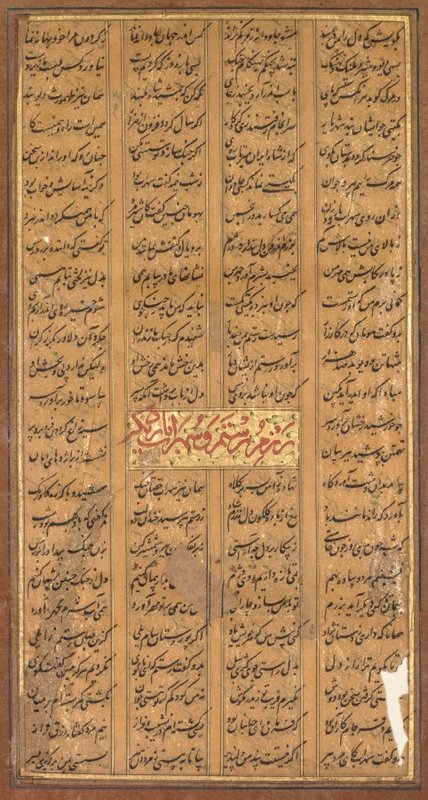
Text of Rustam and Suhrab, from the Shah-nama of Firdausi (Persian, c. 934–1020) (verso)
India, Bijapur, Deccan
2013.283.2.b
About this artwork
Similar artworks
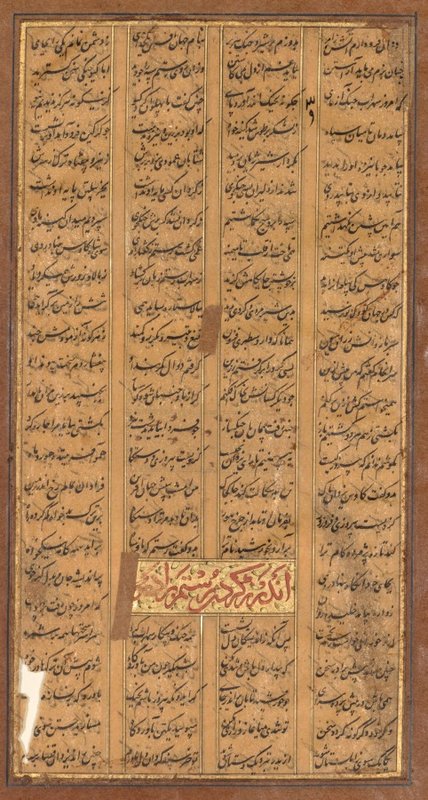
Text of Rustam and Suhrab, from the Shah-nama of Firdausi (Persian, c. 934–1020) (recto)
India, Bijapur, Deccan
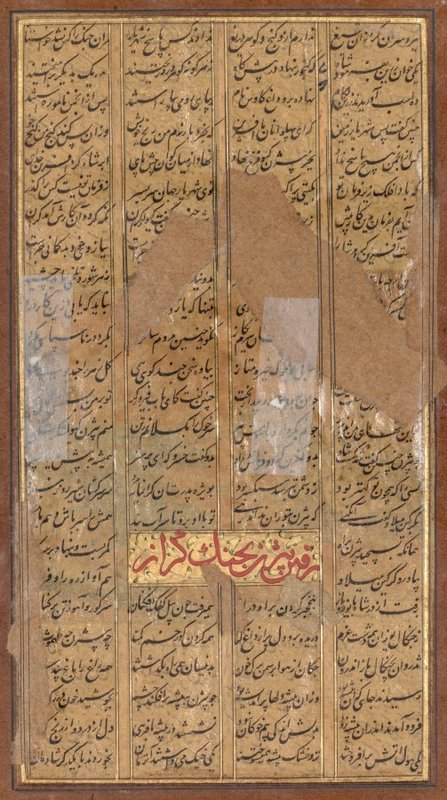
Bijan killing the wild boars of Irman, from a Shah-nama (Book of Kings) of Firdausi (Persian, about 934–1020), (recto)
India, Bijapur, Deccan
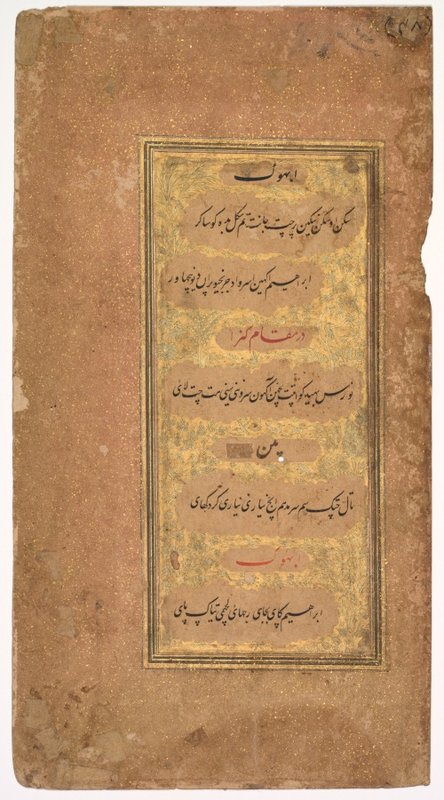
From Dohras (Songs) 40 and 42 from the Kitab-i Nauras (Book of Nine Essences) of Sultan Ibrahim Adil Shah II of Bijapur (r. 1580–1627) (recto)
Khalilullah Butshikan
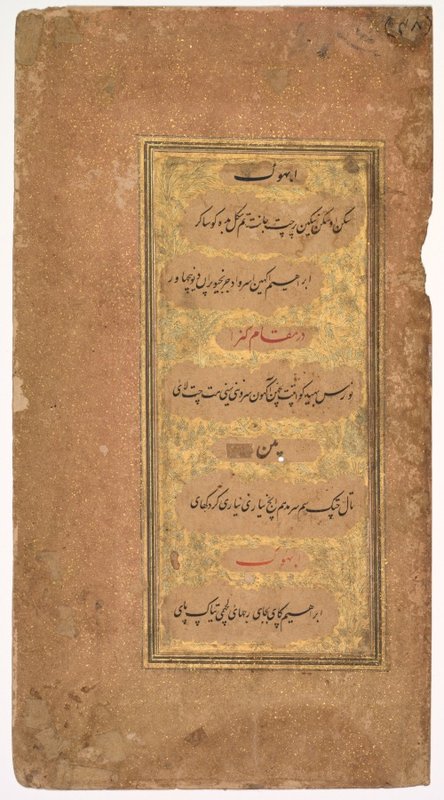
From Dohras (Songs) 40 and 42 from the Kitab-i Nauras (Book of Nine Essences) of Sultan Ibrahim Adil Shah II of Bijapur (r. 1580–1627); verso: From Dohras (Songs) 40 and 36 from the Kitab-i Nauras of Sultan Ibrahim Adil Shah II
Khalilullah Butshikan
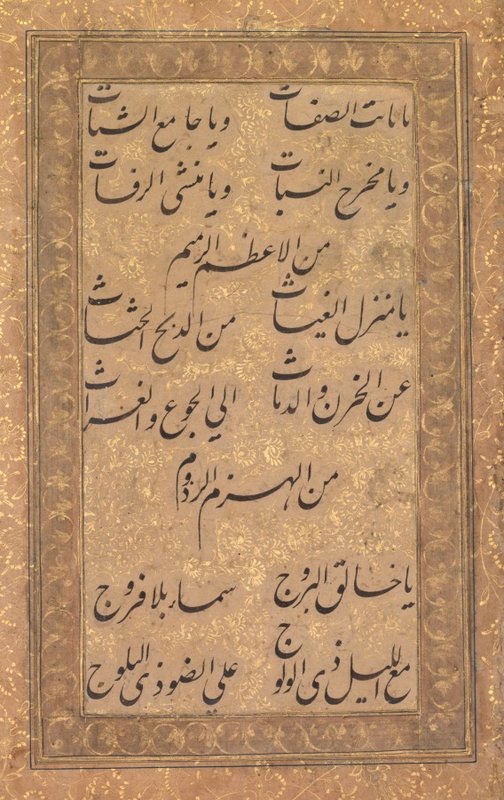
Calligraphy of a Pious Invocation in Rhyme (verso)
India, Mughal, 16th century
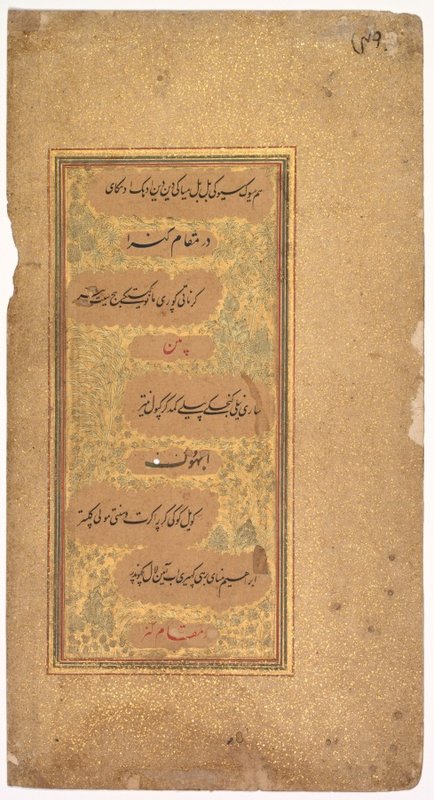
From Dohras (Songs) 40 and 36 from the Kitab-i Nauras of Sultan Ibrahim Adil Shah II (verso)
Khalilullah Butshikan
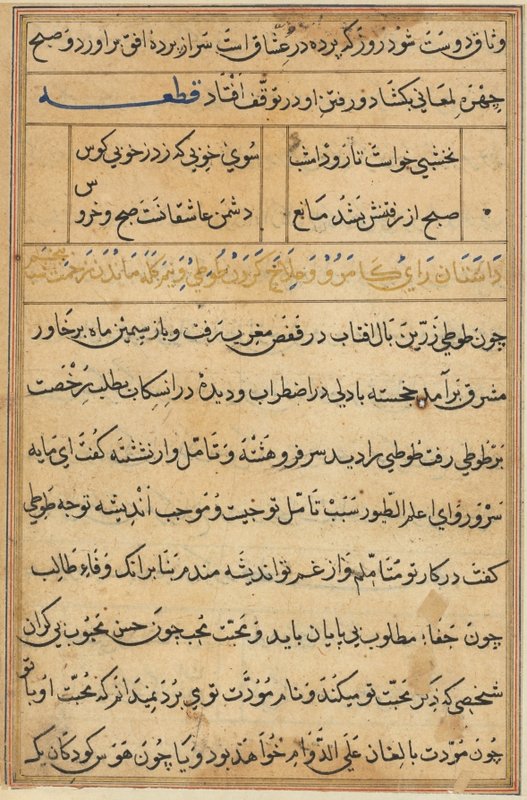
Page from Tales of a Parrot (Tuti-nama): text page
Mughal India, court of Akbar (reigned 1556–1605)
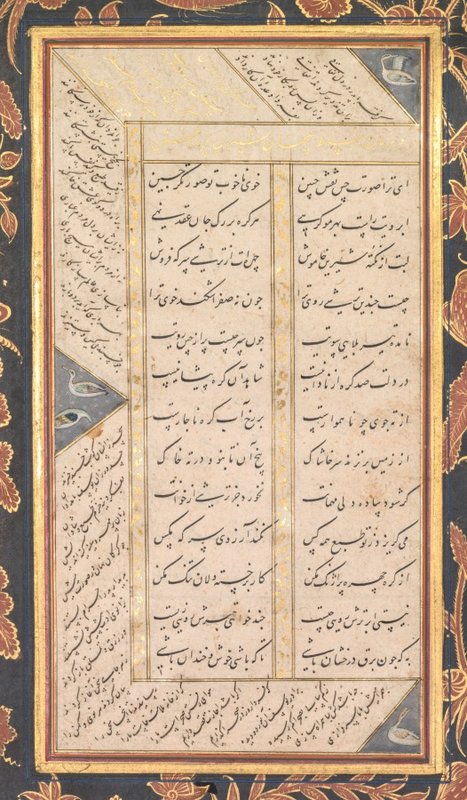
Folio B: Folio from the "Five Treasures" (Panj Ganj) of Jami (recto)
Mushfiq, others
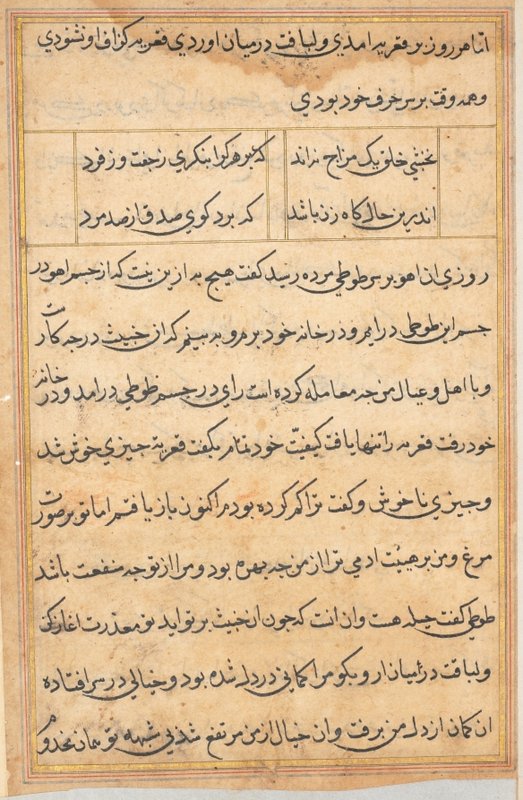
Page from Tales of a Parrot (Tuti-nama): text page
Mughal India, court of Akbar (reigned 1556–1605)
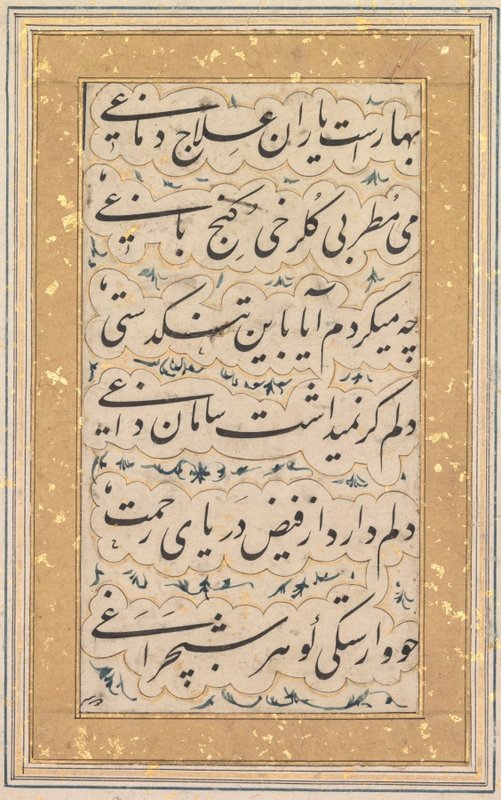
Calligraphy (verso)
India, Deccan, 17th century
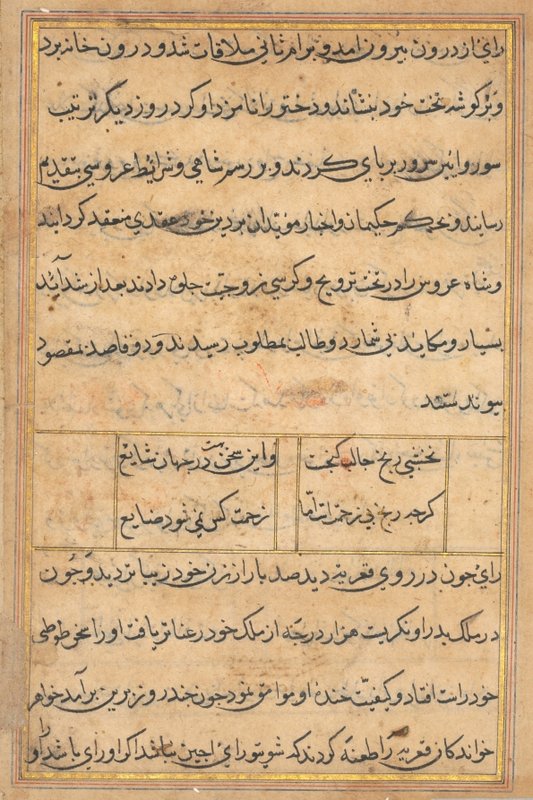
Page from Tales of a Parrot (Tuti-nama): text page
Mughal India, court of Akbar (reigned 1556–1605)
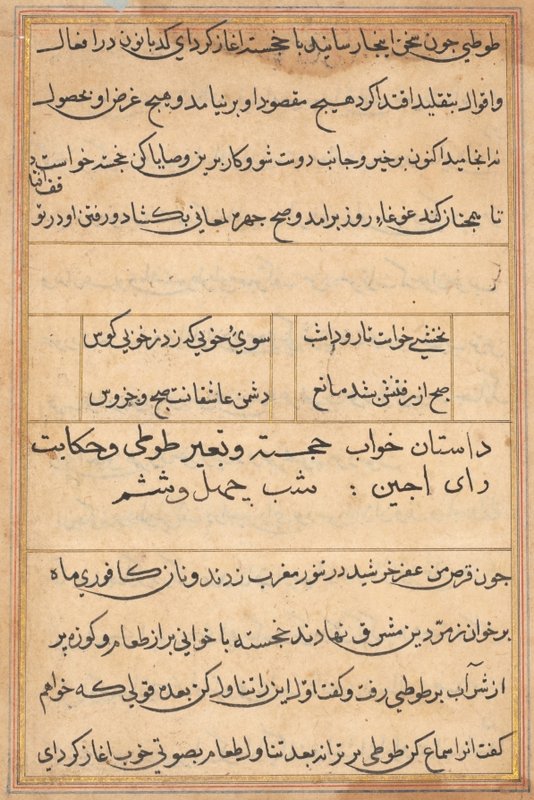
Page from Tales of a Parrot (Tuti-nama): text page
Mughal India, court of Akbar (reigned 1556–1605)