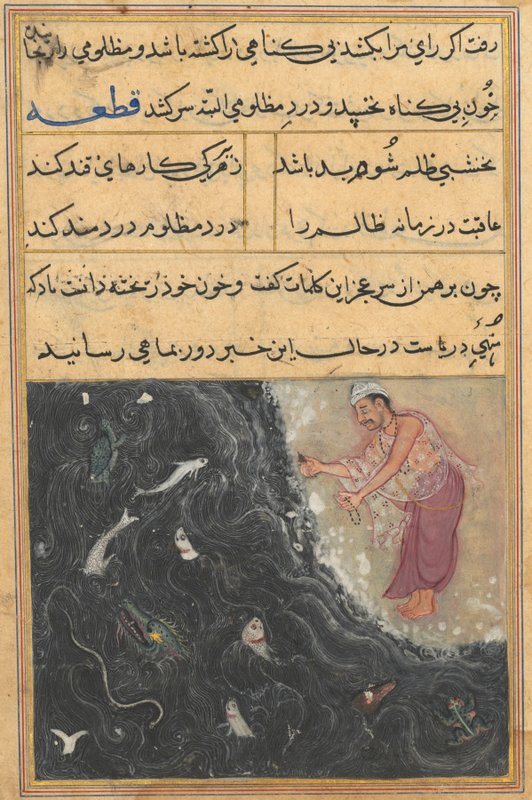
The Brahman’s predicament is conveyed by the wind to the fish who carries the news to the king of the Ocean, from a Tuti-nama (Tales of a Parrot): Eleventh Night
Mughal India, court of Akbar (reigned 1556–1605)
1962.279.89.a
About this artwork
Similar artworks
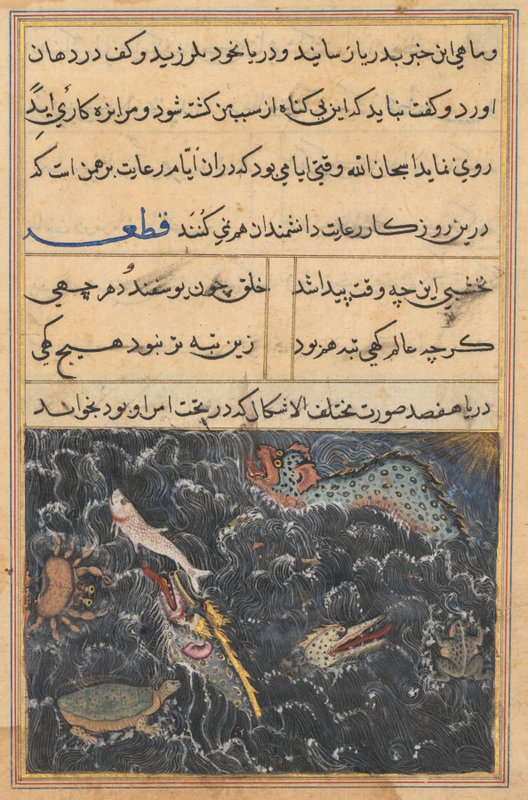
The creatures of the sea are asked by the king of the Ocean to take a message to the Brahman, from a Tuti-nama (Tales of a Parrot): Eleventh Night
Mughal India, court of Akbar (reigned 1556–1605)
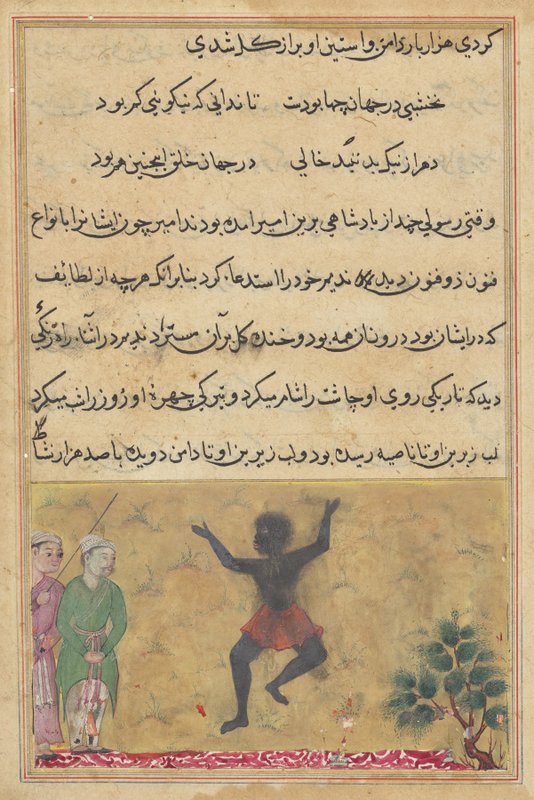
The court jester meets a Zangi dancing with joy, and learns from him that the cause of his happiness is his assignation with a woman who is the jester’s own wife, from a Tuti-nama (Tales of a Parrot): Twenty-second Night
Mughal India, court of Akbar (reigned 1556–1605)
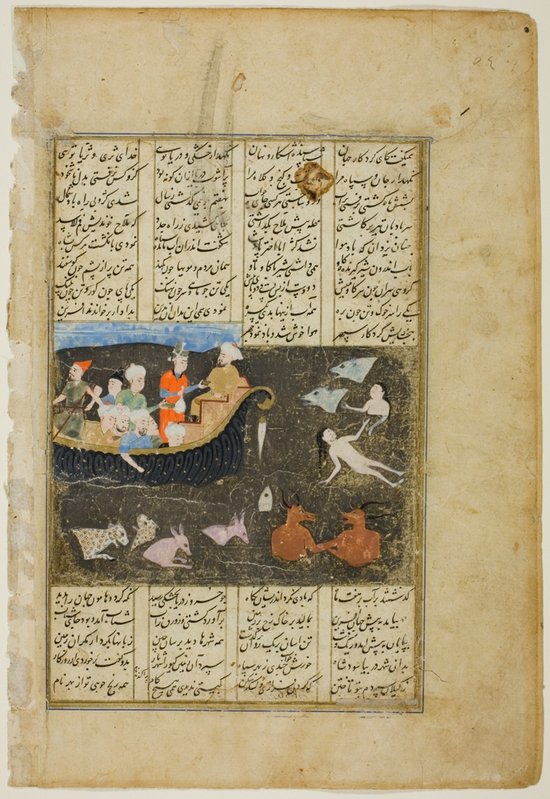
Kay Khosrow Crosses the Sea of Zareh on His Way to China, a scene from the Shahnama of Firdausi
Unknown Artist
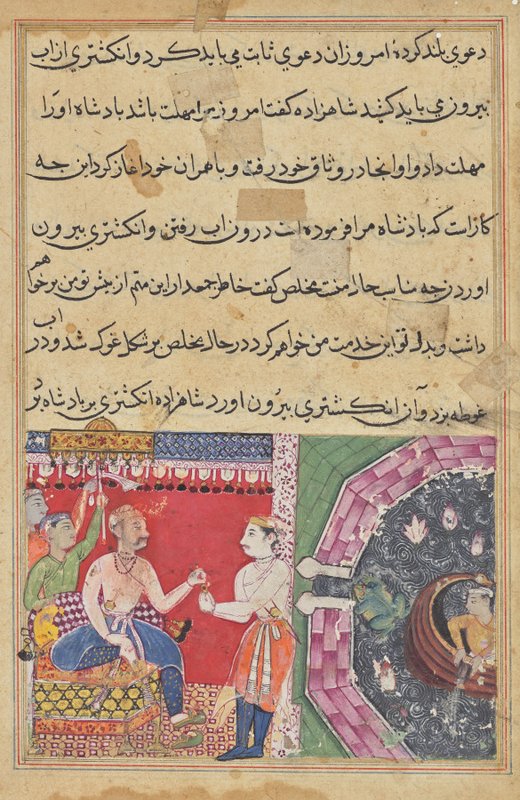
The prince, with the help of Mukhlis who changes into a frog, recovers the ring lost in the sea, and returns it to the king, from a Tuti-nama (Tales of a Parrot): Eighteenth Night
Mughal India, court of Akbar (reigned 1556–1605)
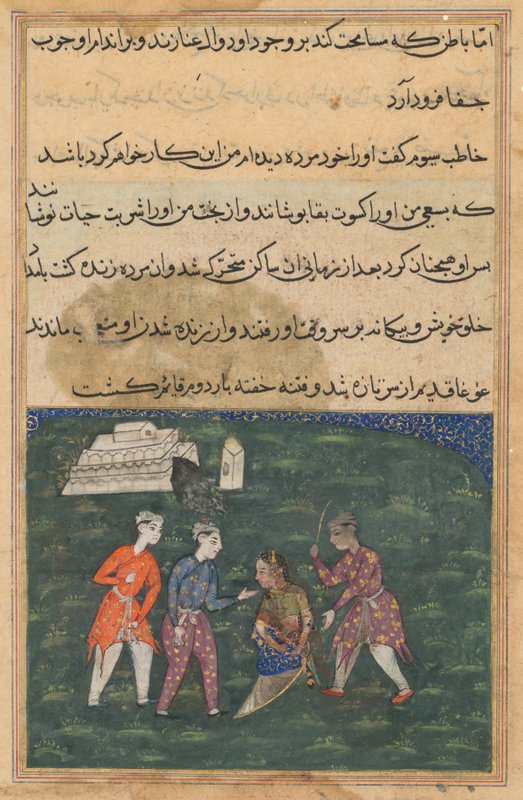
The third suitor strikes the devotee’s daughter and thus restores her to life, from a Tuti-nama (Tales of a Parrot): Twentieth Night
Mughal India, court of Akbar (reigned 1556–1605)
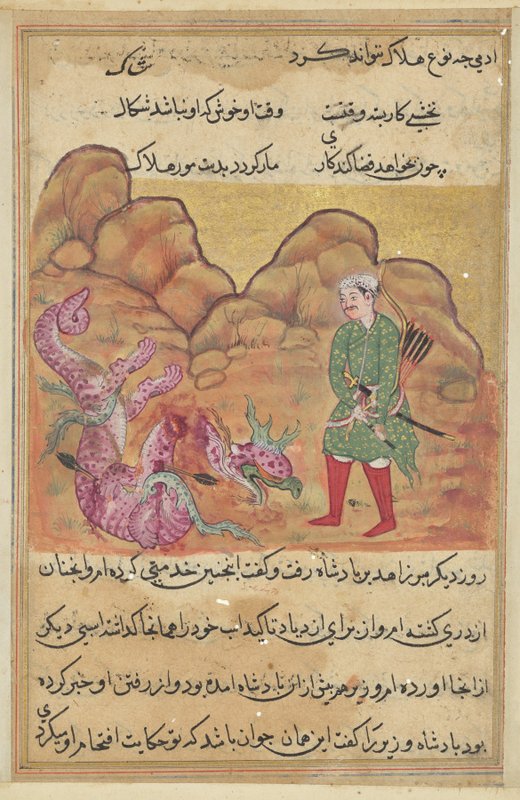
The son of the pious man slays the dragon, from a Tuti-nama (Tales of a Parrot): Fifty-second Night
Mughal India, court of Akbar (reigned 1556–1605)
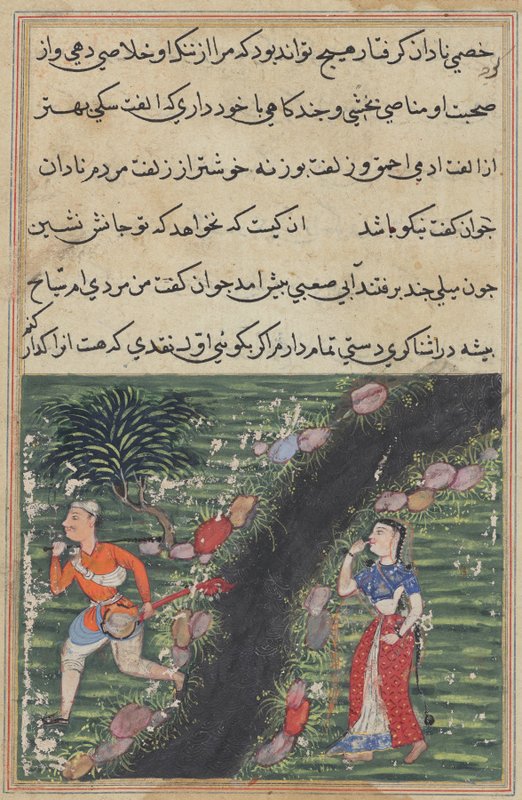
The vagabond crosses a stream with the possessions of the daughter-in-law of the king of Banaras and absconds, from a Tuti-nama (Tales of a Parrot): Sixteenth Night
Mughal India, court of Akbar (reigned 1556–1605)
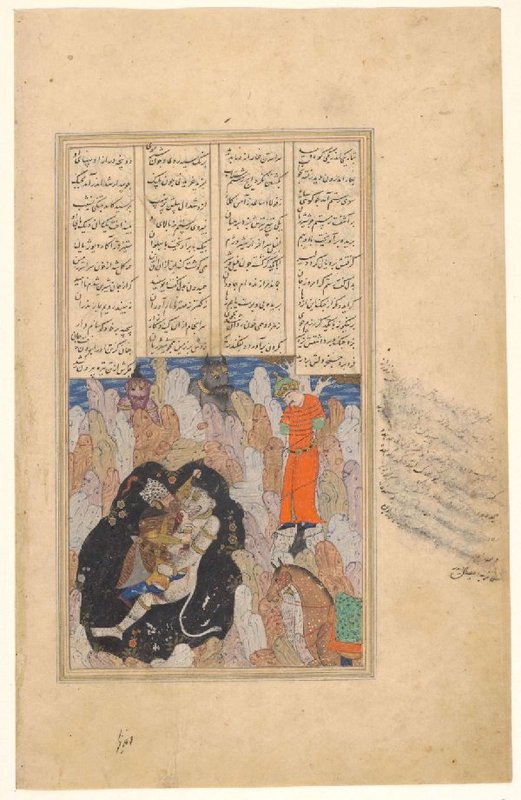
Rustan en demon
anonymous
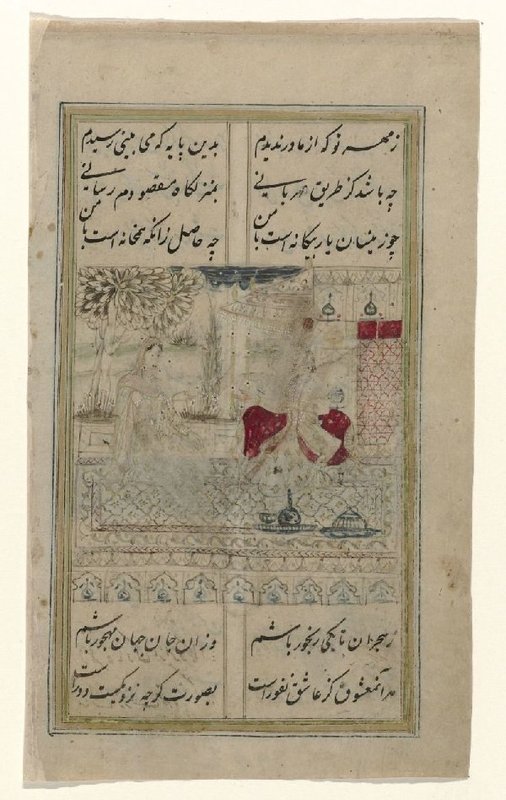
Paar onder een baldakijn voor een paleis
anonymous
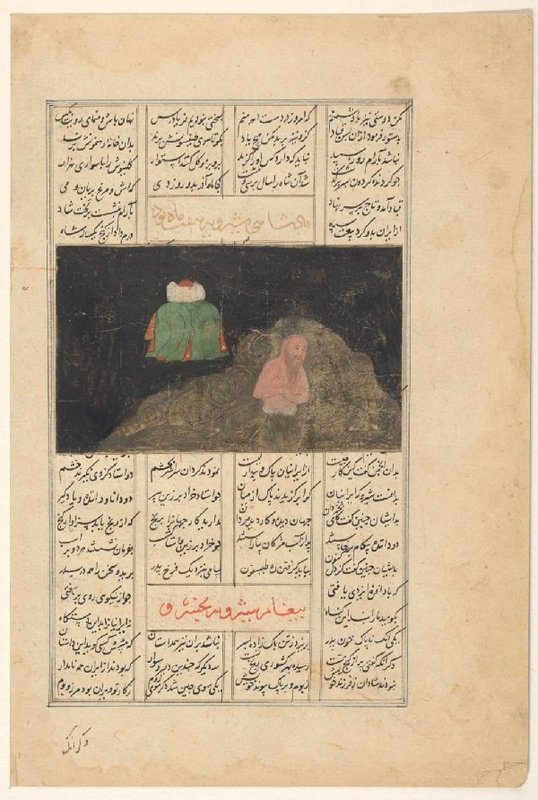
Zelfmoord van de Kai Kusran
anonymous
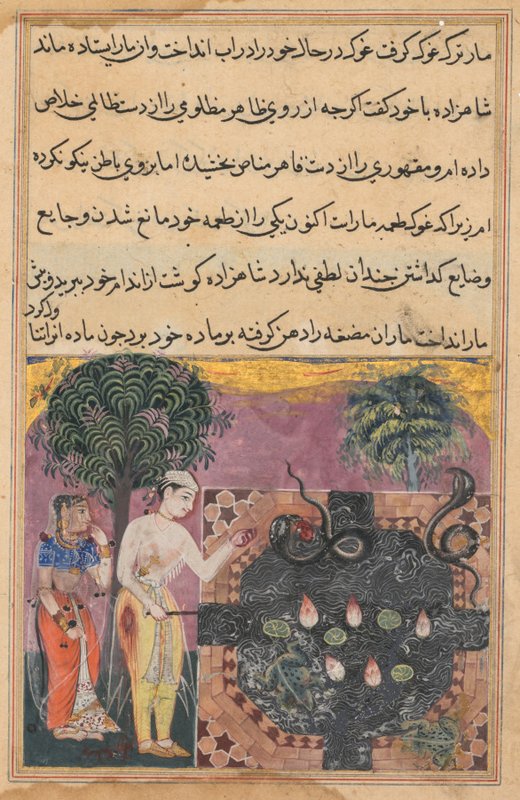
The prince, having deprived the snake of its natural food, a frog, feeds it with a piece of his own flesh, from a Tuti-nama (Tales of a Parrot): Eighteenth Night
Mughal India, court of Akbar (reigned 1556–1605)
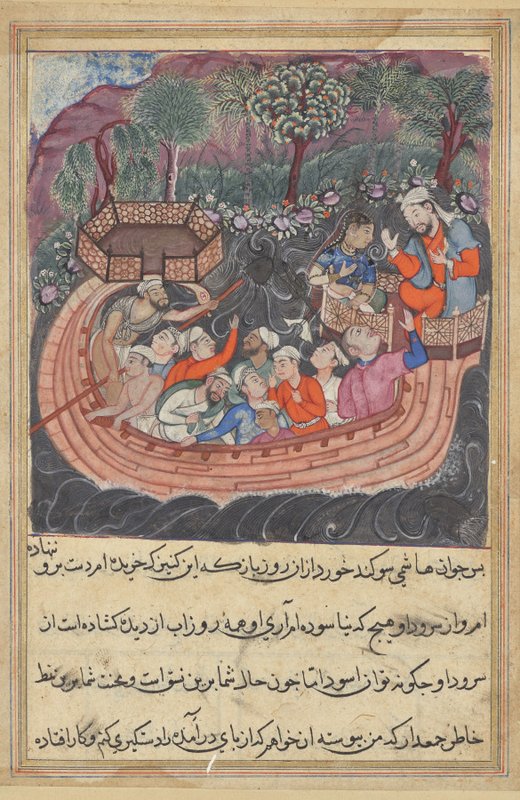
The young man of Baghdad reveals his true identity to the Hashimi, from a Tuti-nama (Tales of a Parrot: Forty-eighth Night
Mughal India, court of Akbar (reigned 1556–1605)