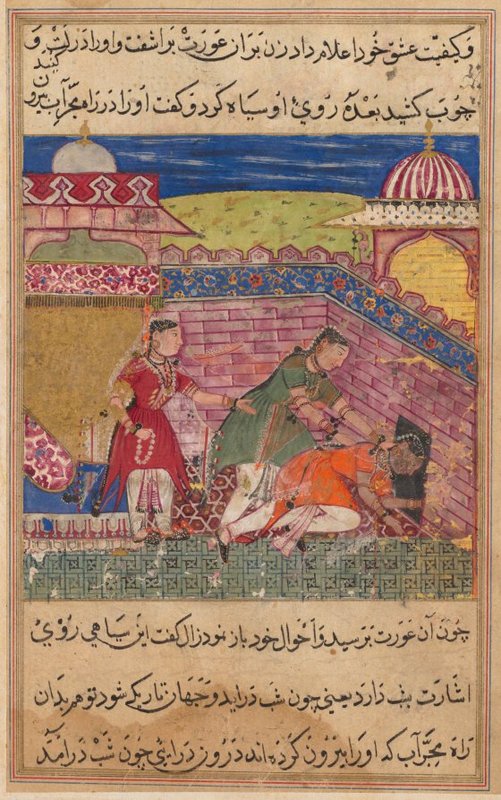
The deceitful wife ejects the procuress after blackening her face, from a Tuti-nama (Tales of a Parrot): Eighth Night
Shravana
1962.279.67.b
About this artwork
Similar artworks
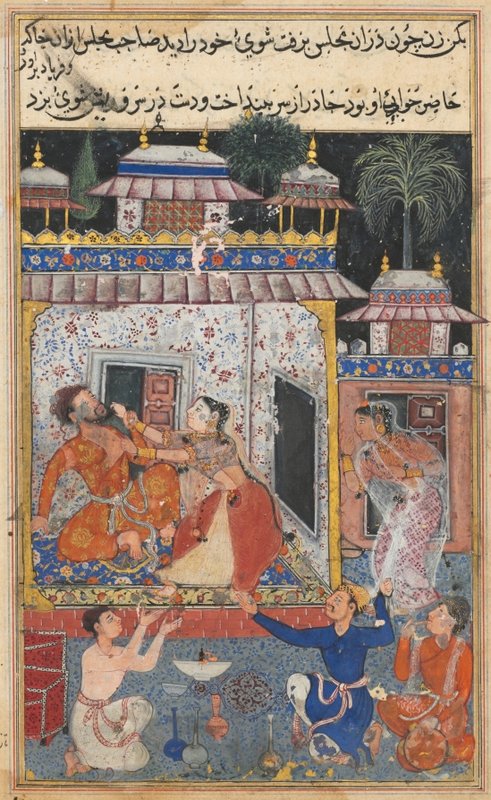
The deceitful wife assaults her erring husband, from a Tuti-nama (Tales of a Parrot): Eighth Night
Tara 1
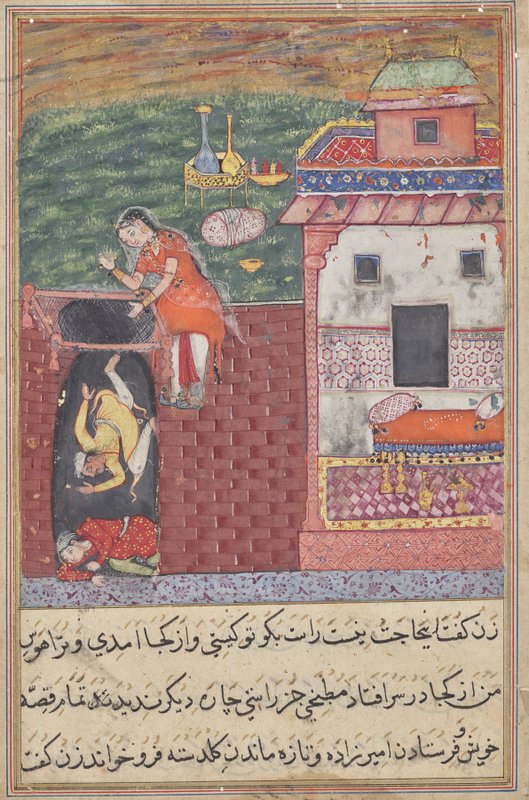
The two cooks, who attempt to seduce the warrior’s loyal wife, are trapped by her in a cellar, from a Tuti-nama (Tales of a Parrot): Fourth Night
Mughal India, court of Akbar (reigned 1556–1605)
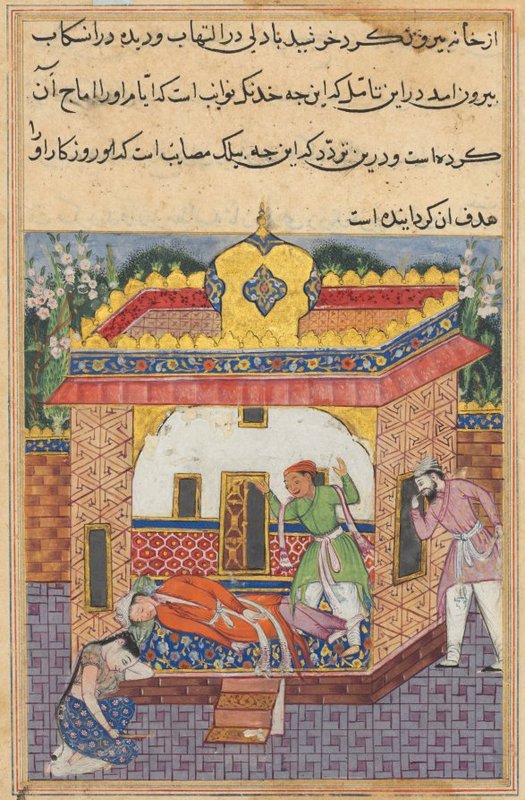
Latif, who has murdered his brother, falsely accuses Khurshid of the deed, from a Tuti-nama (Tales of a Parrot): Thirty-second Night
Mughal India, court of Akbar (reigned 1556–1605)
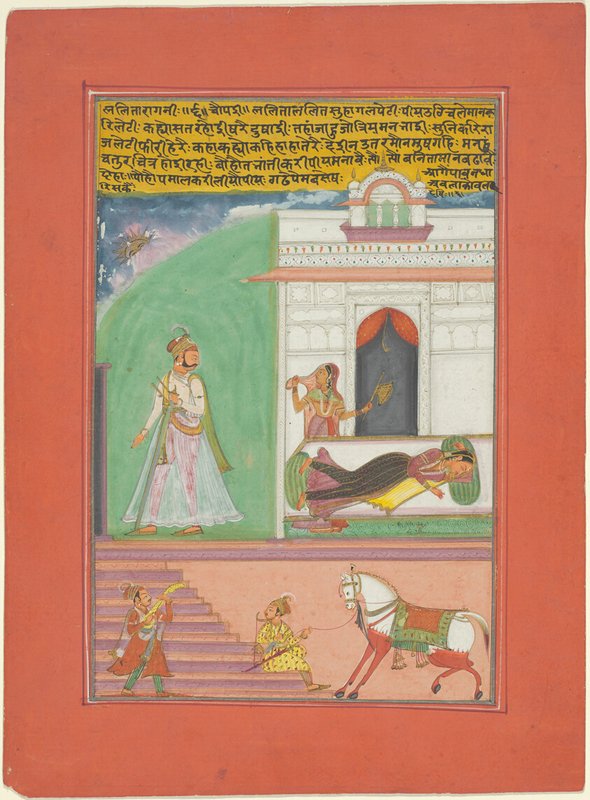
Lalita Ragini, Page from a Jaipur Ragamala Set
Unknown Artist
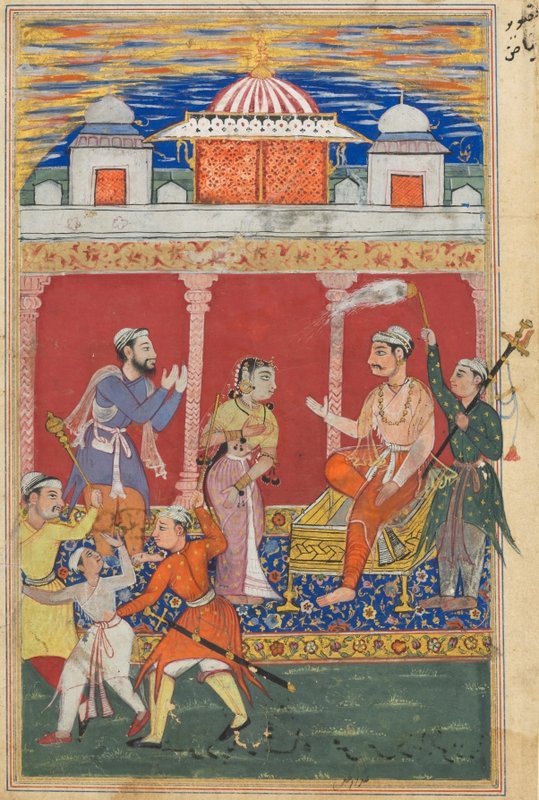
The prince’s ordeal continues, he is ordered away to be executed for the fifth time, from a Tuti-nama (Tales of a Parrot): Eighth Night
Ghulam 'Ali
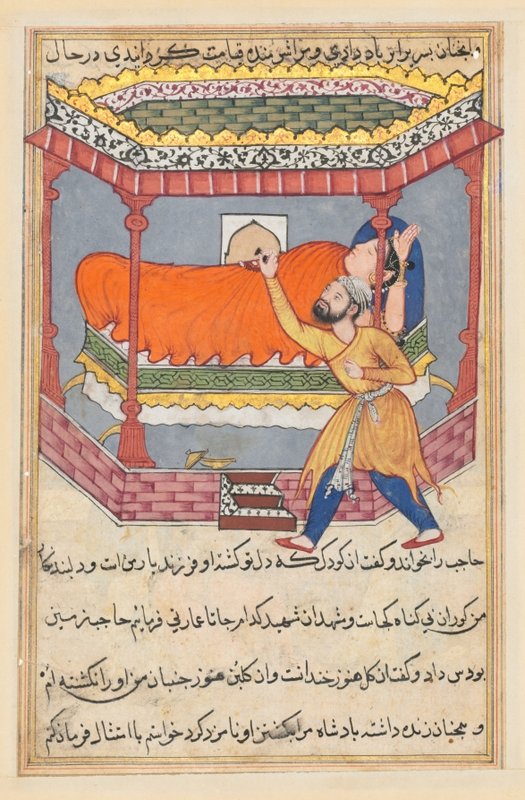
The king places the talisman on his sleeping wife, from a Tuti-nama (Tales of a Parrot): Fiftieth Night
Mughal India, court of Akbar (reigned 1556–1605)
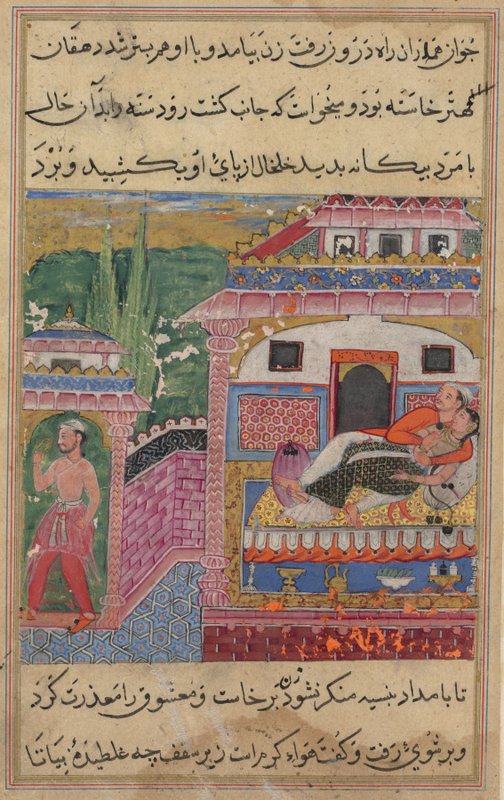
The farmer, father of the son with the deceitful wife, steals away with her anklet while she is in bed with her lover, from a Tuti-nama (Tales of a Parrot): Eighth Night
Mughal India, court of Akbar (reigned 1556–1605)
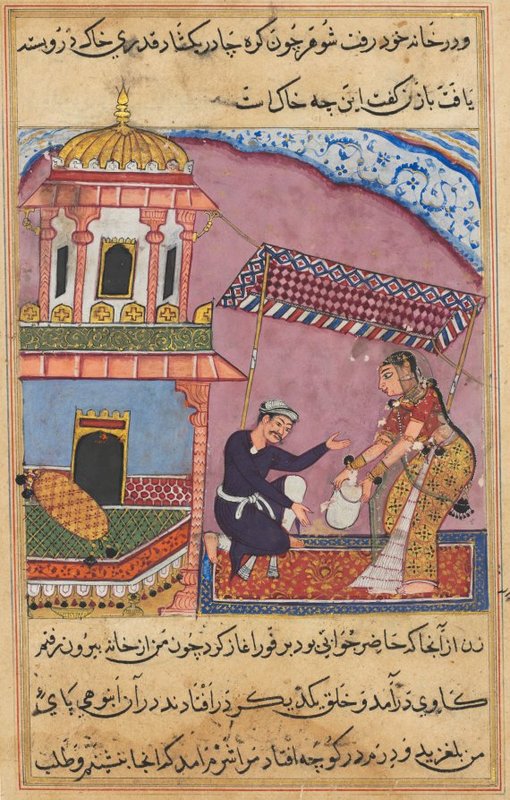
The husband berates his wife for purchasing gravel instead of sugar, from a Tuti-nama (Tales of a Parrot): Eighth Night
Mughal India, court of Akbar (reigned 1556–1605)
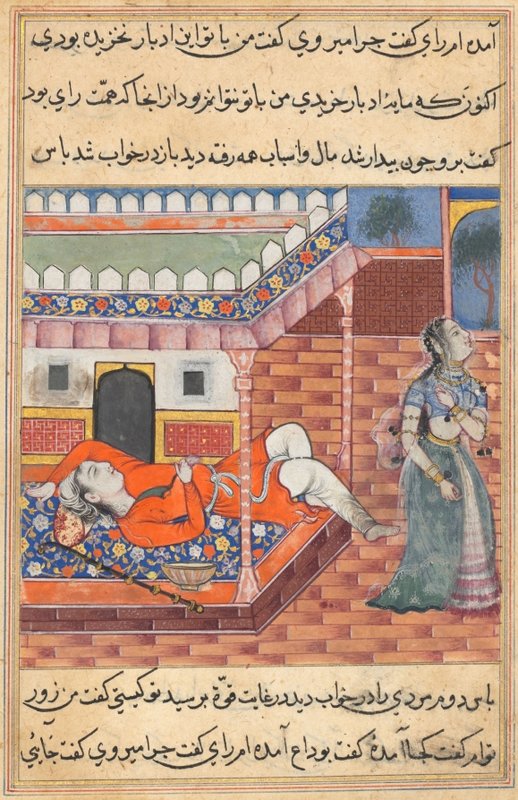
The king dreams of a lady, the personification of wealth, departing from him on account of his purchasing a bowl and a staff from a yogi, from a Tuti-nama (Tales of a Parrot): Thirty-sixth Night
Mughal India, court of Akbar (reigned 1556–1605)
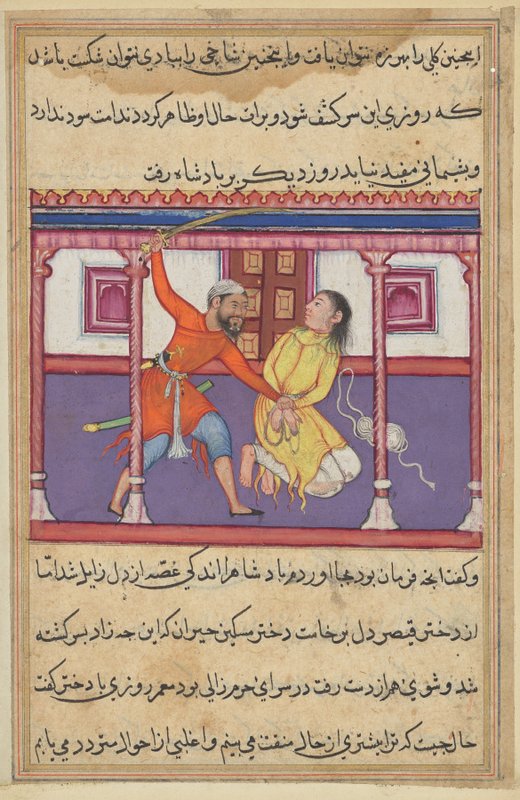
The guard spares the life of the slave when he learns that he is the son of the princess of the Rum, from a Tuti-nama (Tales of a Parrot): Fiftieth Night
Mughal India, court of Akbar (reigned 1556–1605)
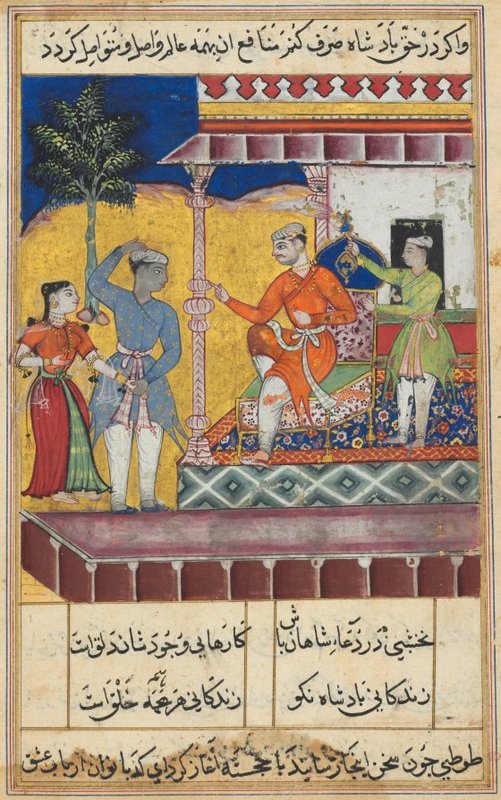
The rejuvenated old man and the daughter of the king of the jinns take leave of the King of Kings, from a Tuti-nama (Tales of a Parrot): Seventh Night
Mughal India, court of Akbar (reigned 1556–1605)
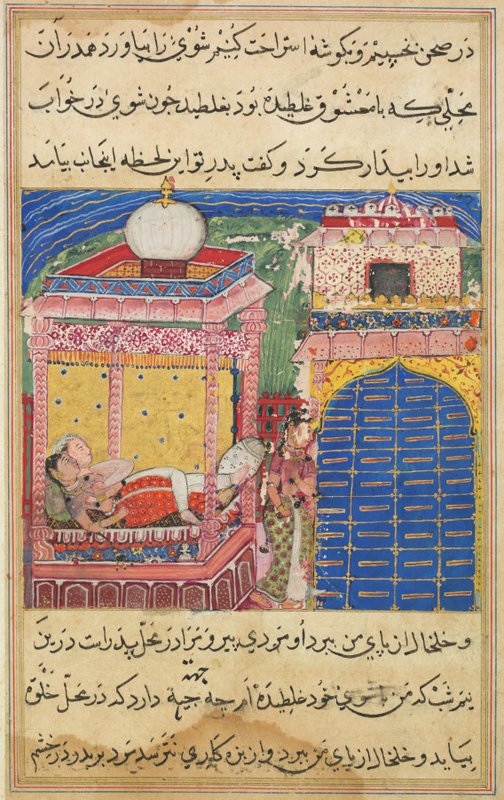
The deceitful wife persuades her husband to sleep in the same place where she had previously slept with her lover, from a Tuti-nama (Tales of a Parrot): Eighth Night
Mughal India, court of Akbar (reigned 1556–1605)