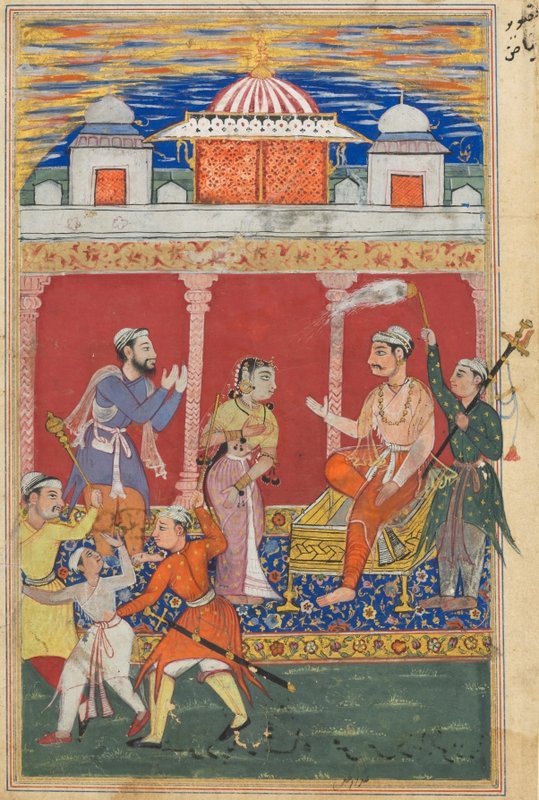
The prince’s ordeal continues, he is ordered away to be executed for the fifth time, from a Tuti-nama (Tales of a Parrot): Eighth Night
Ghulam 'Ali
1962.279.66.a
About this artwork
Similar artworks
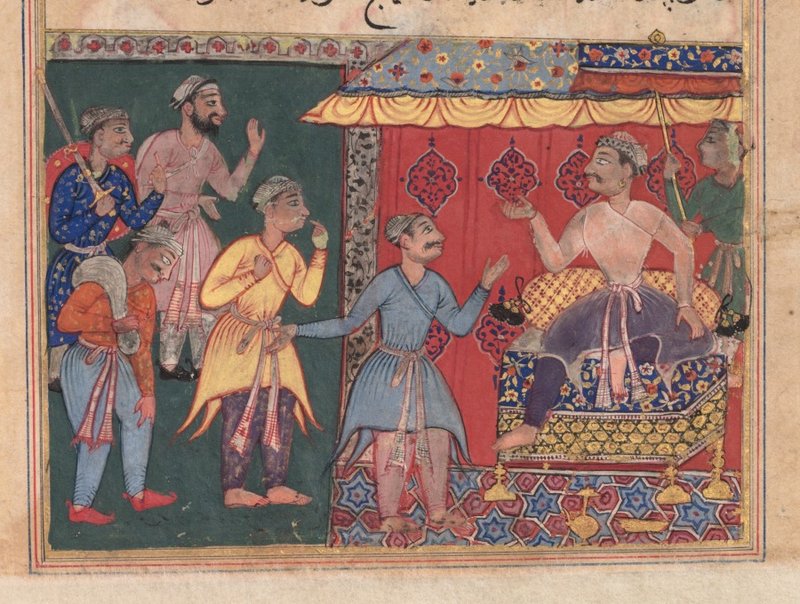
King Bhojaraja tries in vain to ascertain the whereabouts of the pearl from the four travelling companions, from a Tuti-nama (Tales of a Parrot): Twelfth Night
Mughal India, court of Akbar (reigned 1556–1605)
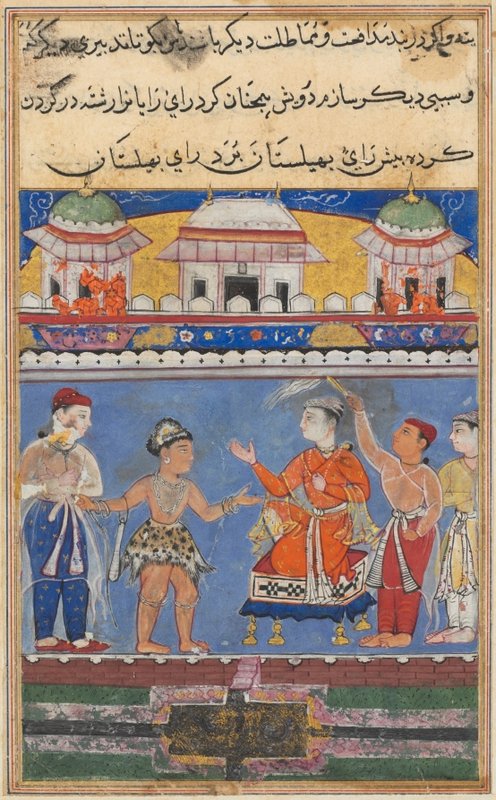
The dervish brings the King of Kings before the king of Bahilistan, from a Tuti-nama (Tales of a Parrot): Seventh Night
Mughal India, court of Akbar (reigned 1556–1605)
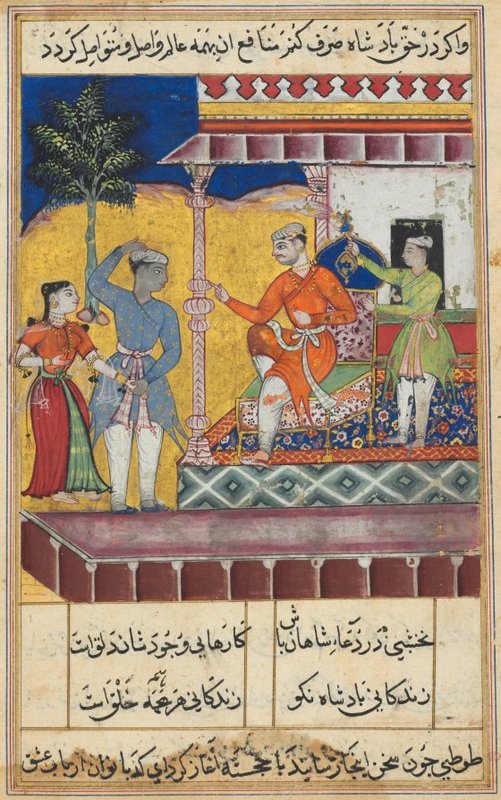
The rejuvenated old man and the daughter of the king of the jinns take leave of the King of Kings, from a Tuti-nama (Tales of a Parrot): Seventh Night
Mughal India, court of Akbar (reigned 1556–1605)
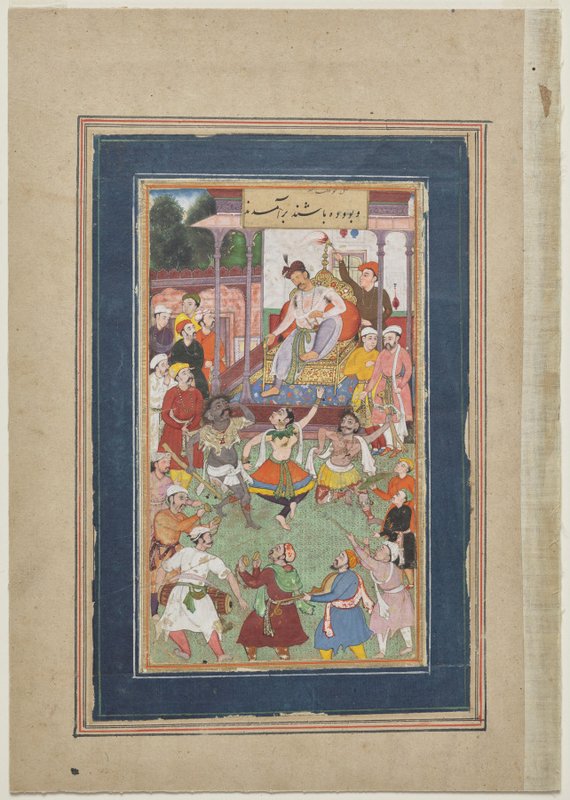
Grotesque Dancers Performing
Mughal India
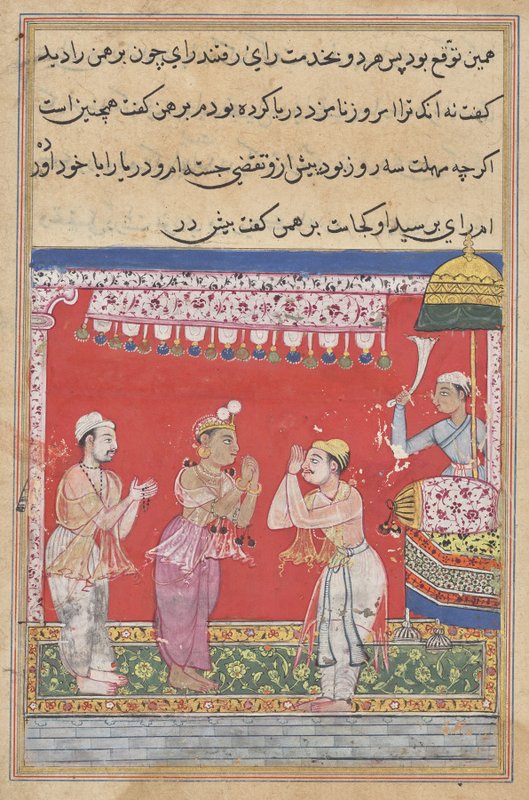
The king of the Ocean, having assumed human form, arrives at the court of the Raja, from a Tuti-nama (Tales of a Parrot): Eleventh Night
Ghulam 'Ali
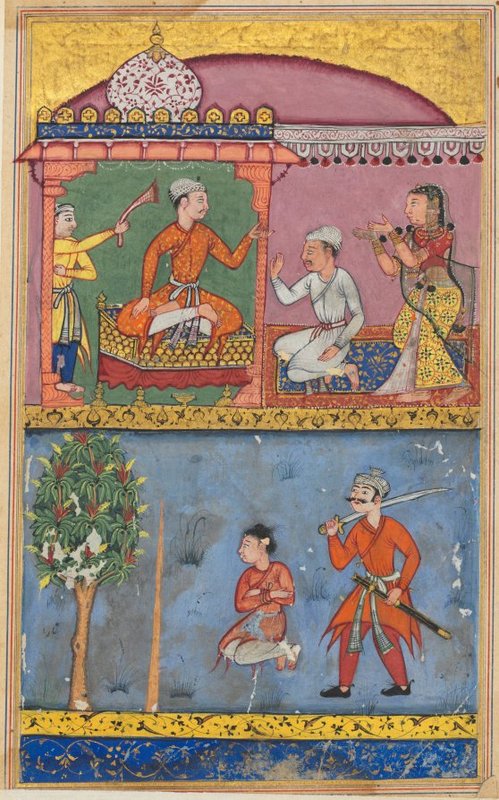
The handmaiden appeals for justice and the prince is taken to the execution site for the fourth time, from a Tuti-nama (Tales of a Parrot): Eighth Night
Tara 2
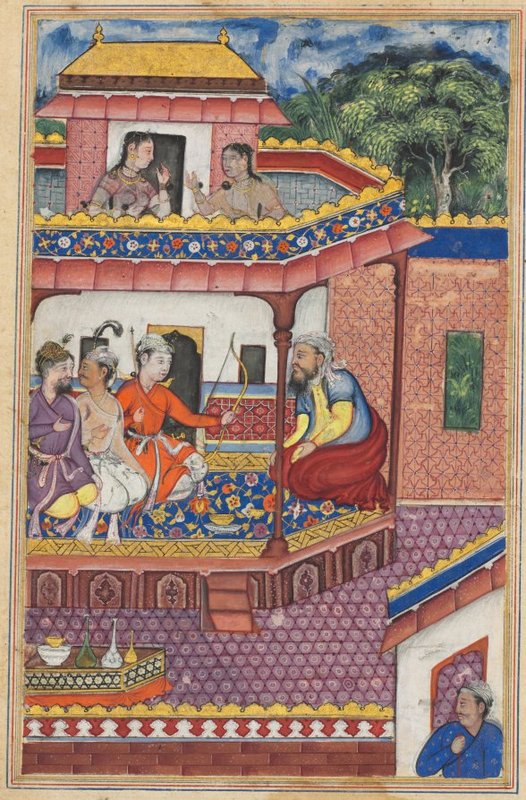
The three young men present themselves as suitors for the hand of Zuhra, the daughter of the merchant of Kabul, from a Tuti-nama (Tales of a Parrot): Thirty-fourth Night
Mughal India, court of Akbar (reigned 1556–1605)
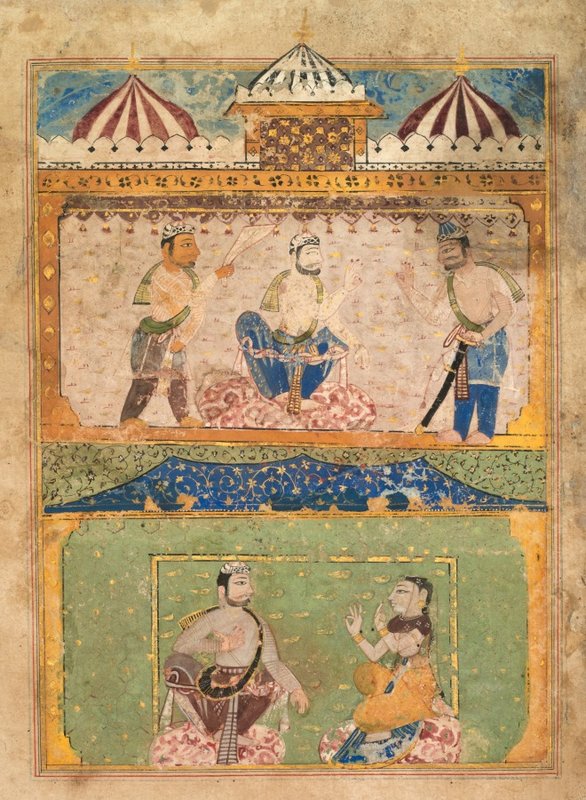
A traveler persuades Lorik to return home (top); Chanda objects (bottom), from a Chandayana (Story of Chanda)
Sultanate India
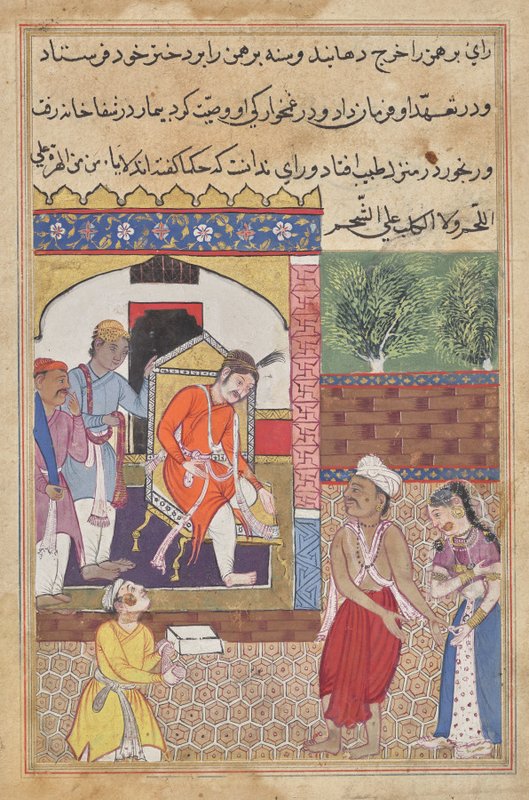
The magician, disguised as a Brahman, visits the king of Babylon, from a Tuti-nama (Tales of a Parrot): Thirty-fifth Night
Mughal India, court of Akbar (reigned 1556–1605)
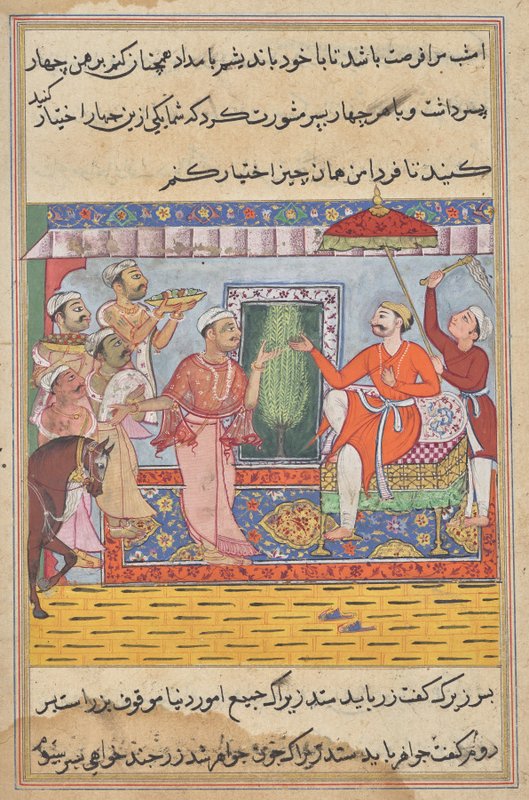
The Brahman, unable to select from the four gifts of the king of the Ocean seeks the Raja’s advice, from a Tuti-nama (Tales of a Parrot): Eleventh Night
Mughal India, court of Akbar (reigned 1556–1605)
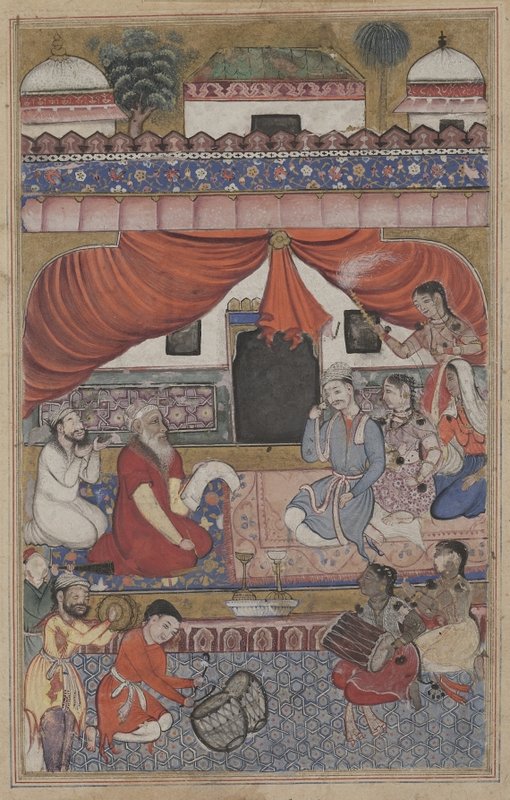
Preparation for the marriage of Mahmuda to the Young Vizier, from a Tuti-nama (Tales of a Parrot): Thirty-third Night
Mughal India, court of Akbar (reigned 1556–1605)
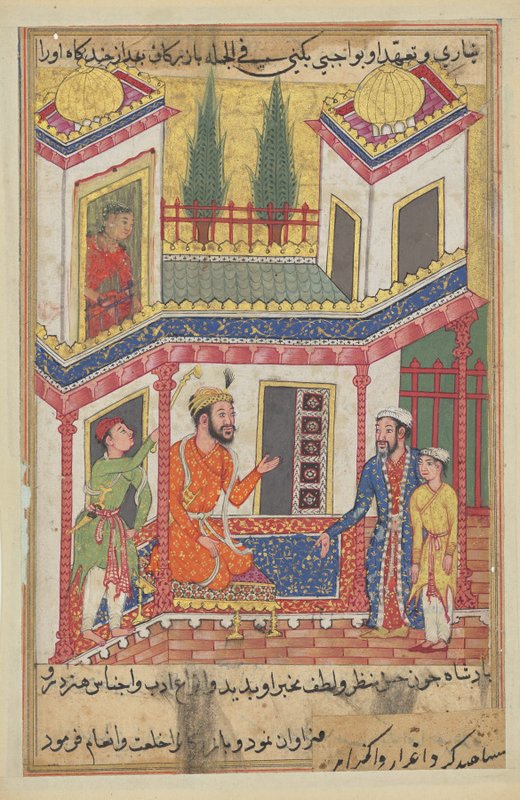
The merchant returns bringing a young slave who is really the son of the princess of Rum, now married to the king, from a Tuti-nama (Tales of a Parrot): Fiftieth Night
Mughal India, court of Akbar (reigned 1556–1605)