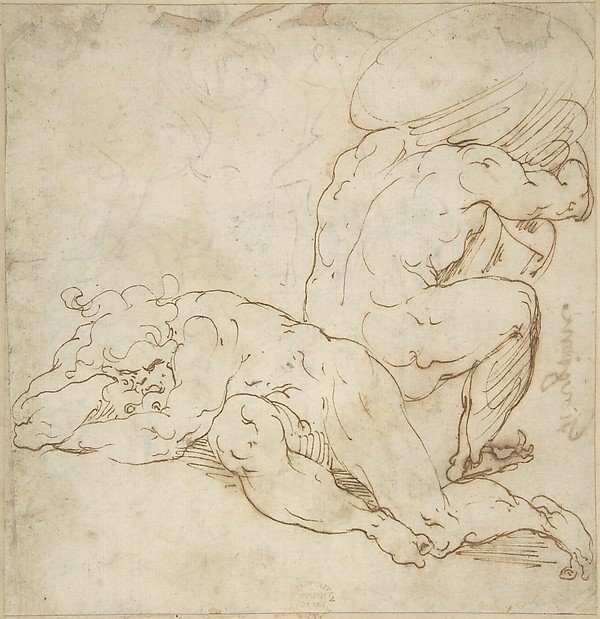
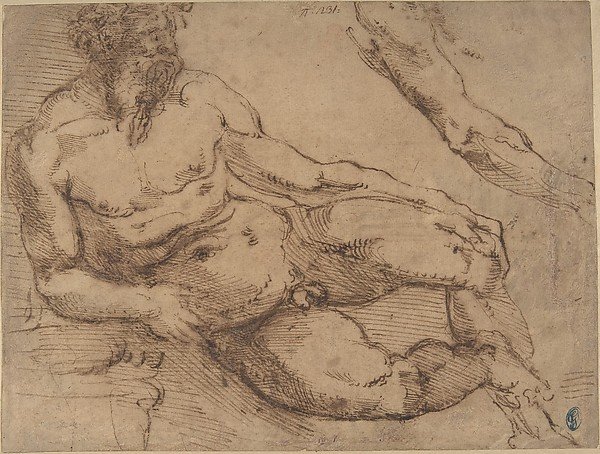
Sisyphus and Tantalus
Anonymous, Italian, 16th century
80.3.288
About this artwork
This work, titled "Sisyphus and Tantalus," is a 16th-century drawing created using pen and brown ink by an anonymous Italian artist active in Central Italy around 1550–1580. The artwork depicts two figures, traditionally associated with punishment in the afterlife: Sisyphus, known for eternally rolling a boulder uphill, and Tantalus, who is tormented by unreachable food and water. Each figure is rendered in a muscular style, showcasing their exertion and suffering through their exaggerated forms and facial expressions. The composition emphasizes their physical struggle, drawing attention to the contrasts between their forms and the space around them. This drawing is part of the tradition of classical themes in Renaissance art, highlighting the enduring human fascination with mythological narratives of punishment and morality.
AI-generated description based on artwork image and available museum metadata
Similar artworks
Ancient Sarcophagus Relief with the Labors of Hercules
Girolamo da Carpi
Amor tugtes
Jacopo Palma (il Giovane)
Sleeping Figure
Unknown artist
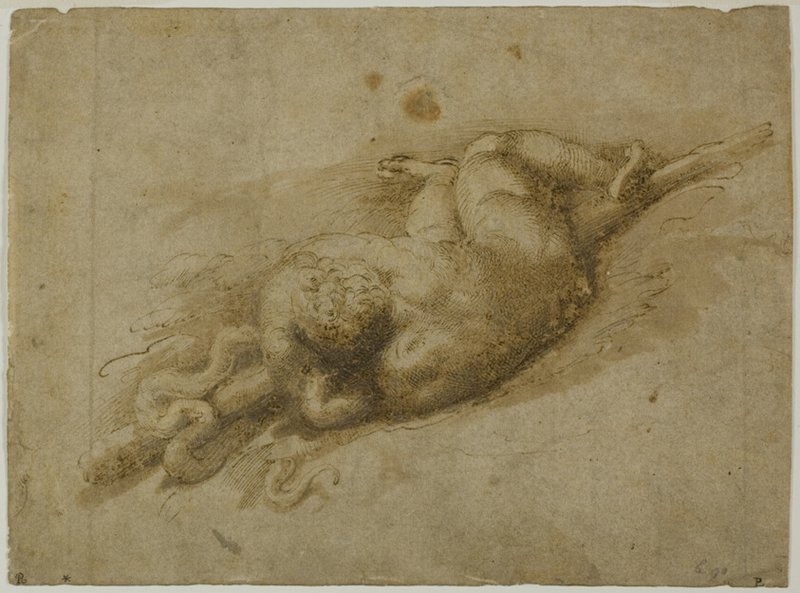
Infant Hercules (recto); Standing Putto with Hand to Chin (verso)
Follower of Parmigianino
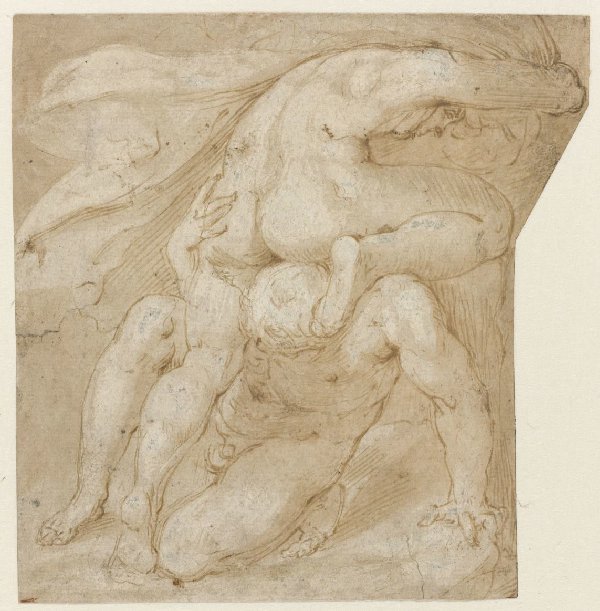
Twee klimmende mannen
Hans Speckaert
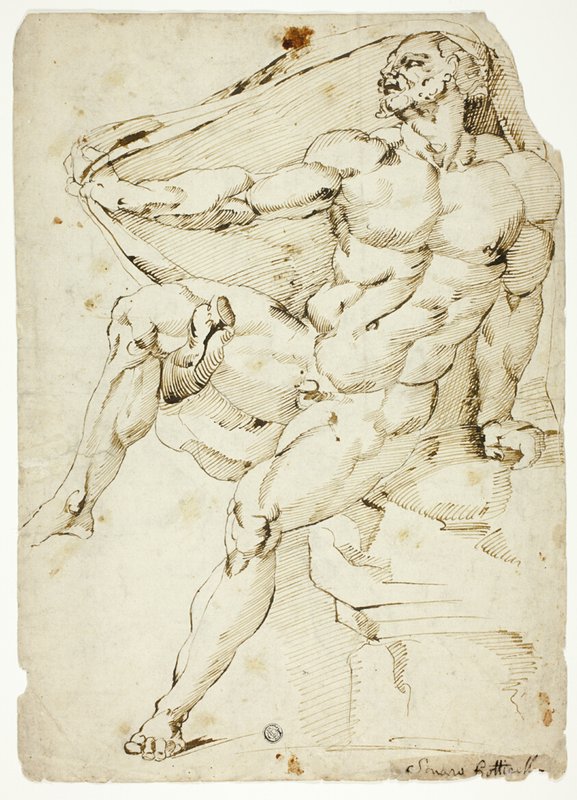
Academic Male Nude Representing Hercules with Nessus's Robe (recto and verso)
Baccio Bandinelli
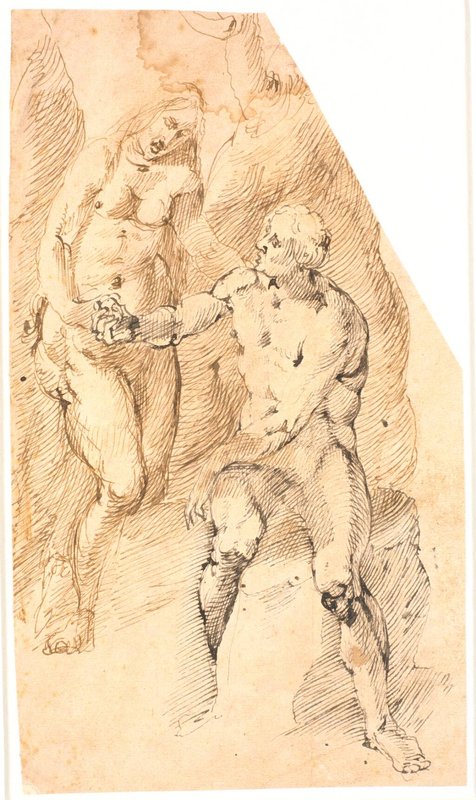
Adam modtager æblet af Eva
Frantz Clein
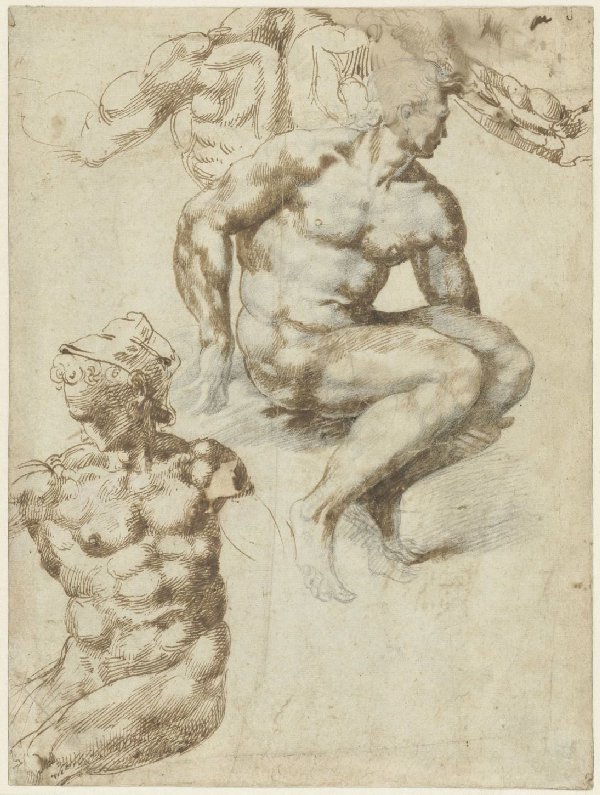
Twee naakten en een rug
anonymous
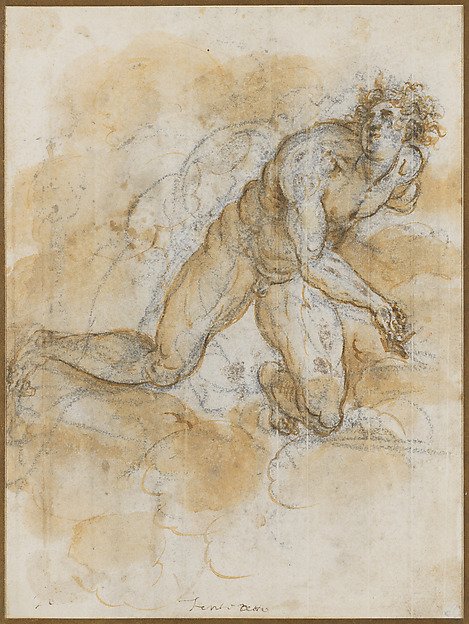
Studies of a kneeling man (recto); Study of a standing man at right, and small scene of a kneeling figure in an interior, probably the Virgin in the Annunciation (verso)
Francesco Maffei
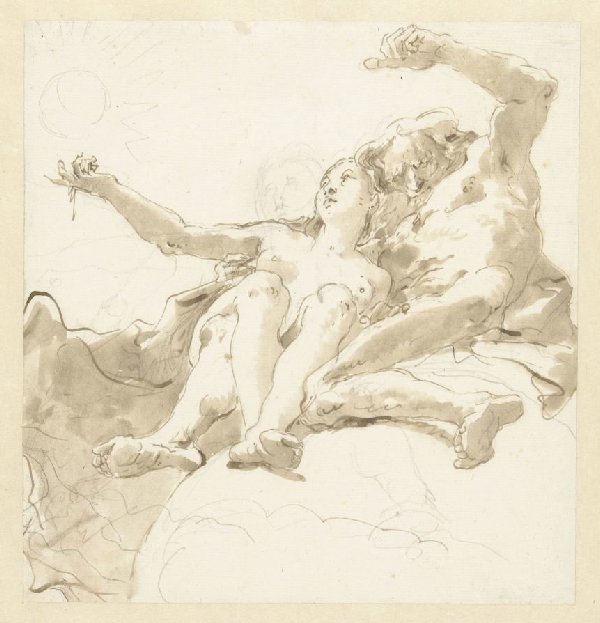
De Waarheid en de Tijd
Giovanni Battista Tiepolo
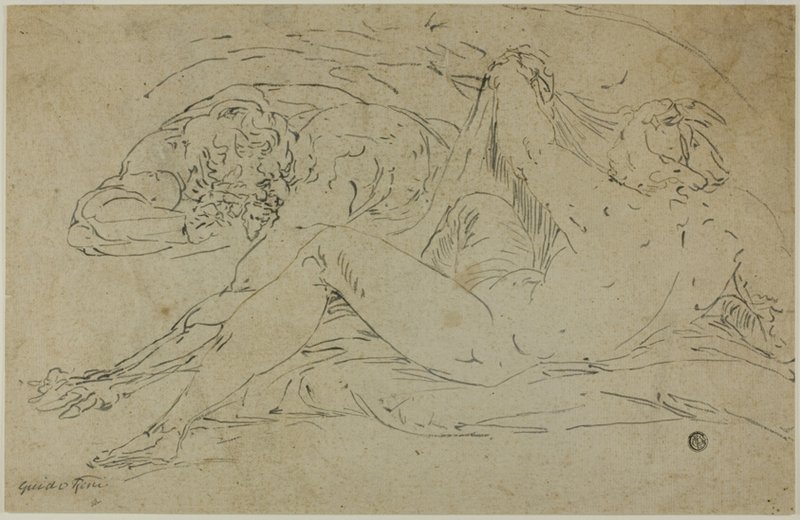
Nymph and Satyr
Follower of Luca Cambiaso
A River God (recto); Sketches for the Vestibule of the Laurenziana, Florence (verso)
Bartolomeo Ammanati (Ammannati)