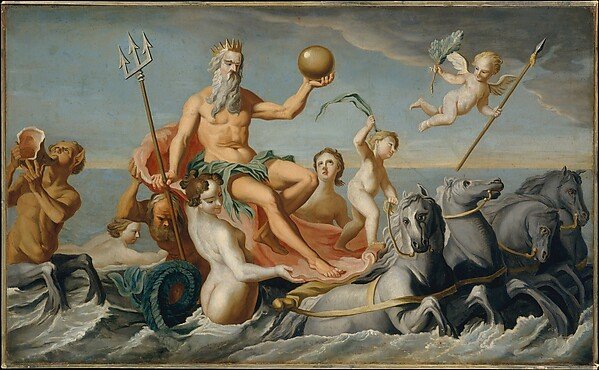
The Return of Neptune
John Singleton Copley
59.198
About this artwork
John Singleton Copley’s painting "The Return of Neptune," created around 1754, is an oil on canvas that depicts the Roman god Neptune seated on a grand chariot drawn by horses. Neptune, holding a globe in his right hand and a trident in his left, is surrounded by several figures, including cherubs and mermaids, who contribute to the dynamic composition. The god’s strong presence is emphasized by his regal demeanor and the tumultuous sea setting that forms the backdrop. The chariot, adorned with aquatic themes, signals his dominion over the ocean, while the swirling waves add a sense of movement to the scene. Copley, an American artist from Boston, captures both the mythological narrative and the grandeur associated with Neptune's character.
AI-generated description based on artwork image and available museum metadata
Similar artworks
Europas bortførelse
Nicolas Colombel
Untitled
Adriaen van Nieulandt (I)
Venus in a Chariot drawn by Two Swans
Master IQV, After Giulio Romano
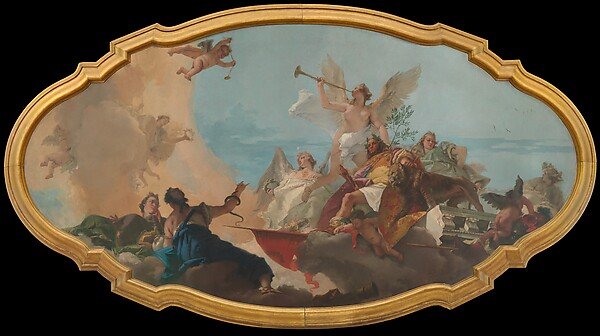
The Glorification of the Barbaro Family
Giovanni Battista Tiepolo
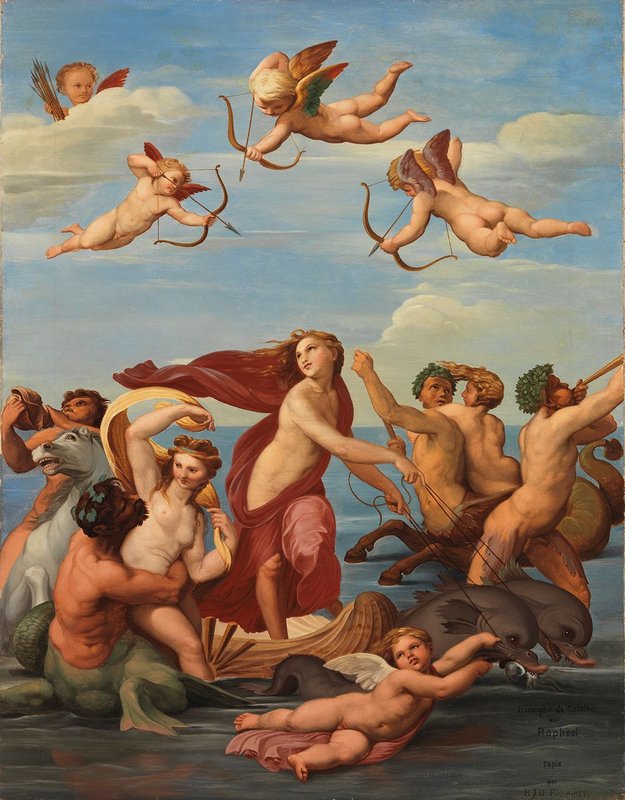
The Triumph of Galatea, a copy after Raphael (Raffaello Sanzio)
Nils Jakob Olsson Blommér
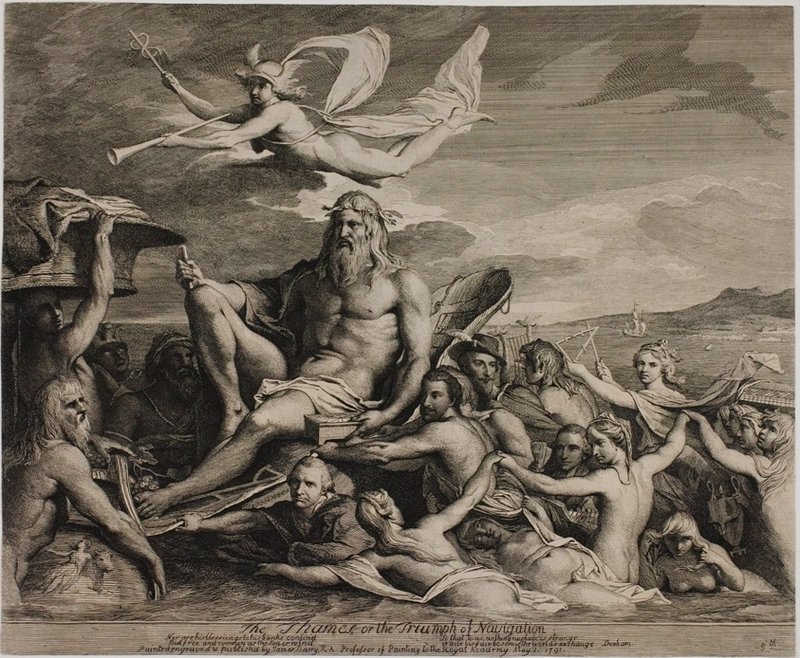
The Thames, or The Triumph of Navigation
James Barry
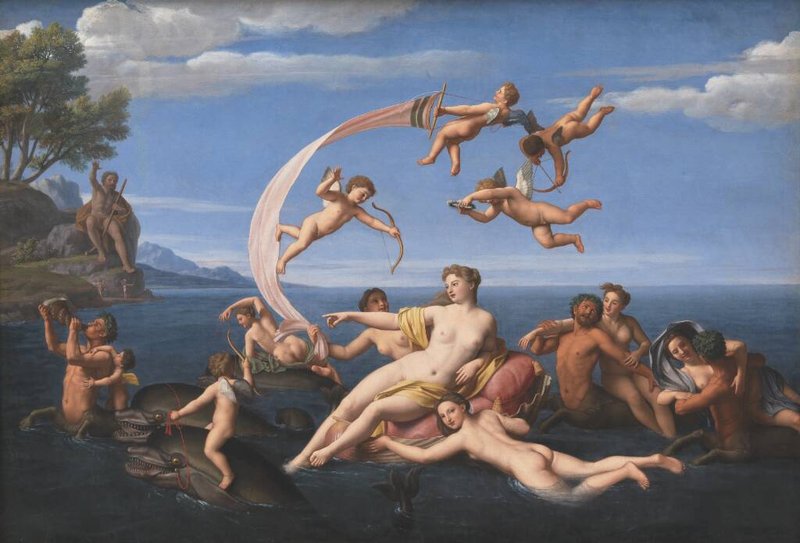
Galatheas triumf
Nicolas Colombel
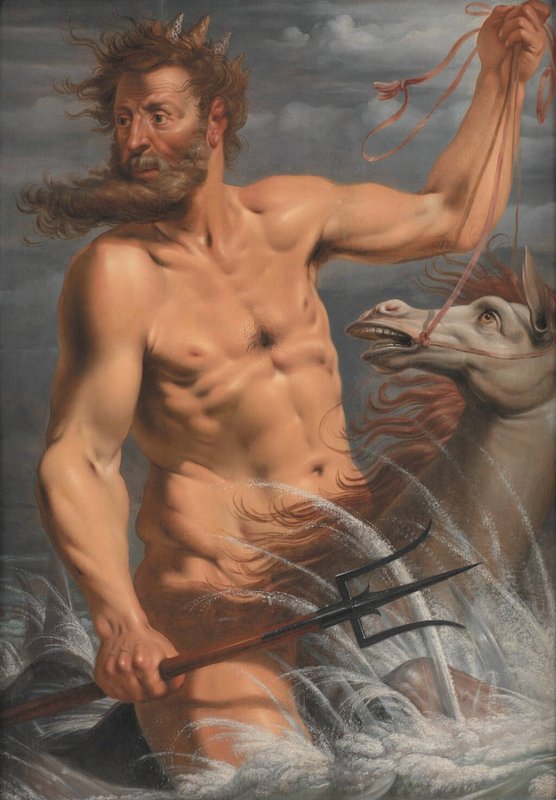
Neptun
Werner van den Valckert
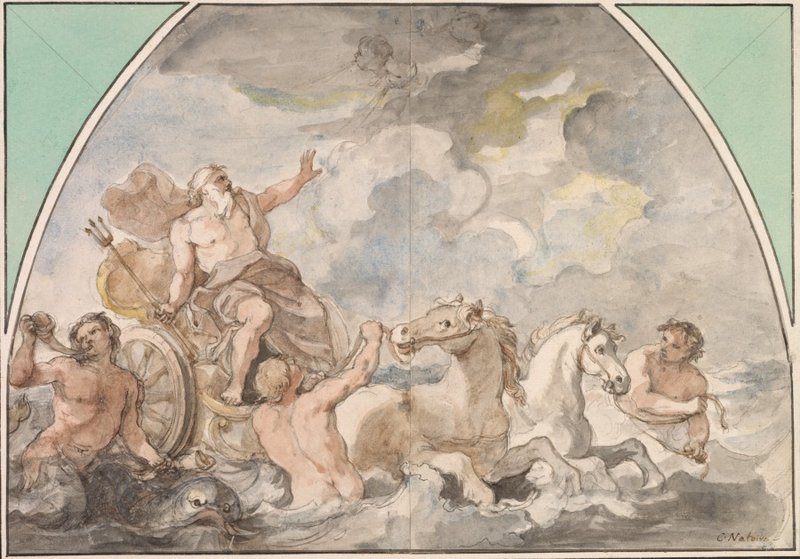
The Triumph of Neptune
Charles Joseph Natoire
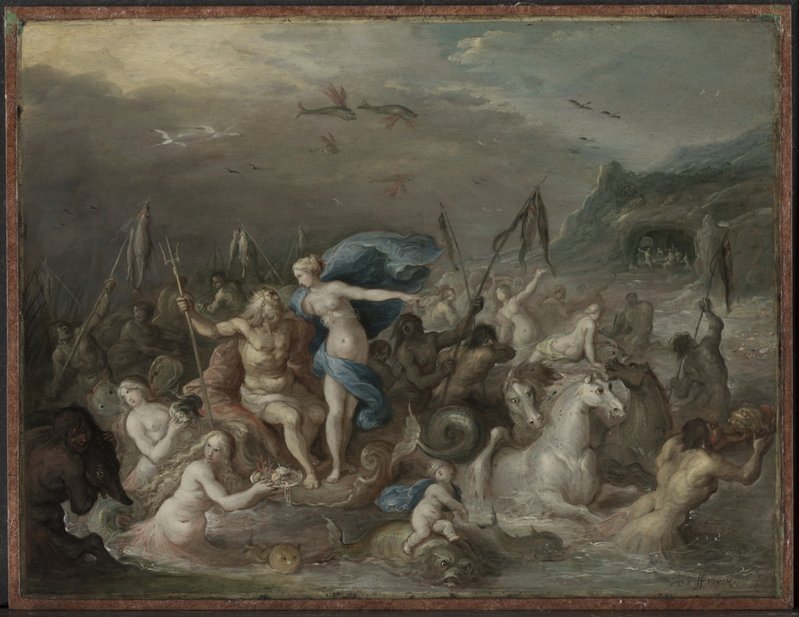
The Triumph of Neptune and Amphitrite
Frans Francken
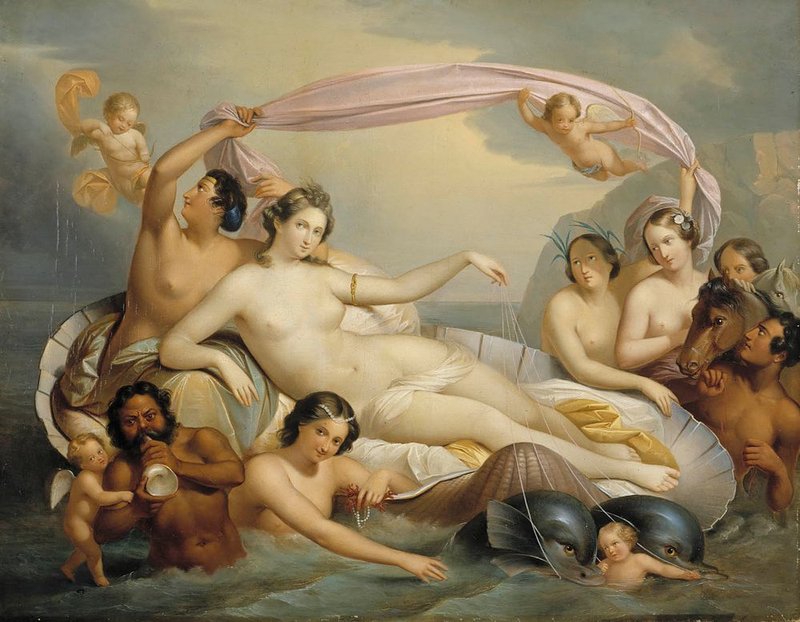
Galatea´s Triumph
Berndt Abraham Godenhjelm
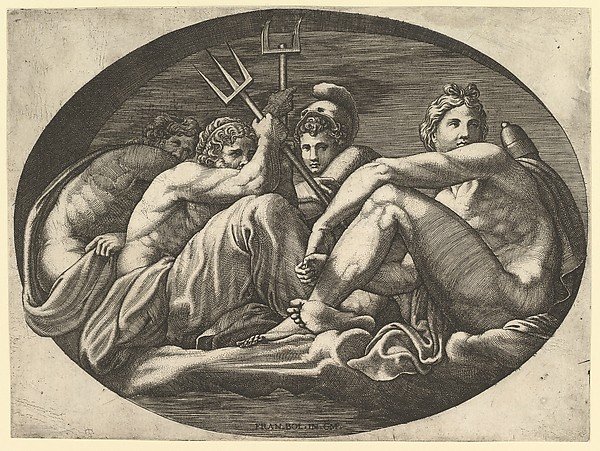
Pluto, Neptune, Minerva and Apollo, from a series of eight compositions after Francesco Primaticcio's designs for the ceiling of the Ulysses Gallery (destroyed 1738-39) at Fontainebleau
Giorgio Ghisi, After Francesco Primaticcio