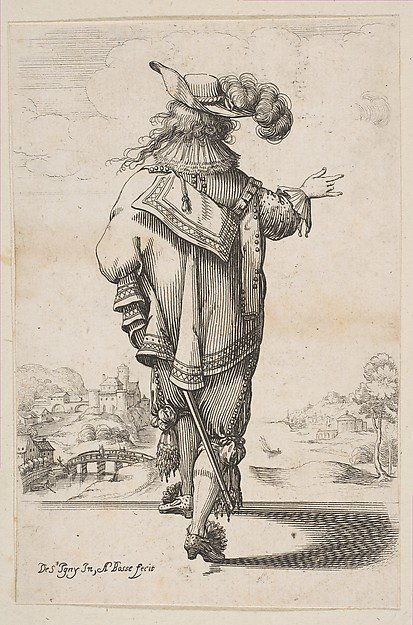
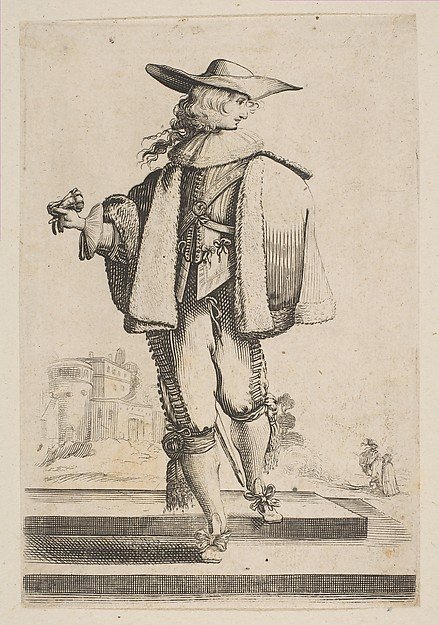
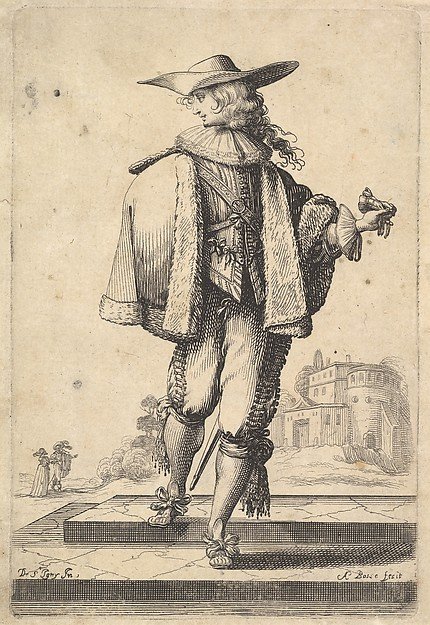
Gentleman Seen from the Back Indicating a Landscape
Abraham Bosse, After Jean de Saint-Igny
53.600.1564
About this artwork
Similar artworks
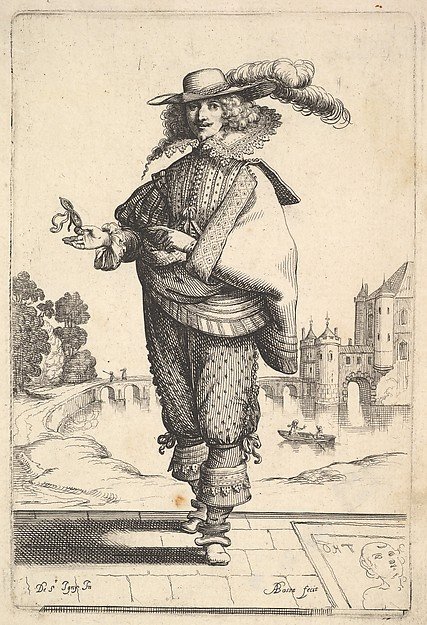
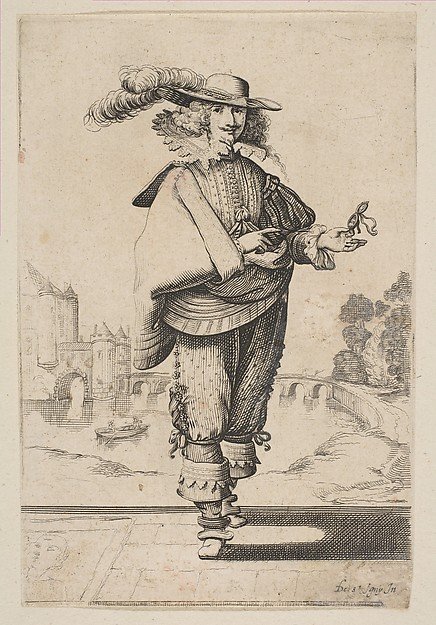
A gentleman standing in front of a large castle and wearing a plumed hat and a lace collar, the tomb with an engraving of the head of a woman on the ground to right, from "The Garden of the French Nobles In Which One Can Pick Up Their Way of Dressing"
Abraham Bosse, After Jean de Saint-Igny
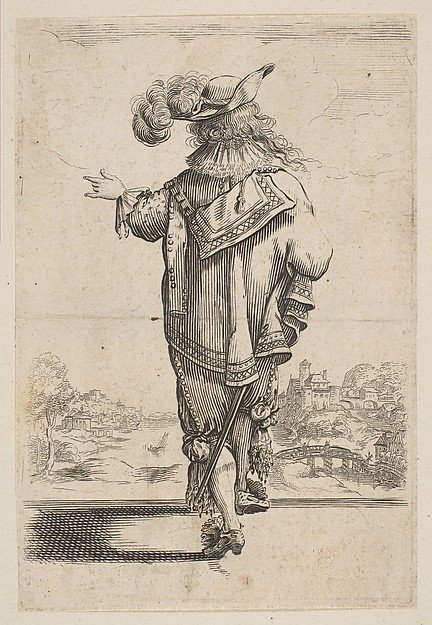
Gentleman Seen from the Back Indicating a Landscape
Anonymous, French, 17th century, After Abraham Bosse, After Jean de Saint-Igny
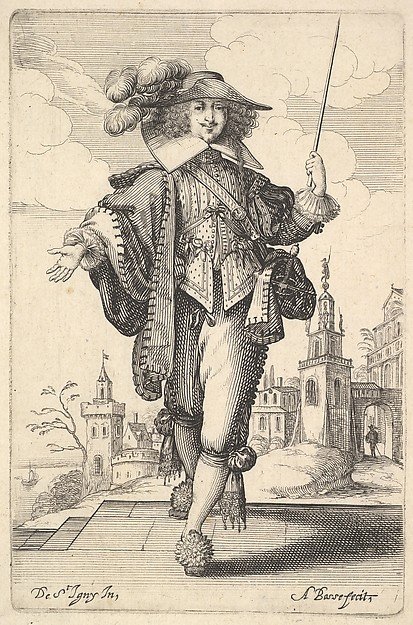
A gentleman walking forward, with his right arm outstretched and a whip in his left hand, wearing a plumed hat and decorated shoes, from "The Garden of the French Nobles In Which One Can Pick Up Their Way of Dressing"
Abraham Bosse, After Jean de Saint-Igny
Gentleman with a Glove
Anonymous, French, 17th century, After Abraham Bosse, After Jean de Saint-Igny
The Amorous Widower
Anonymous, French, 17th century, After Abraham Bosse, After Jean de Saint-Igny
A Gentleman Mounts a Step
Anonymous, French, 17th century, After Abraham Bosse
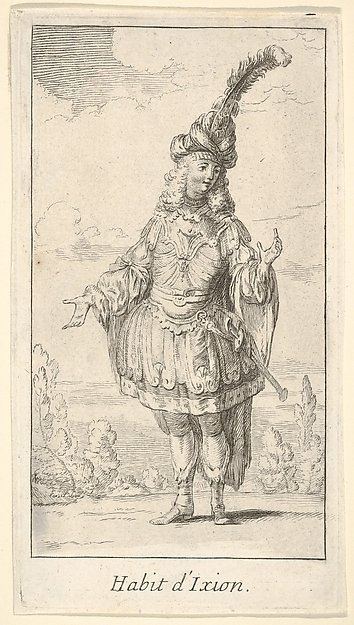
Habit d'Ixion: a man wearing a tonnelet with a sword in the belt, a turban with one large feather on his head, from "New designs for costumes" (Nouveaux desseins d'habillements à l'usage des balets operas et comedies)
François Joullain, After Claude Gillot
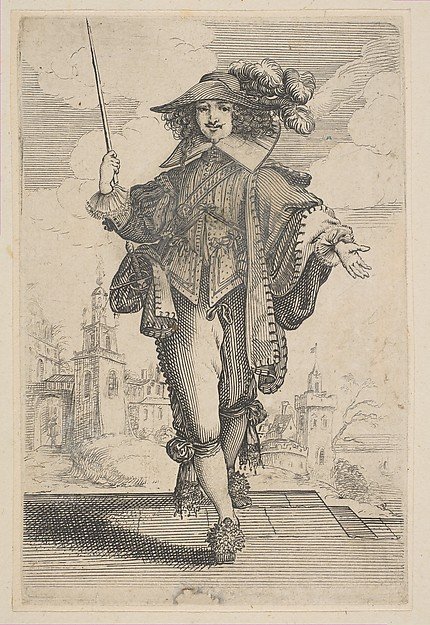
Gentleman Holding a Crop
Anonymous, French, 17th century, After Abraham Bosse, After Jean de Saint-Igny
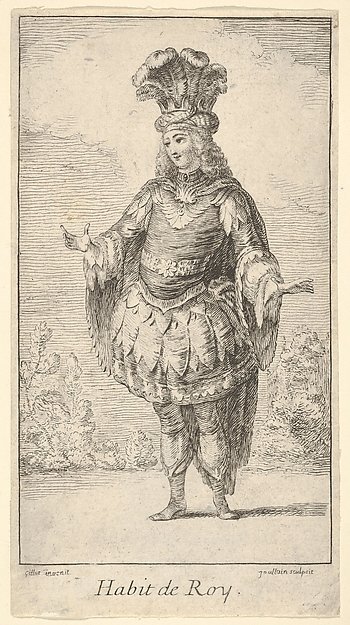
Habit de Roy: a man wearing a tonnelet decorated with rosettes, a crown and a turban with feathers on his head, from "New designs for costumes" (Nouveaux desseins d'habillements à l'usage des balets operas et comedies)
François Joullain, After Claude Gillot
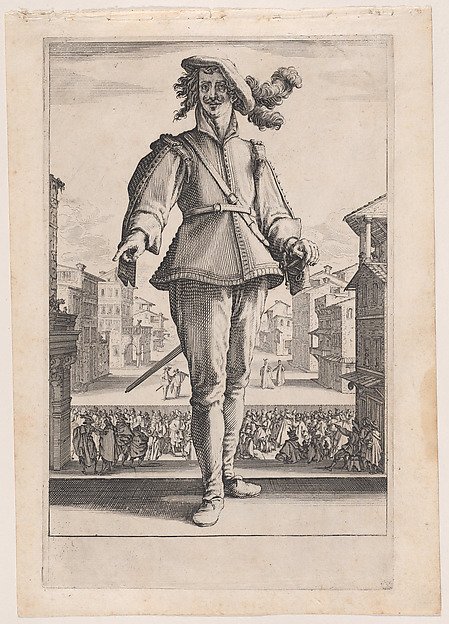
Le Captain ou L'Amoureux, from "Les Trois Pantalons pièces appélees Les Trois Acteurs" (The Three Pants also called the Three Actors)
Jacques Callot
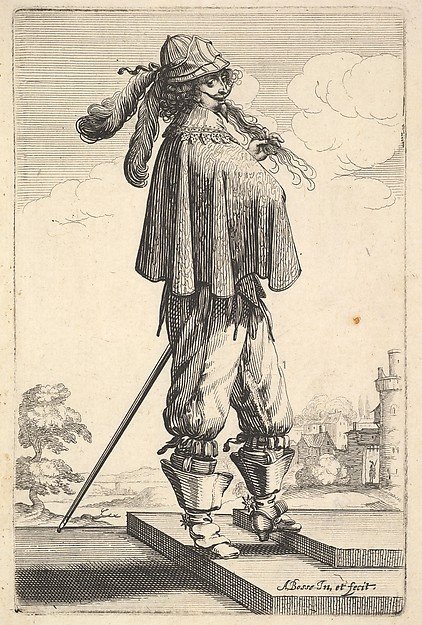
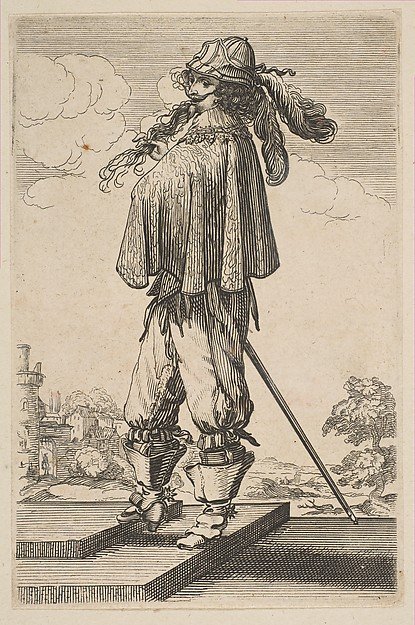
A gentleman wearing a short coat, a helmet, and boots with spurs, standing on the steps and turned towards the right, from "The Garden of the French Nobles In Which One Can Pick Up Their Way of Dressing"
Abraham Bosse, After Jean de Saint-Igny
A gentleman walking forward, his face in profile to the left, holding his glove in his right hand and wearing a hat, a fur jacket, and shoes with ribbons, from "The Garden of the French Nobles In Which One Can Pick Up Their Way of Dressing"
Abraham Bosse, After Jean de Saint-Igny