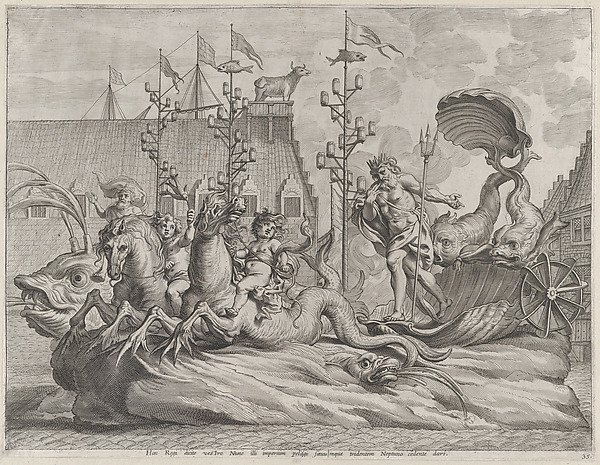
Plate 35: Philip of Spain as Neptune, riding in a chariot drawn by two sea horses; from Guillielmus Becanus's 'Serenissimi Principis Ferdinandi, Hispaniarum Infantis...'
Pieter de Jode II, Johannes Meursius
51.501.7434
About this artwork
Similar artworks
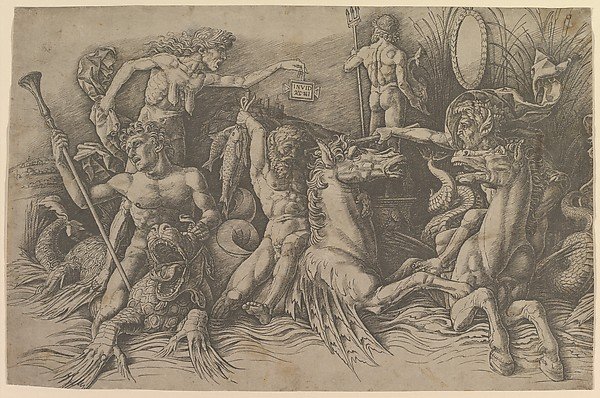
The Battle of the Sea Gods (left portion of frieze)
Andrea Mantegna
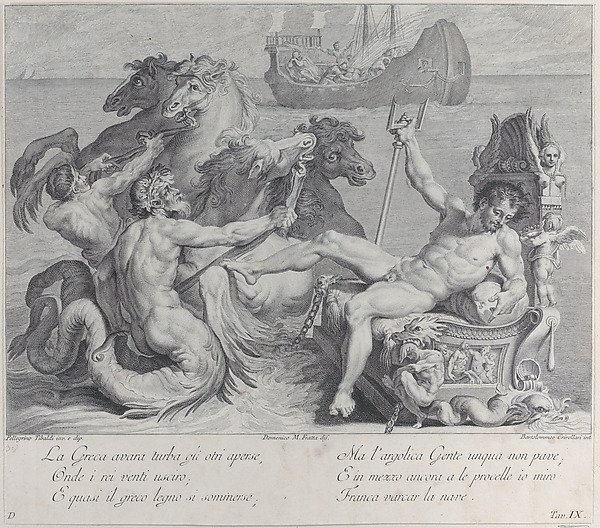
Plate 9: the Greeks opening the bag of wind, thinking there is gold inside, driving their vessel to the island of Circe
Bartolomeo Crivellari, Intermediary draftsman Domenico Maria Fratta, After Pellegrino Tibaldi, Giampietro Zanotti
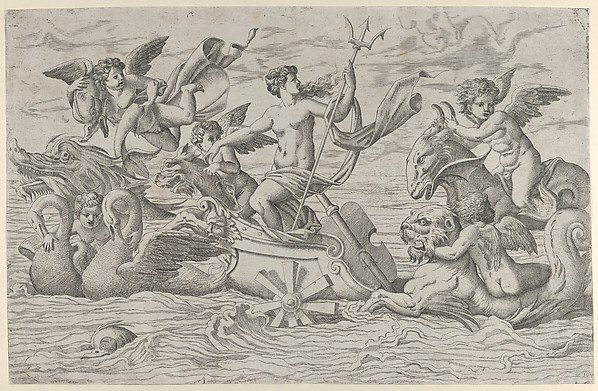
Venus in a Chariot drawn by Two Swans
Master IQV, After Giulio Romano
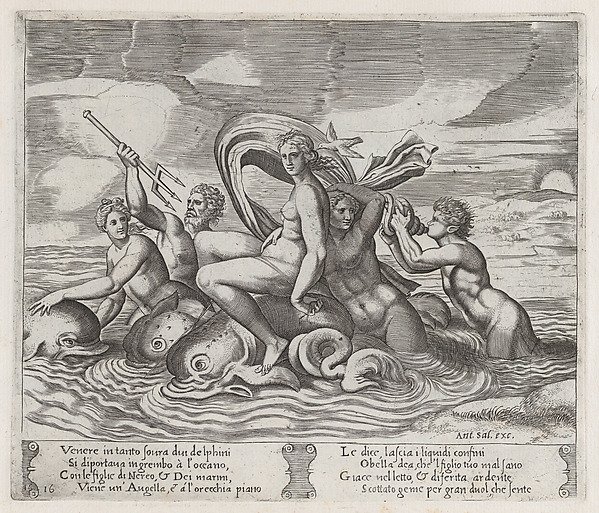
Plate 16: A white bird tells Psyche of Cupid's illness, as she rides dolphins on the sea accompanied by tritons and nereids, from "The Story of Cupid and Psyche as told by Apuleius"
Master of the Die, After Michiel Coxie (I), Antonio Salamanca
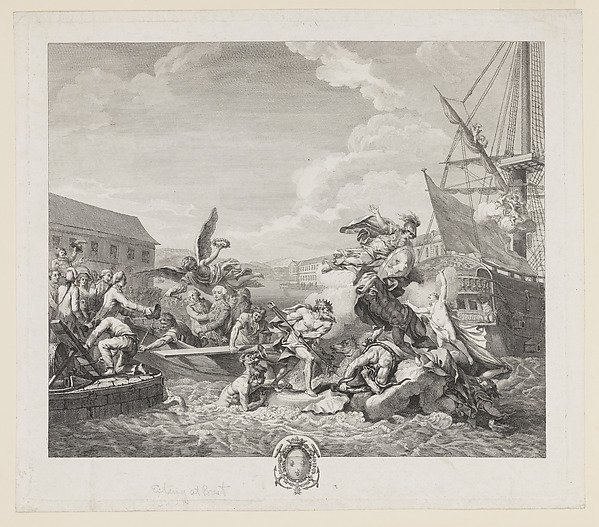
The Arrival of Admiral d'Estaing at Brest
Etched by (?) Pierre Lacour, After Pierre Lacour, Charles Hector, comte d'Estaing
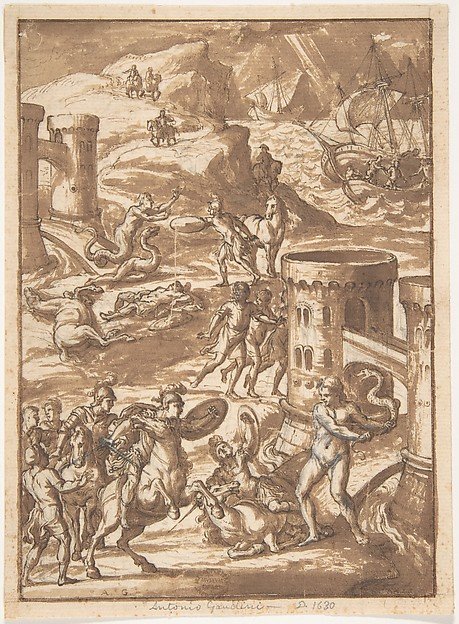
Mythological Scene
attributed to Antonio Gandini
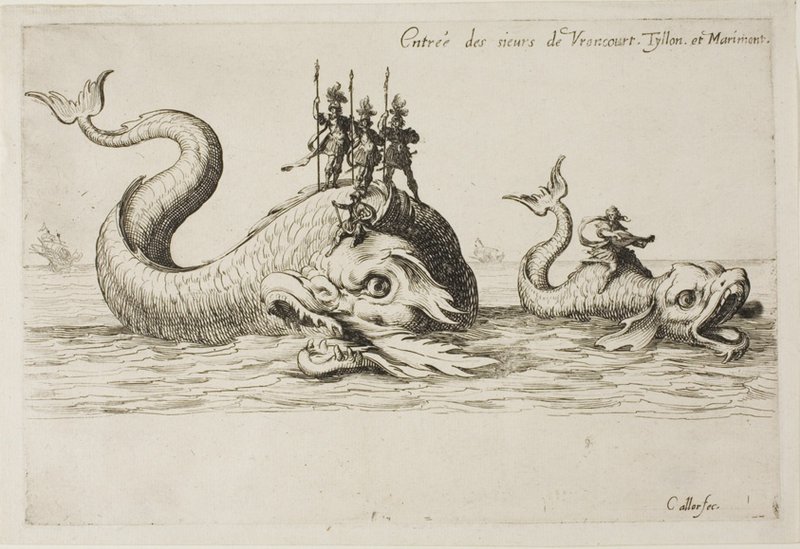
Entry of Mm. de Vroncourt, Tyllon, and Marimont, from The Combat at the Barrier
Jacques Callot
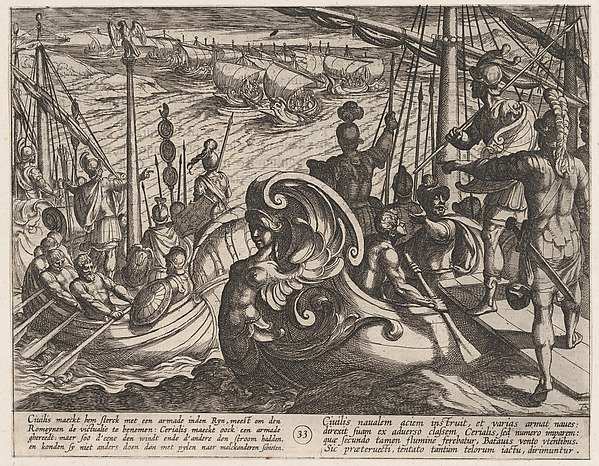
Plate 33: Dutch and Roman Flotillas on the Rhine, from The War of the Romans Against the Batavians (Romanorvm et Batavorvm societas)
Antonio Tempesta, After Otto van Veen
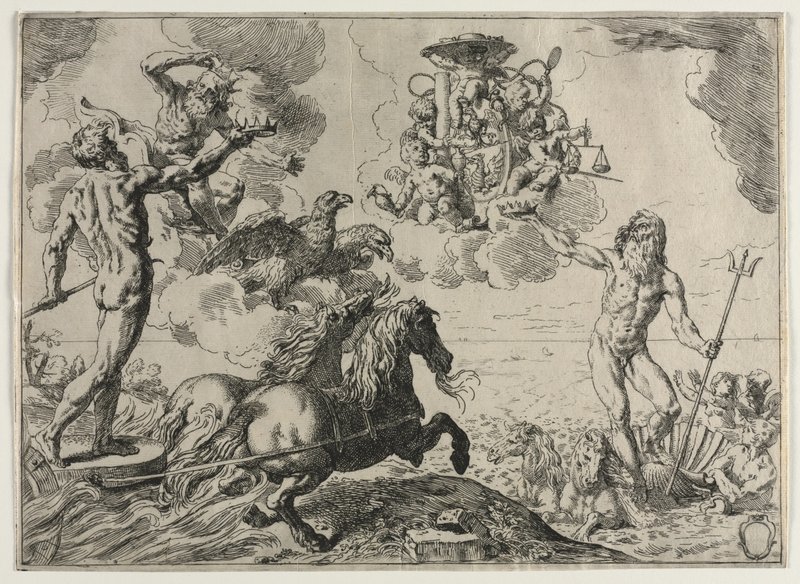
The "Quos Ego"
Simone Cantarini
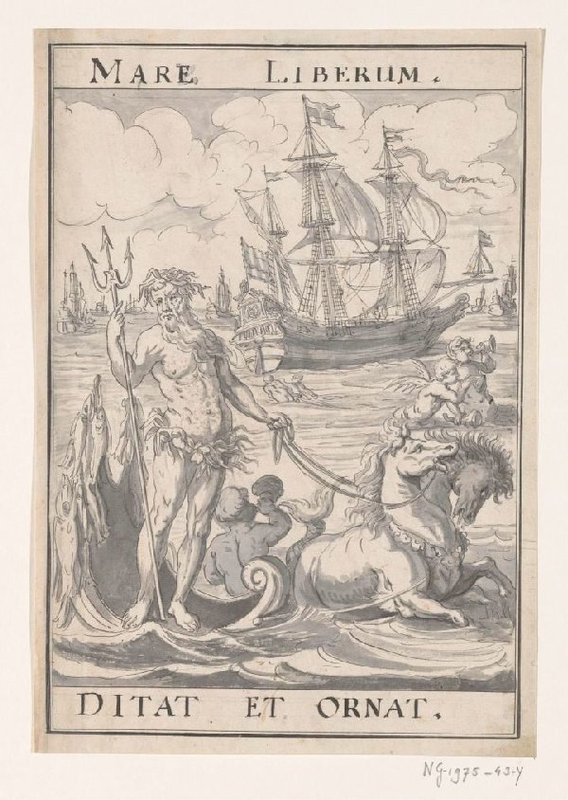
Allegorisch embleem bij de Vrede van Rijswijk, 1697
anonymous
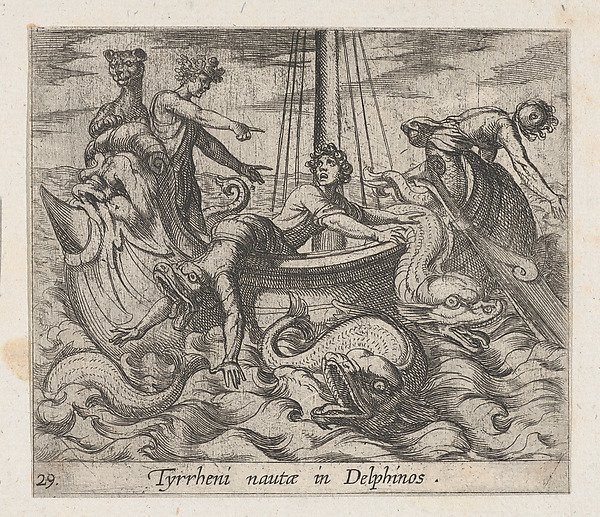
Plate 29: Bacchus Changing his Kidnappers into Monsters (Tyrrheni nautae in Dlephinos), from Ovid's 'Metamorphoses'
Antonio Tempesta
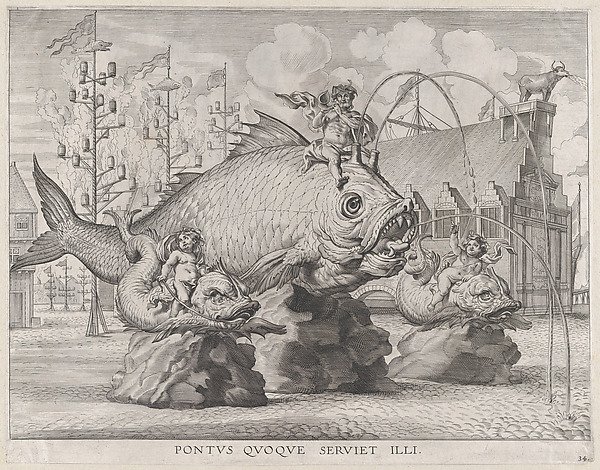
Plate 34: King Ferdinand as Neptune, seated on a whale at center, with putti atop two small fish on either side; from Guillielmus Becanus's 'Serenissimi Principis Ferdinandi, Hispaniarum Infantis...'
Jacob Neeffs, Johannes Meursius