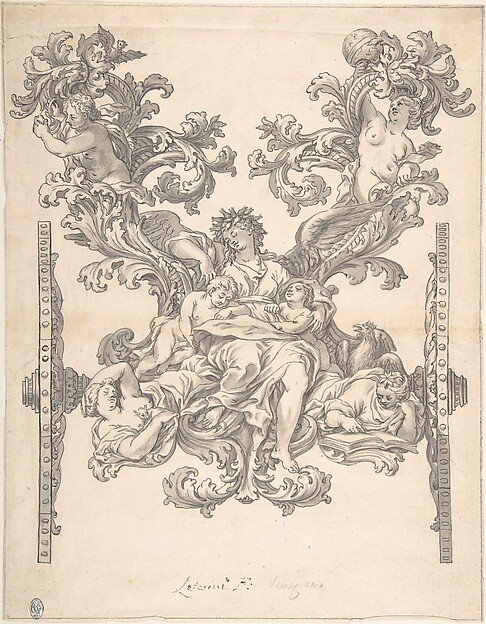
Design for Rear Decoration of a Coach
Attributed to Agostino Letterini, Attributed to Bartolomeo Letterini
44.48.1
About this artwork
Similar artworks
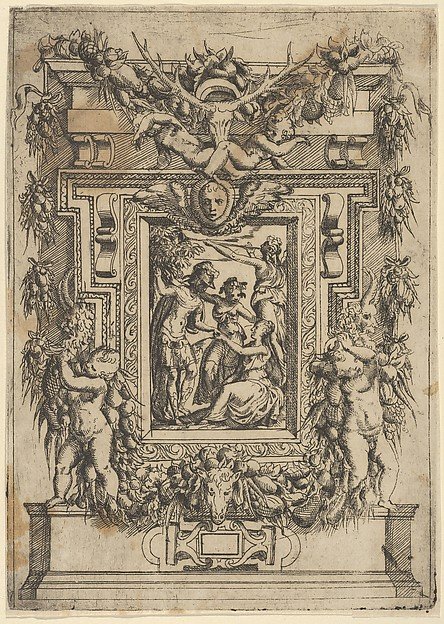
A young man offers his hand to a seated woman, another woman stands between them and a third blows a trumpet behind them, set within an elaborate frame
Battista Angolo del Moro, Formerly attributed to Andrea Schiavone (Andrea Meldola), After Jacques Androuet Du Cerceau
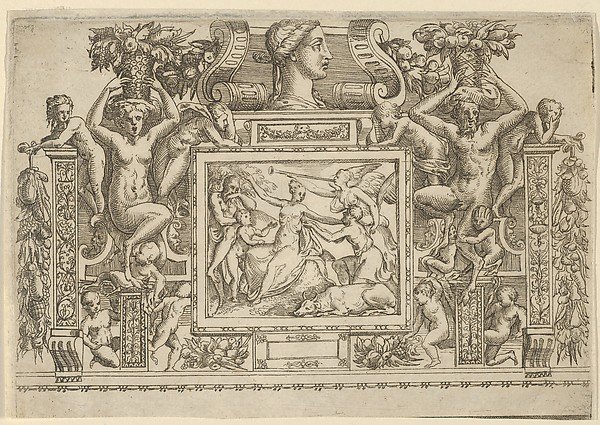
Woman seated with arms outstretched, personification of Fame with trumpet at right, set within an elaborate frame
Battista Angolo del Moro, Formerly attributed to Andrea Schiavone (Andrea Meldola), After Jacques Androuet Du Cerceau
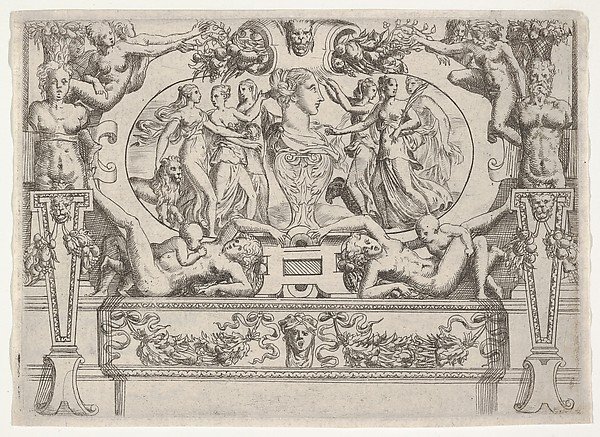
Bust of a woman flanked by three women on each side, set within an elaborate frame
Battista Angolo del Moro, Formerly attributed to Andrea Schiavone (Andrea Meldola), After Jacques Androuet Du Cerceau
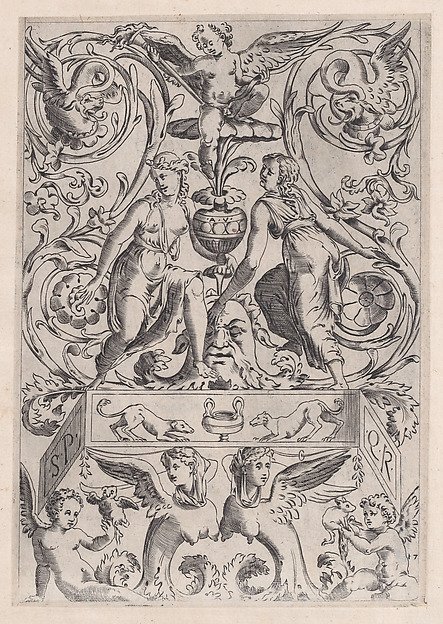
Ornamental Panel
Agostino Veneziano (Agostino dei Musi), Designed by Raphael (Raffaello Sanzio or Santi), or Giovanni da Udine (Giovanni dei Ricamatori)
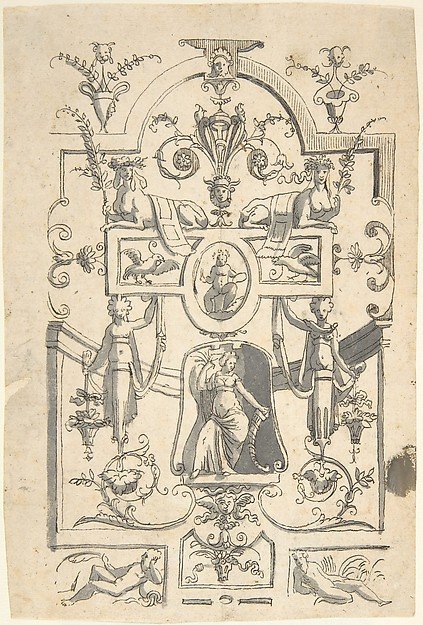
Candelabra Grotesque with a Female Figure in a Niche and Two Sphinxes
Anonymous, Italian, 16th century, After Cornelis Massys
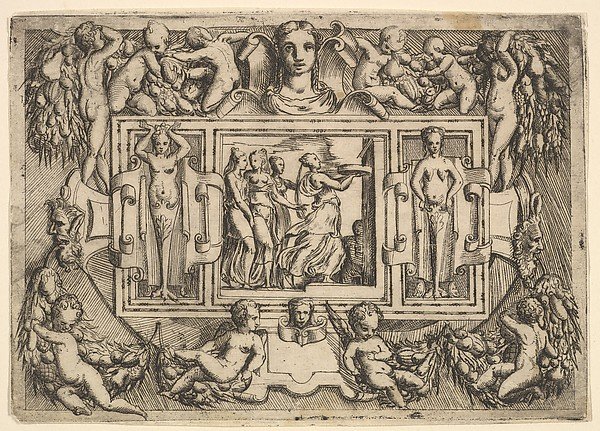
The Cumeaean sibyl walking to the right and carrying a tray, followed by three women, set within an elaborate frame
Battista Angolo del Moro, Formerly attributed to Andrea Schiavone (Andrea Meldola), After Jacques Androuet Du Cerceau
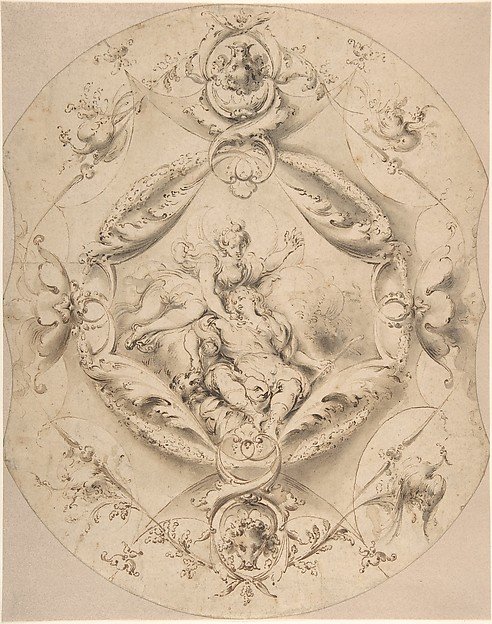
Ornamental Design with Diana and Endymion in a Central Cartouche
Attributed to Jacob Denys
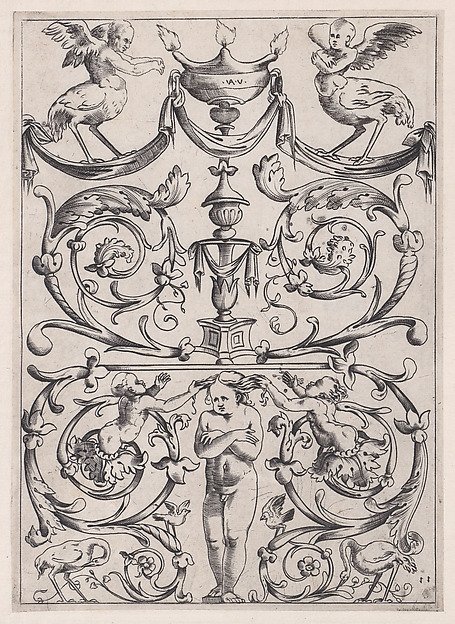
Ornamental Panel
Agostino Veneziano (Agostino dei Musi), After Raphael (Raffaello Sanzio or Santi), or after Giovanni da Udine (Giovanni dei Ricamatori)
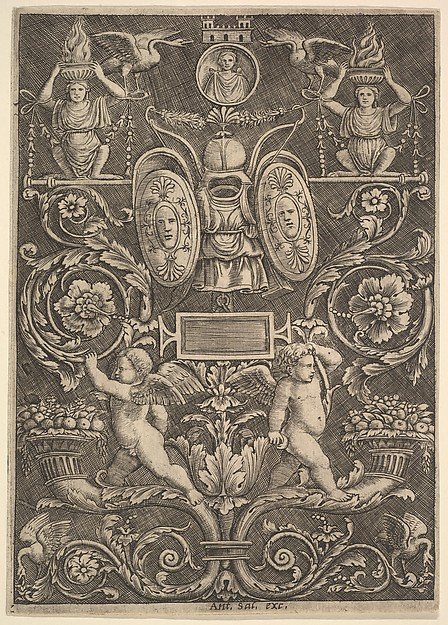
A panel of ornament, putti standing on cornucopia in lower section
Master of the Die, After Perino del Vaga (Pietro Buonaccorsi), Antonio Salamanca
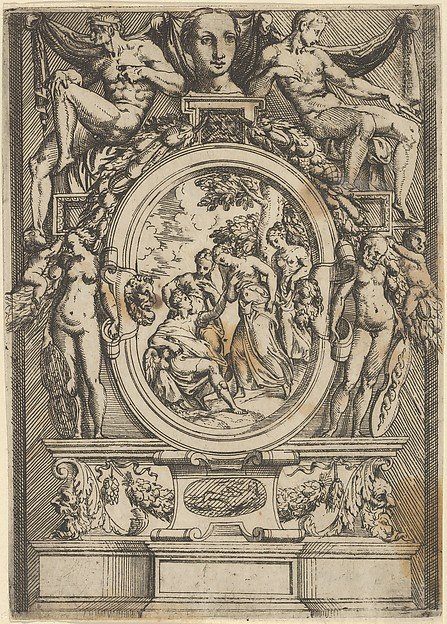
The Judgment of Paris; man seated at left reaches out to a woman who is flanked by two others, set within an elaborate frame
Battista Angolo del Moro, Formerly attributed to Andrea Schiavone (Andrea Meldola), After Jacques Androuet Du Cerceau
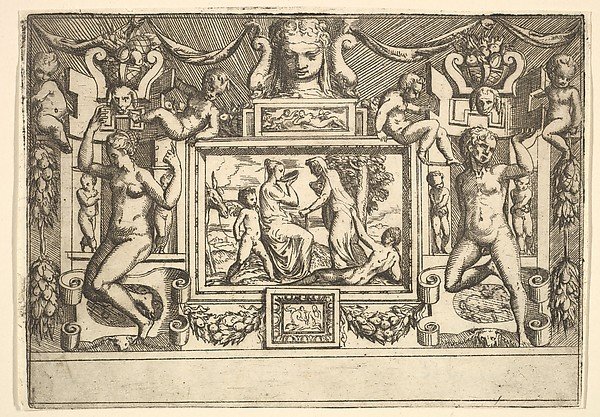
Young woman drinking from a bowl, an old woman standing in front of her, set within an elaborate frame
Battista Angolo del Moro, Formerly attributed to Andrea Schiavone (Andrea Meldola), After Jacques Androuet Du Cerceau
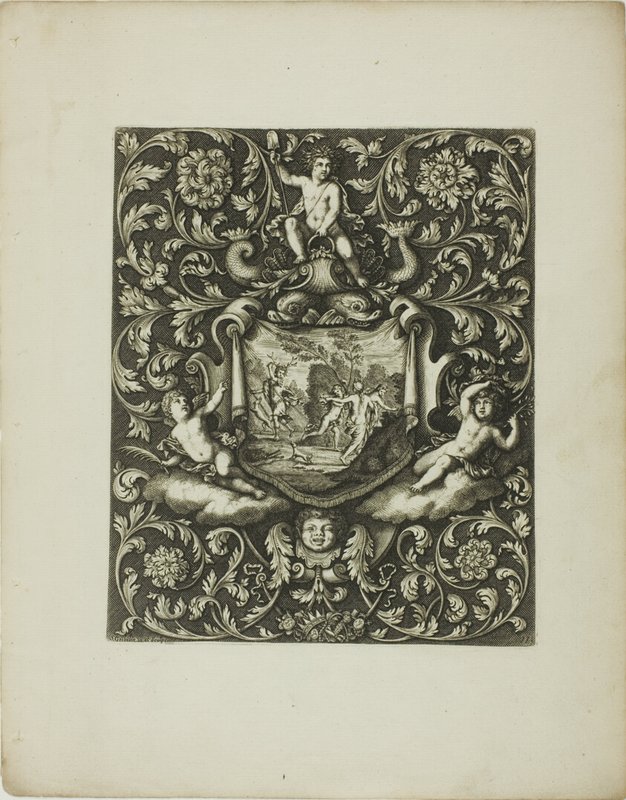
Plate Eleven, from A New Book of Ornaments
Simon Gribelin, II