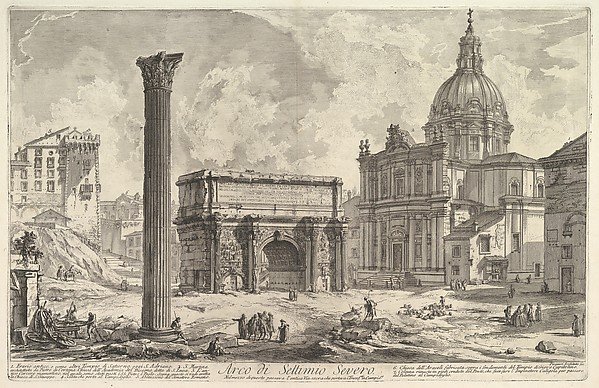
The Arch of Septimius Severus, with the Church of S. Martina on the right (Arco di Settimio Severo), from "Vedute di Roma"
Giovanni Battista Piranesi
37.45.3(63)
About this artwork
Similar artworks
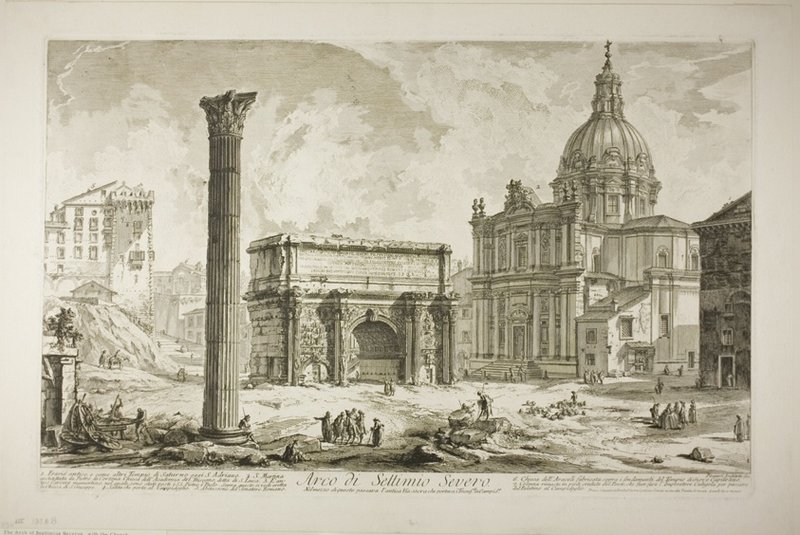
Arch of Septimius Severus through which passed the ancient Sacred Way, bringing victors to the Capitol, from Views of Rome
Giovanni Battista Piranesi
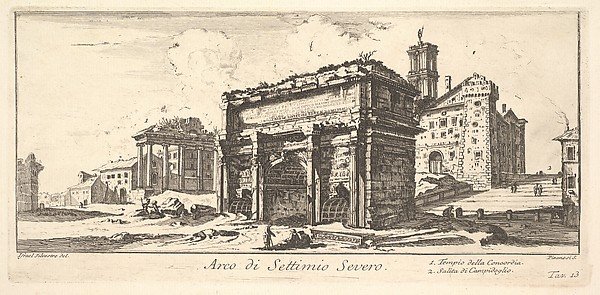
Plate 13: Arch of Settimius Severus 1. Temple of Concord. 2. Ascent to the Capitoline Hill (Arco di Settimio Severo. 1. Tempio della Concordia. 2. Salita di Campidoglio.), from "Antichità Romane de' Tempi della Repubblica, e de' primi Imperatori"
Giovanni Battista Piranesi, After Israel Silvestre
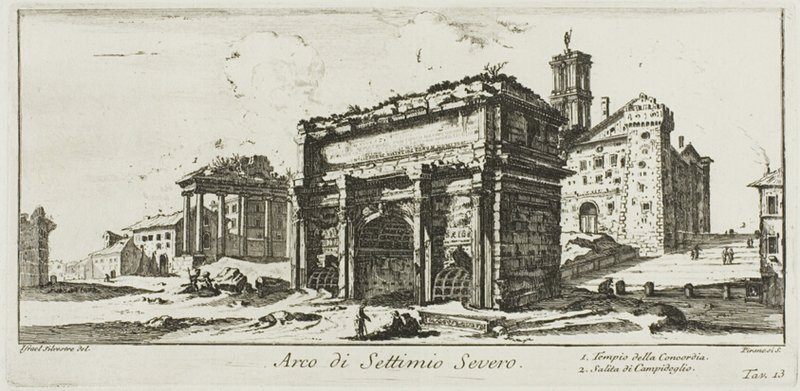
Arch of Septimius Severus. 1. Temple of Concord. 2. Ascent to the Capitoline Hill, plate 13 from Some Views of Triumphal Arches and other Monuments
Giovanni Battista Piranesi
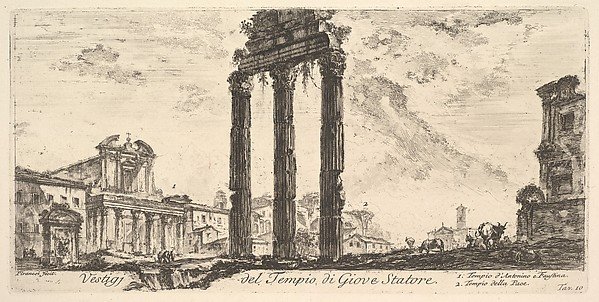
Plate 10: Ruins of the Temple of Jupiter Stator (Jupiter the Supporter). 1. Temple of Antoninus and Faustina. 2. Temple of Peace. (Vestigi del Tempio di Giove Statore. 1. Tempio d'Antonino e Faustina. 2. Tempio della Pace.), from "Antichità Romane de' Tempi della Repubblica, e de' primi Imperatori"
Giovanni Battista Piranesi
View of the Flavian Amphitheater, called the Colosseum, from "Vedute di Roma" (Roman Views), part II
Giovanni Battista Piranesi
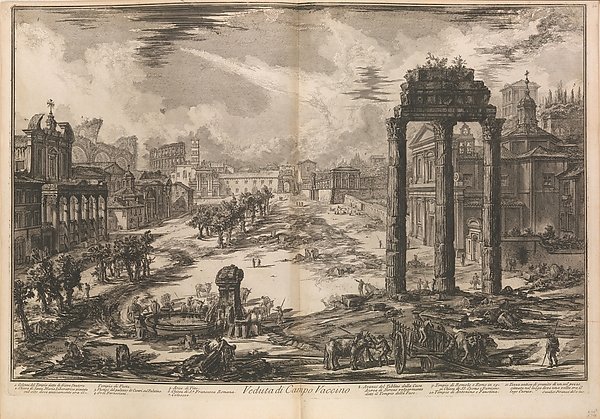
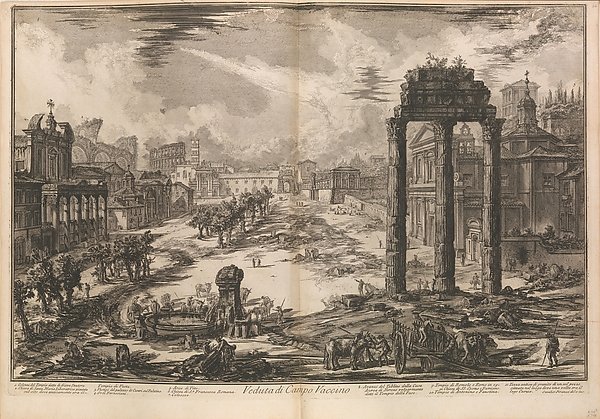
View of the Campo Vaccino (Roman Forum with the Temple of Castor and Pollux to right), from "Vedute di Roma" (Roman Views), part II
Giovanni Battista Piranesi
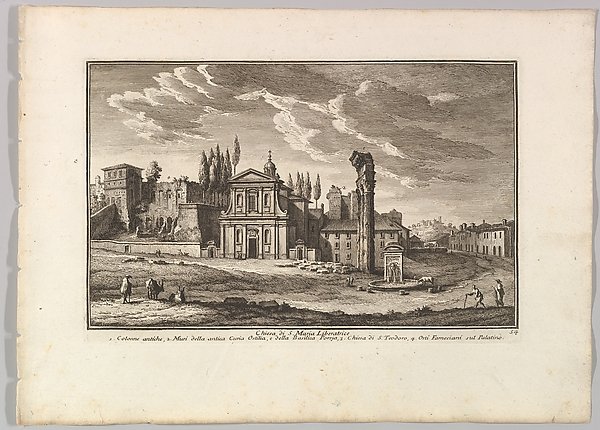
Chiesa di S. Maria Liberatrice, Plate 54 from Raccolta Delle Più Belle Veduta Antiche, E Moderne Di Roma...
Giuseppe Vasi
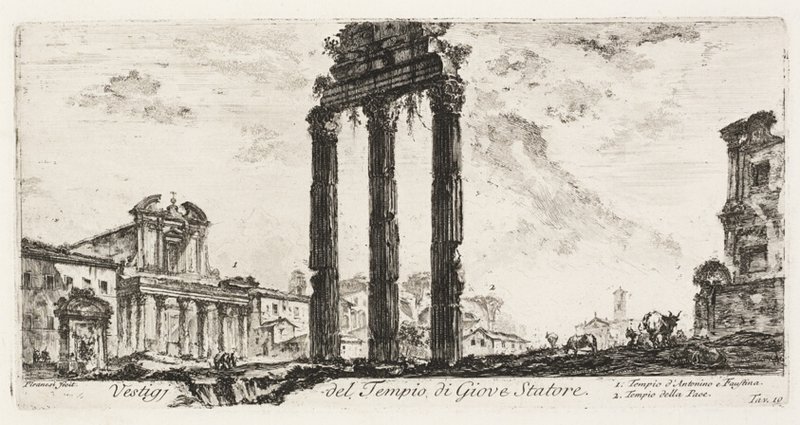
Ruins of the Temple of Jupiter Stator [Jupiter the Supporter]. 1. Temple of Antoninus and Faustina. 2. Temple of Peace, plate 10 from Some Views of Triumphal Arches and other Monuments
Giovanni Battista Piranesi
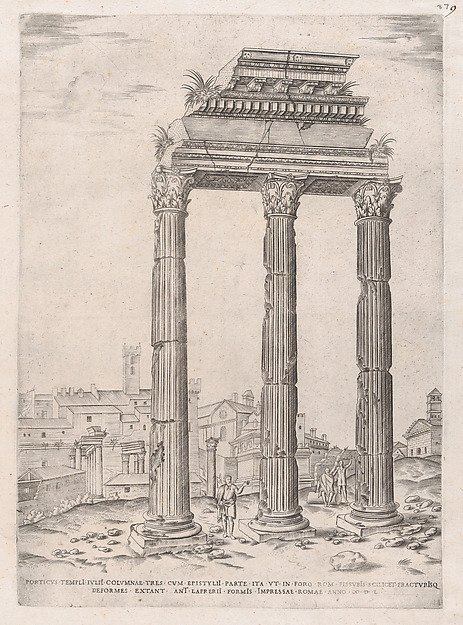
Portico of the Temple of Julius, from "Speculum Romanae Magnificentiae"
Anonymous, Antonio Lafreri
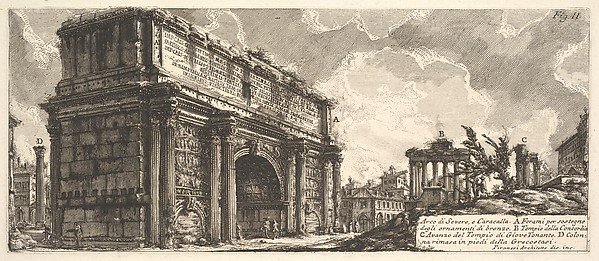
The Arch of Septimius Severus (Arco di Severo, e Caracalla)
Giovanni Battista Piranesi
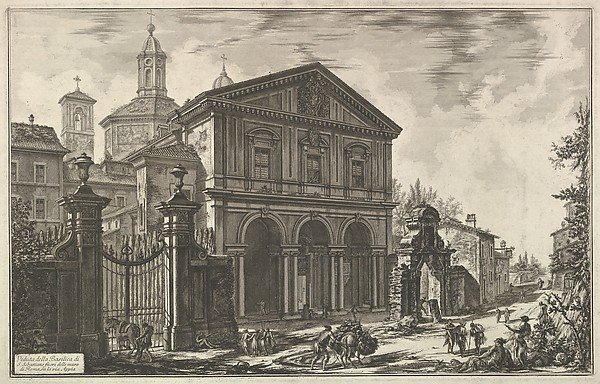
View of the Basilica of San Sebastiano fuori delle mura [St. Sebastian ouside the Walls] on the Appian Way, from Vedute di Roma (Roman Views)
Giovanni Battista Piranesi
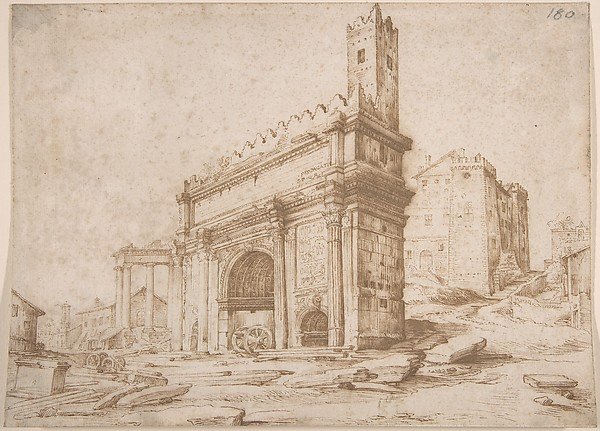
The Arch of Septimius Severus Seen from the East
Jan Brueghel the Elder, Formerly attributed to Bartholomeus Breenbergh, After Matthijs Bril the Younger