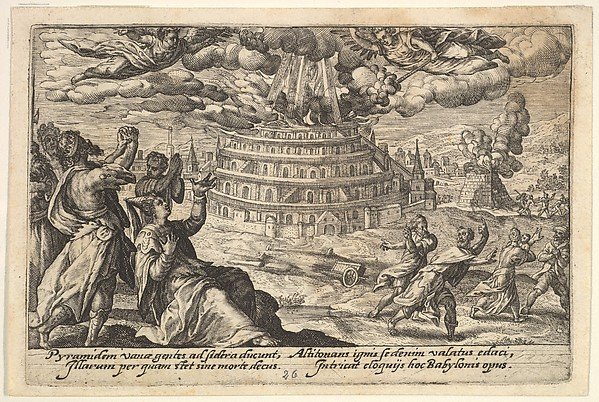
Destruction of the Tower of Babel: at right men and women flee from the burning tower, at left men and women raise their hands toward two flying angels, from "Liber Genesis"
Crispijn de Passe the Elder
2012.136.714.10
About this artwork
Similar artworks
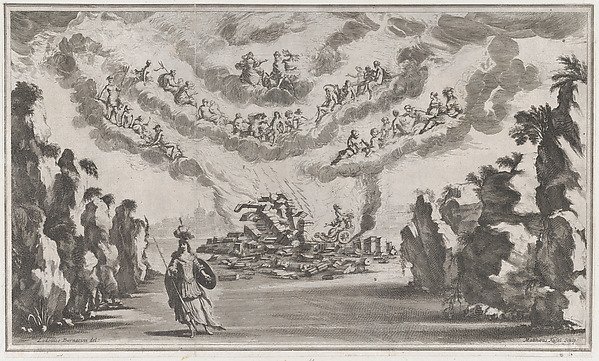
A woman in a chariot arrives at the ruins of a building as the Olympian gods look down from above, in the foreground stands an armed female figure; set design from 'Il Pomo D'Oro'
Mathäus Küsel, after Ludovico Ottaviano Burnacini
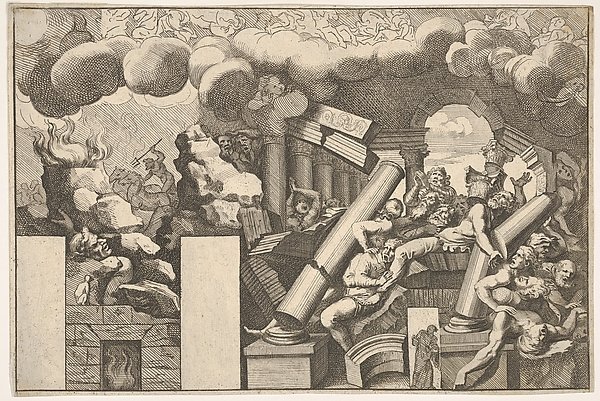
Giants crushed by rocks and the falling columns of the temple, clouds of smoke above, Poseidon in his chariot to left in the background, two spaces at left for doorways, from "Giove che fulmina li giganti", after the frescoes on the ceiling of the Sala dei Giganti designed by Giulio Romano for the Palazzo del Te, Mantua
Pietro Santi Bartoli, After Giulio Romano
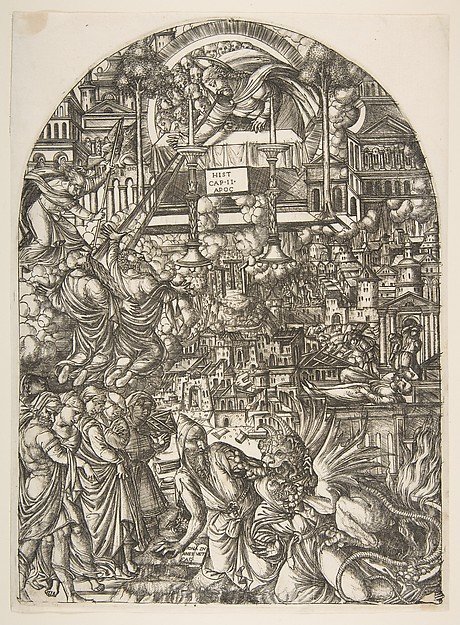
The Measurement of the Temple, from the Apocalypse
Jean Duvet
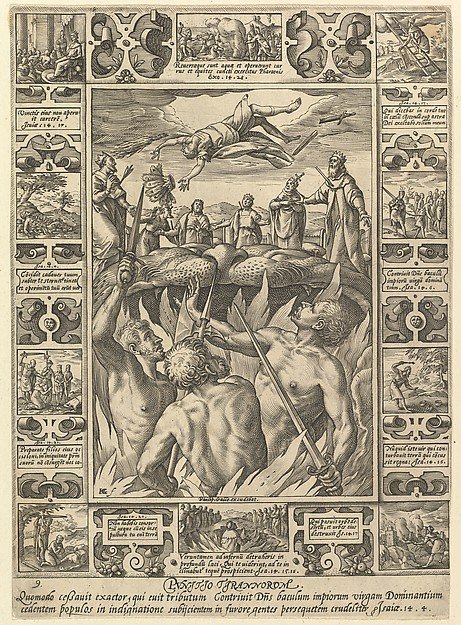
Punitio Tirannorum, from "Allegories of the Christian Faith, from Christian and Profane Allegories"
Hendrick Goltzius
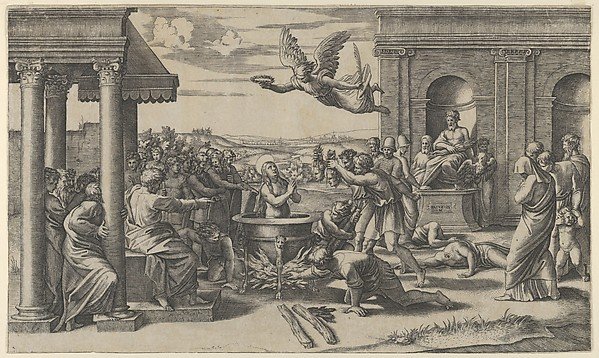
The Martydom of Saint Cecilia standing naked in a large cauldron, at left under a colonnade, sits a Roman Prefect, at right the statue of Jupiter in a niche
Marcantonio Raimondi, After Raphael (Raffaello Sanzio or Santi)
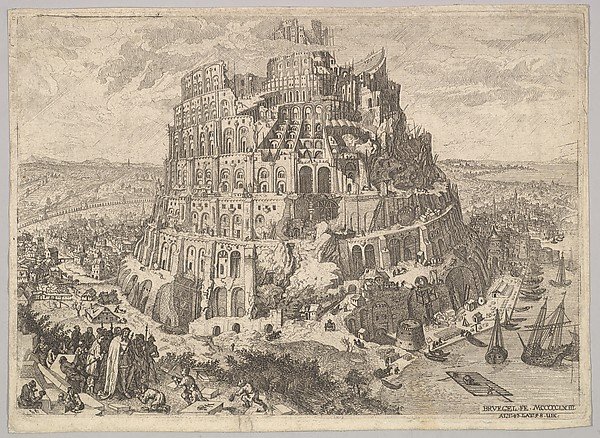
The Tower of Babel
Anton Joseph von Prenner, After Pieter Bruegel the Elder
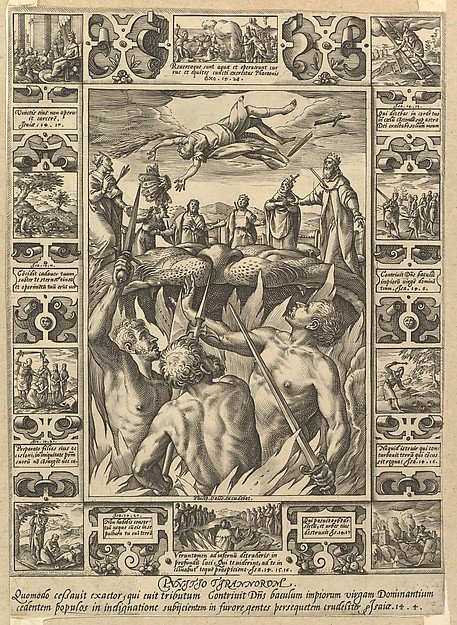
Punitio Tirannorum, from "Allegories of the Christian Faith, from Christian and Profane Allegories"
Hendrick Goltzius, Philips Galle
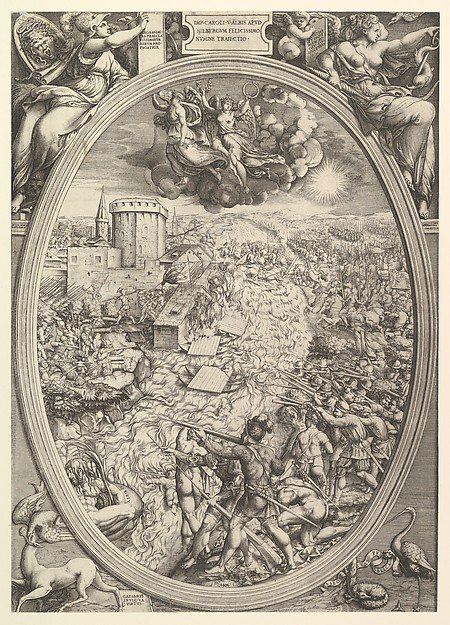
The Battle of Mühlberg with the army of Charles V crossing the Elbe River
Enea Vico, After (?) Giovanni Battista Scultori, and/or After Battista Franco, (?) Giovanni Battista Scultori, Charles V, Holy Roman Emperor, Cosimo I de' Medici, Grand Duke of Tuscany
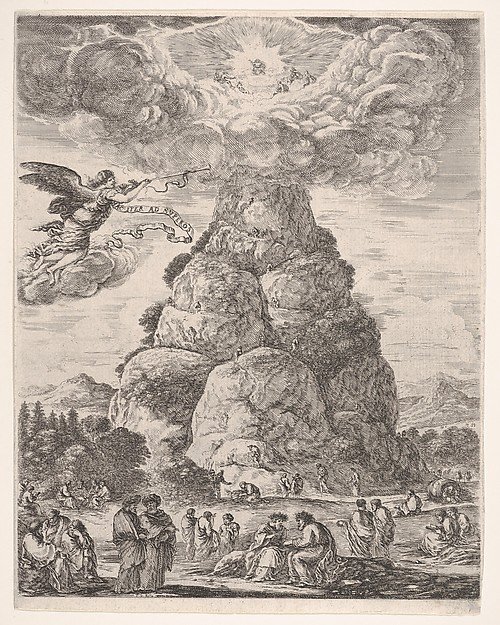
Rock of the Philosphers, or Mount Parnassus, many ancient philosophers gathered in groups at the base of the mountain in the foreground, Diogenes in his barrel to right and Archimedes in center studying an armillary sphere in the middleground, an angel in the sky to left, the mountain in the background, a large cloud at the top of the mountain with the assembly of the gods
Stefano della Bella
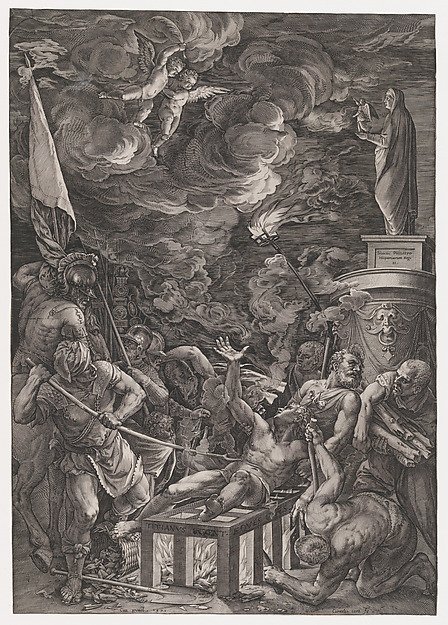
Martyrdom of St. Lawrence
Cornelis Cort, After Titian (Tiziano Vecellio)
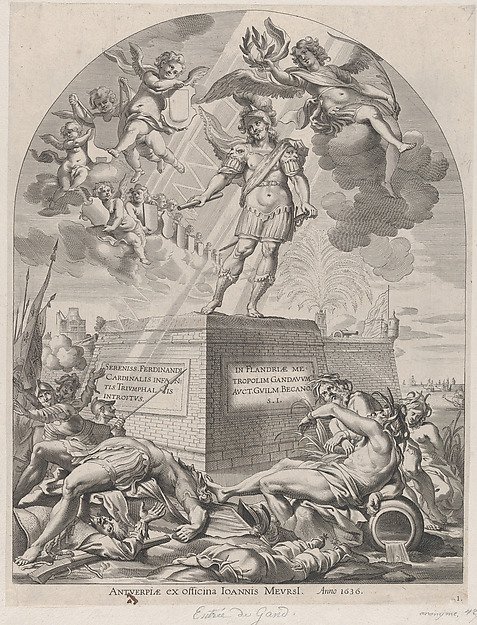
Plate 1: Ferdinand as Mars, standing on a pedestal; from Guillielmus Becanus's 'Serenissimi Principis Ferdinandi, Hispaniarum Infantis...'
Pieter de Jode II, After Cornelis Schut, Johannes Meursius
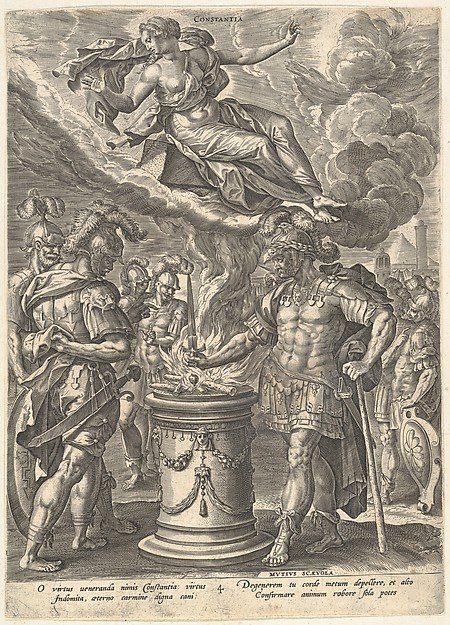
Constantia, from "Virtues"
After Maerten de Vos