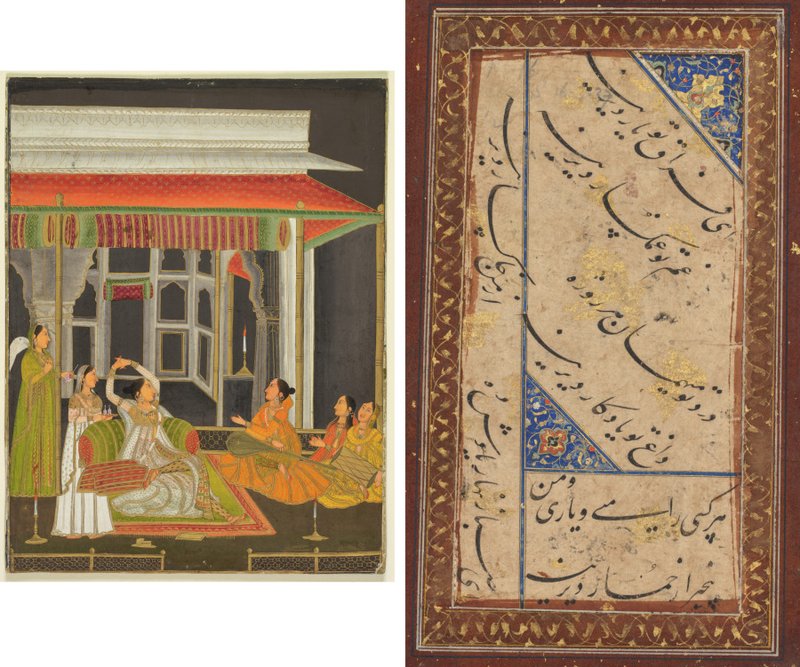
A princess on a terrace with attendants at night (recto); Calligraphy (verso)
India, Farrukhabad, Mughal, 18th century
2013.341
About this artwork
Similar artworks
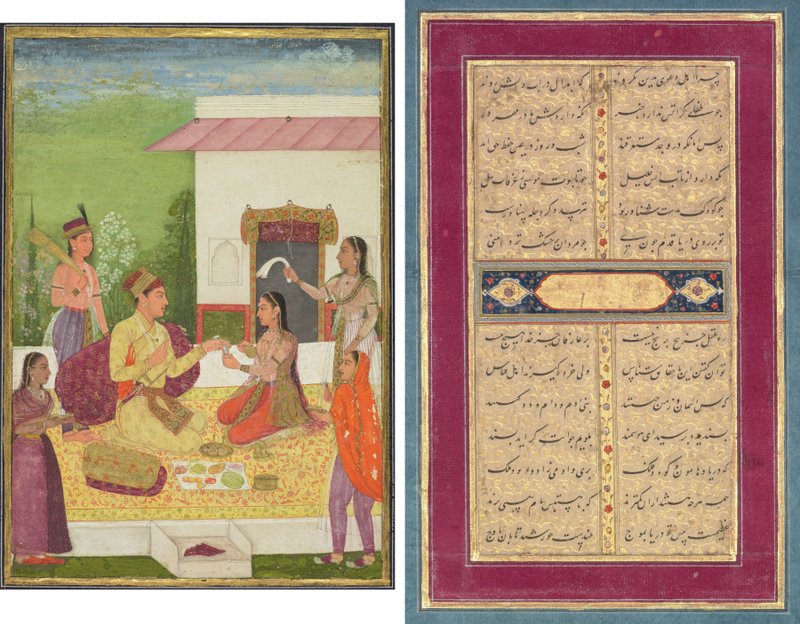
A prince conversing with a woman while taking refreshments on a terrace (recto); Calligraphy (verso)
Mughal India
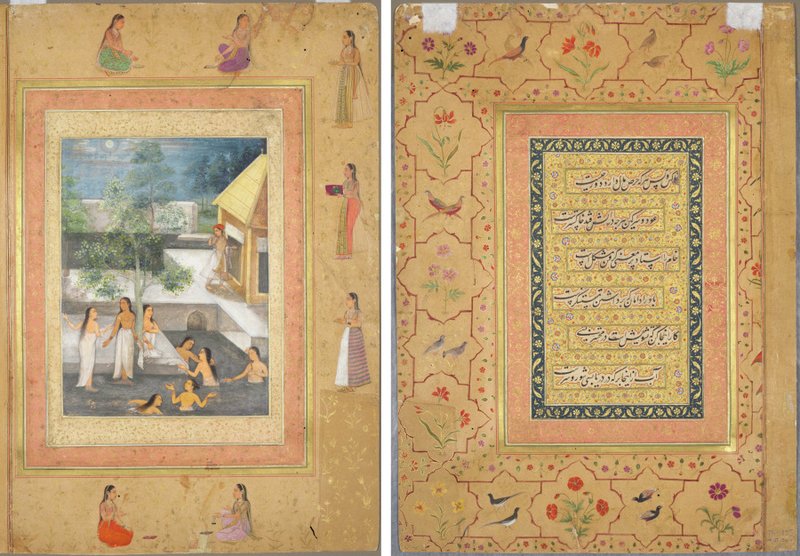
Leaf from the Late Shah Jahan Album: Harem Night-Bathing Scene (recto); Calligraphy Framed by an Ornamental Border of Flowers and Birds (verso)
Mughal India, court of Shah Jahan (reigned 1628–58)
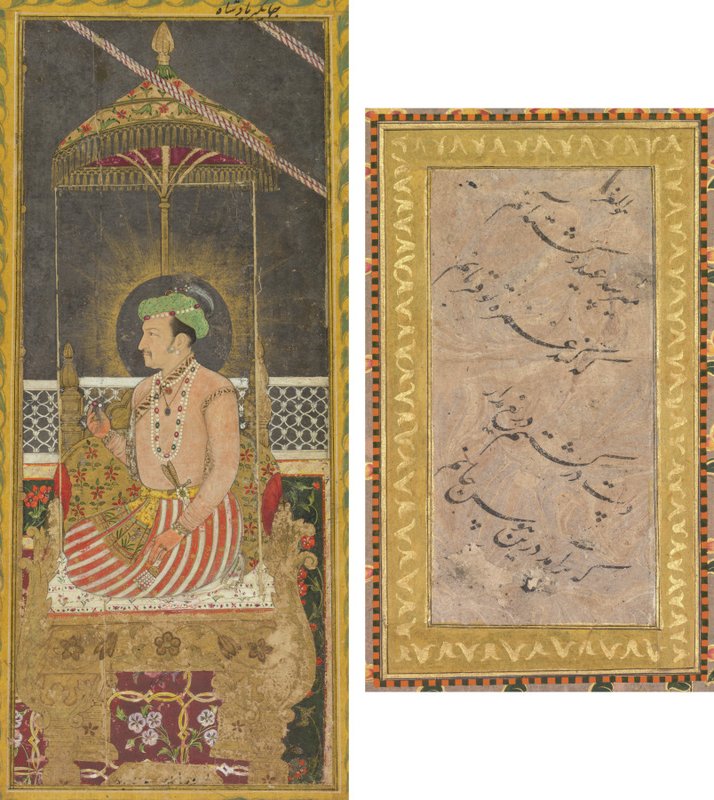
Posthumous portrait of Emperor Jahangir under a canopy (recto); Calligraphy (verso)
India, Mughal, 17th century
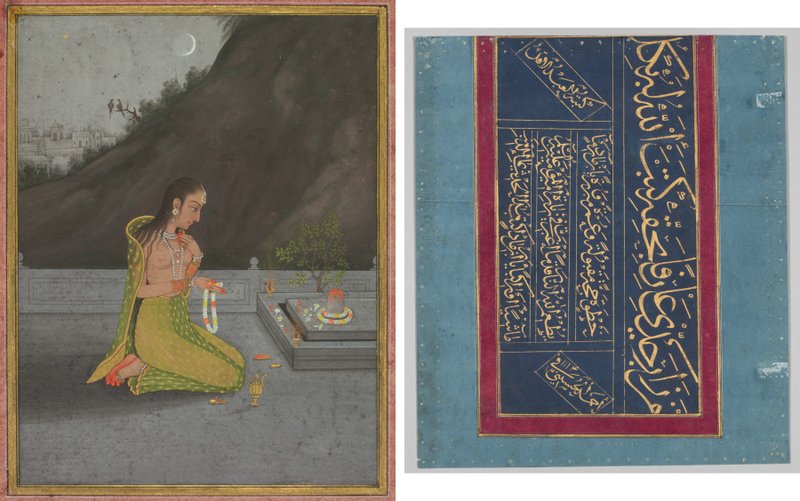
A night scene of Shiva puja (recto); Calligraphy (verso)
Muhammad Rizavi Hindi, Ahmad al-Husaini
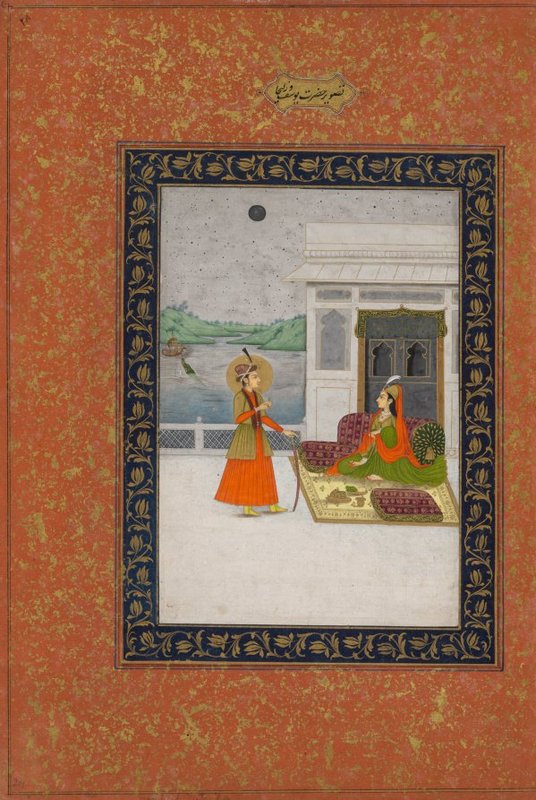
Yusuf and Zulaykha meeting
India, Provincial Mughal, Lucknow, 18th century
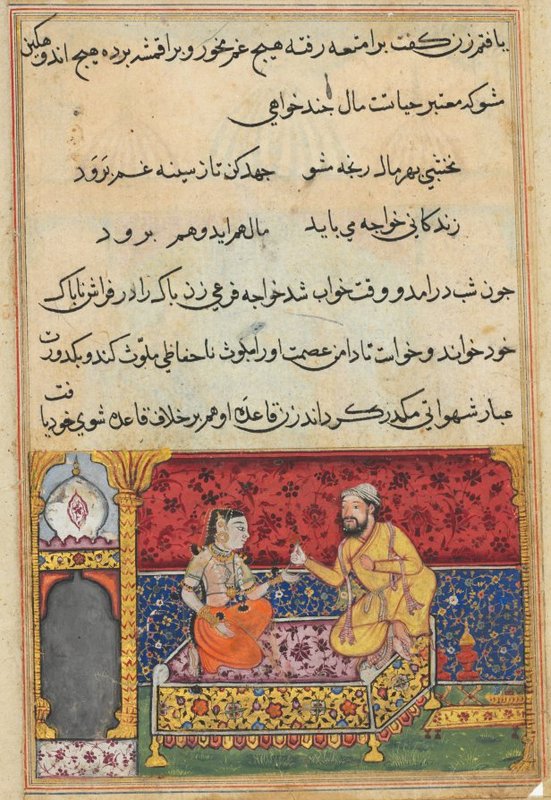
The young man changes himself to look like Mansur, and thus inveigles himself into the bed of Mansur’s wife, but is put off by her, from a Tuti-nama (Tales of a Parrot): Seventeenth Night
Mughal India, court of Akbar (reigned 1556–1605)
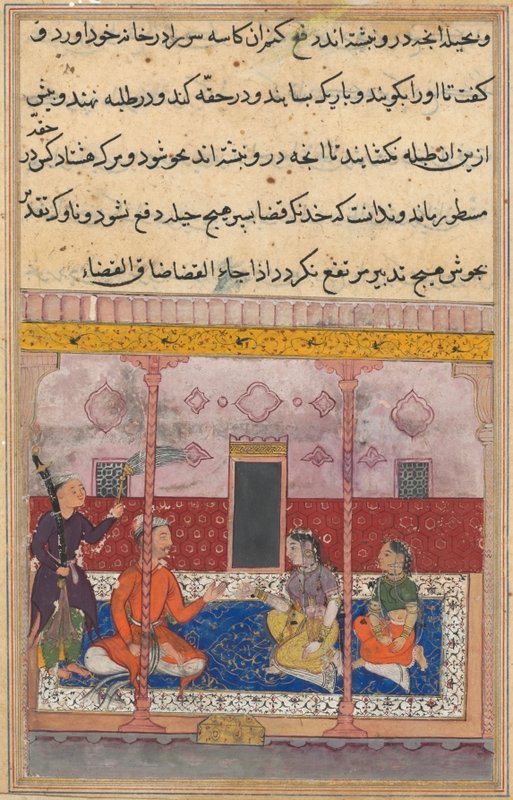
The merchant has the hateful skull ground and put into a box, from a Tuti-nama (Tales of a Parrot): Twenty-third Night
Mughal India, court of Akbar (reigned 1556–1605)
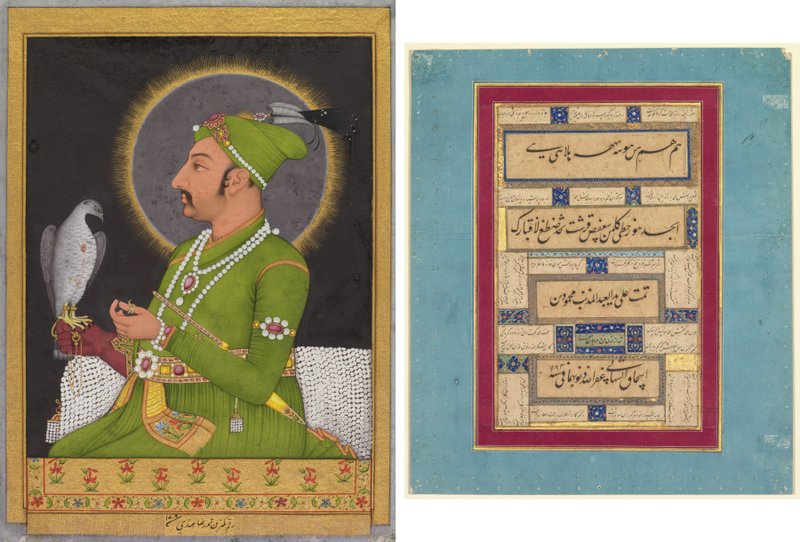
Posthumous portrait of the Mughal emperor Muhammad Shah (reigned 1719–1748) holding a falcon (recto); Calligraphy (verso)
Muhammad Rizavi Hindi, Mahmud ibn Ishaq al-Shahabi
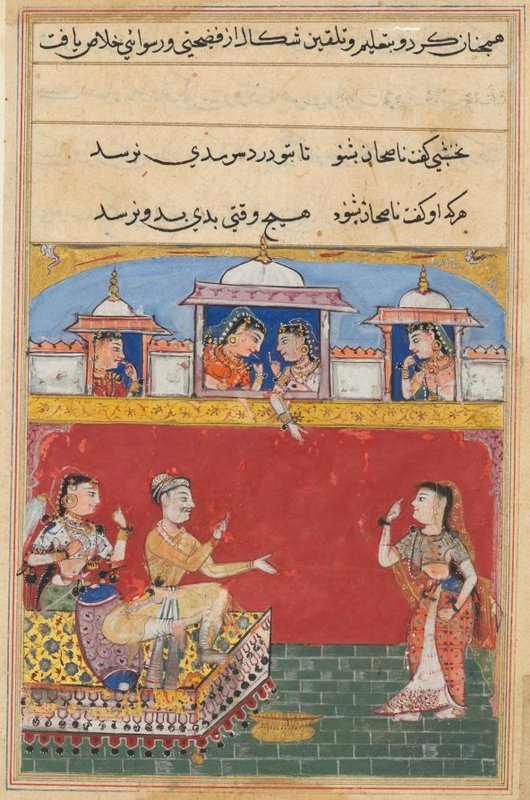
The daughter-in-law returns from her misadventure, feigning insanity, from a Tuti-nama (Tales of a Parrot): Sixteenth Night
Mughal India, court of Akbar (reigned 1556–1605)
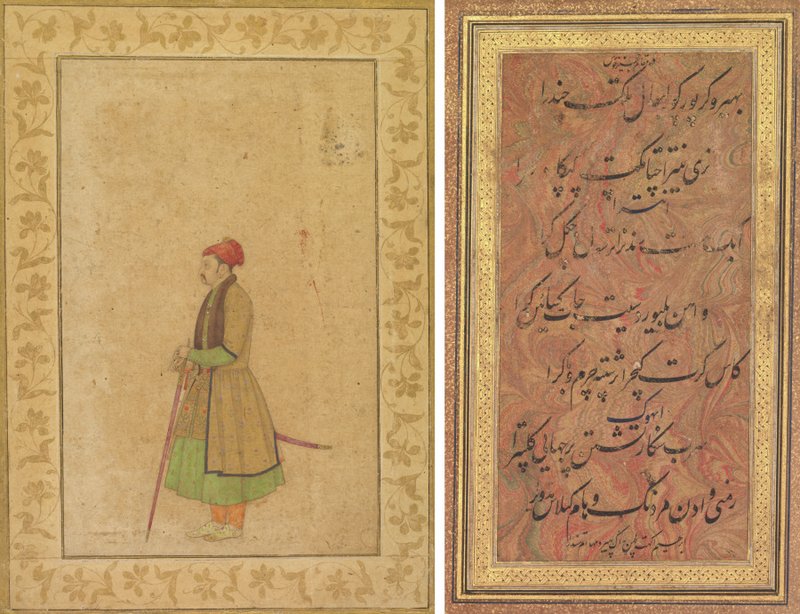
Portrait of Raja Ram Singh of Amber (r. 1667-1688) with a Deccan Sword (recto); Calligraphy (verso)
India, Mughal court, 17th century
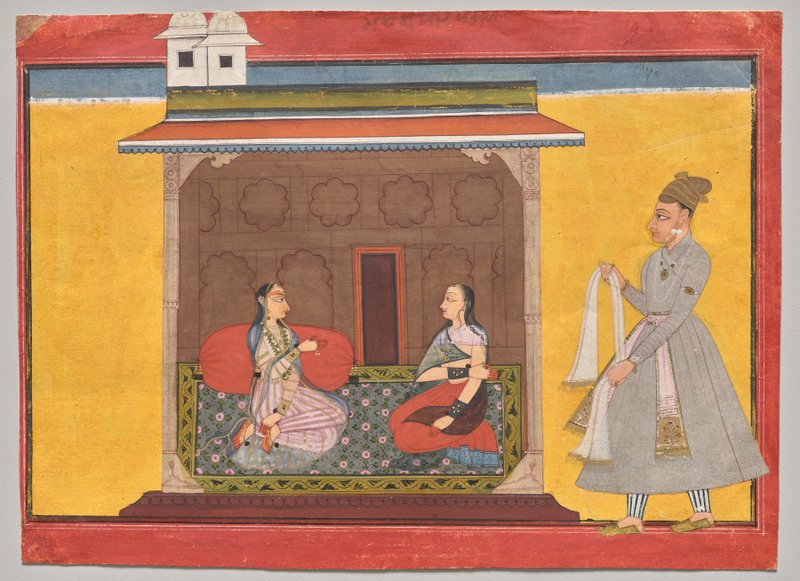
The Heroine Who is Faithfully Loved: Madhya Svadhinapatika Nayika, from a Rasamanjari of Bhanudatta
India, Pahari, Nurpur, 18th century
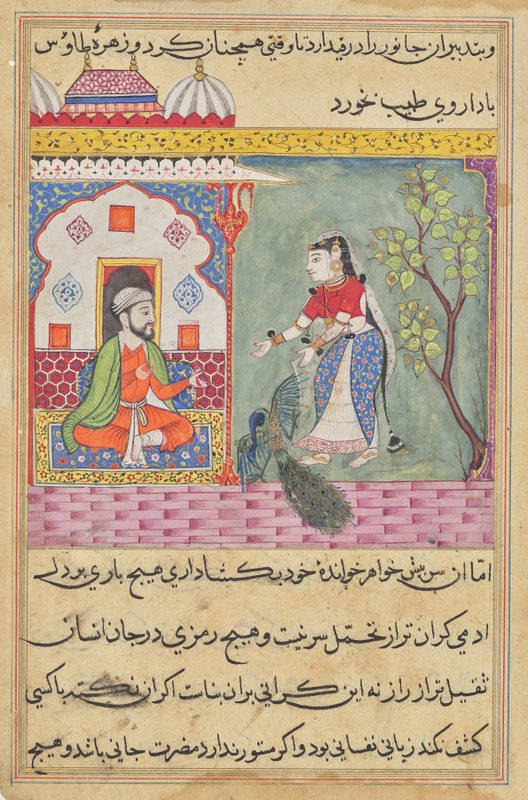
The Brahman’s wife who killed a peacock and ate its gallbladder on the physician’s advice, from a Tuti-nama (Tales of a Parrot): Nineteenth Night
Mughal India, court of Akbar (reigned 1556–1605)