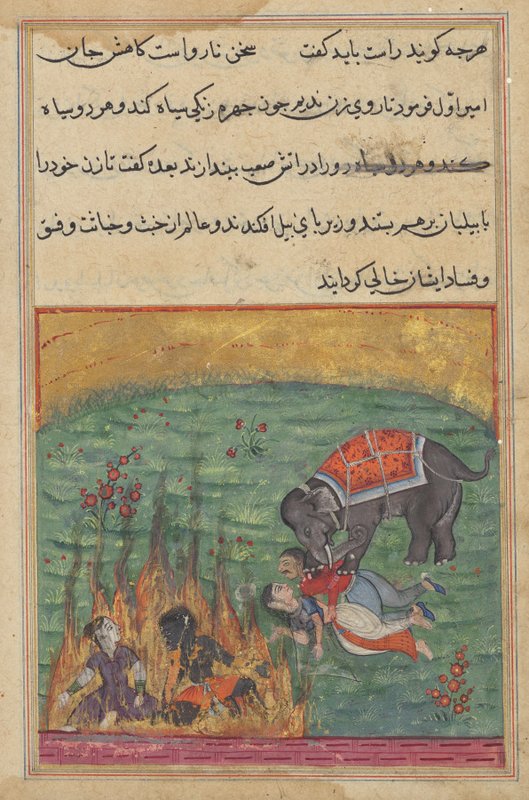
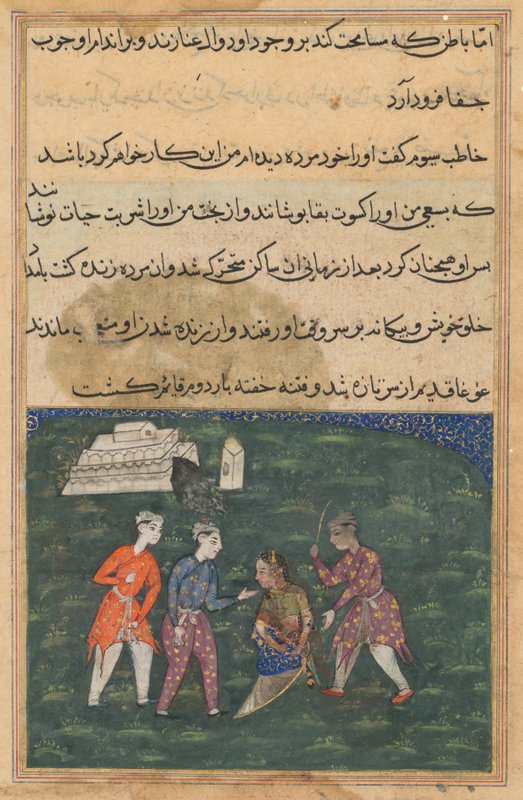
As punishment, the jester’s wife and the Zangi are thrown into fire and the emir’s wife and the mahout are trampled by an elephant, from a Tuti-nama (Tales of a Parrot), Twenty-second Night
Mughal India, court of Akbar (reigned 1556–1605)
1962.279.158.b
About this artwork
Similar artworks
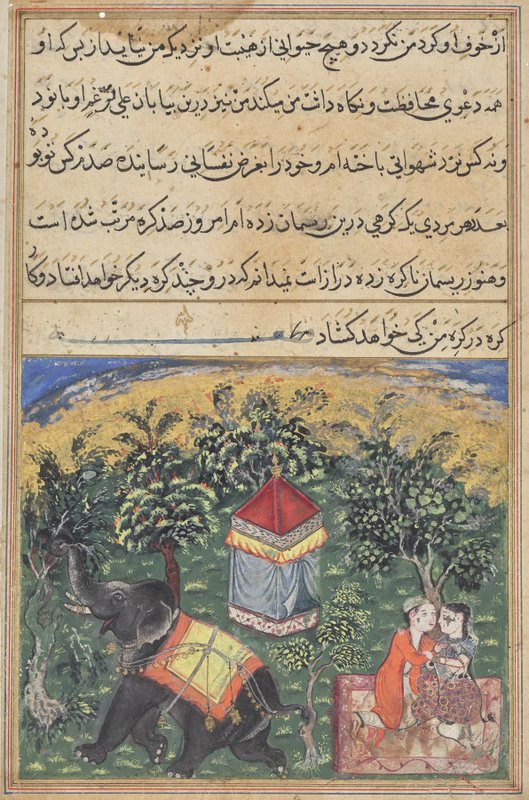
Page from Tales of a Parrot (Tuti-nama): text page
Mughal India, court of Akbar (reigned 1556–1605)
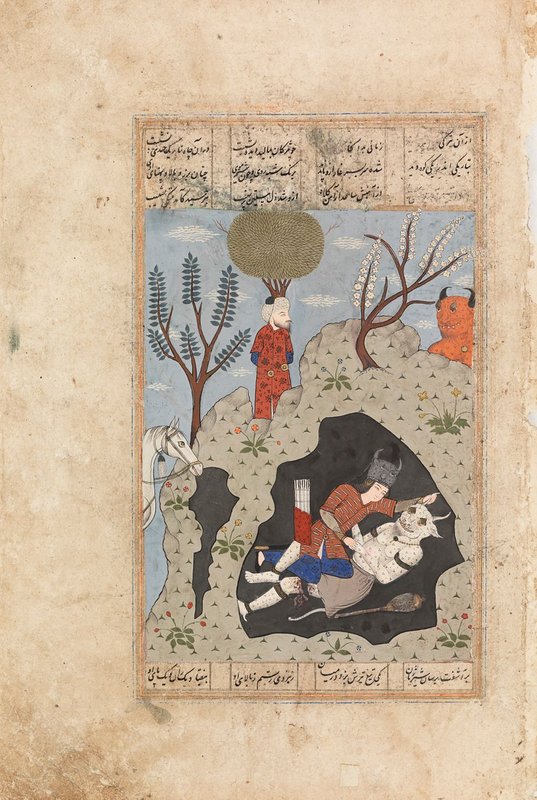
Shahnameh-aihe
Unknown Artist
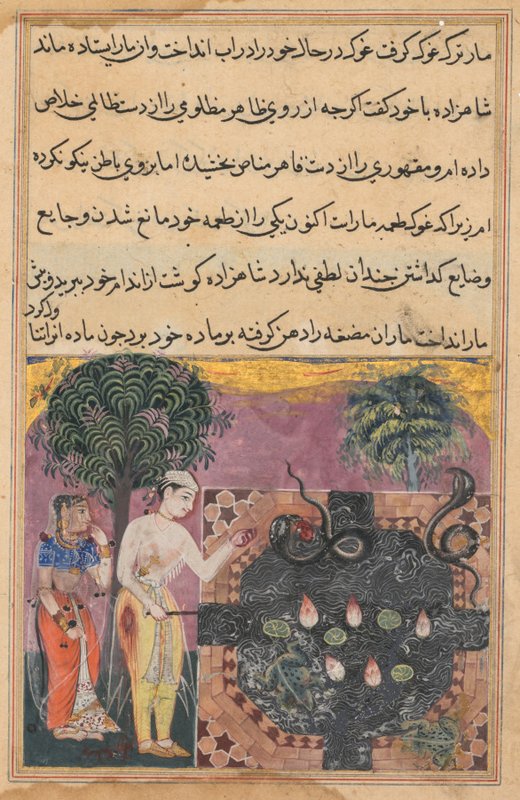
The prince, having deprived the snake of its natural food, a frog, feeds it with a piece of his own flesh, from a Tuti-nama (Tales of a Parrot): Eighteenth Night
Mughal India, court of Akbar (reigned 1556–1605)
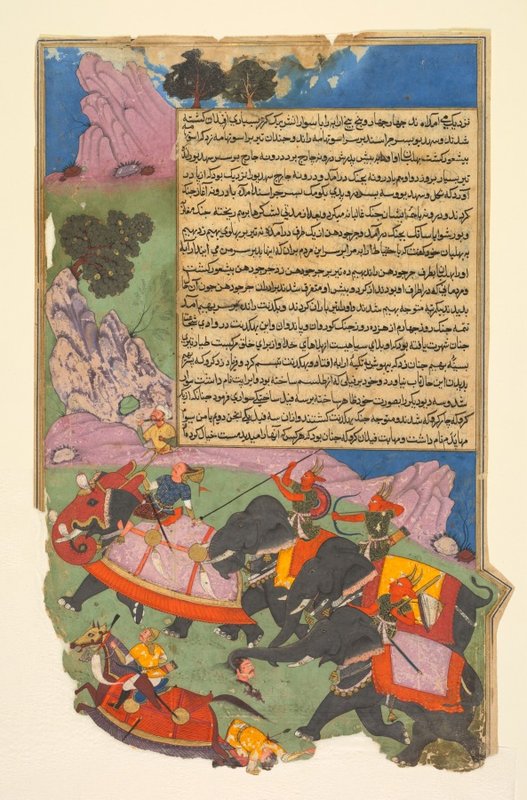
Ghatotkacha and three demons in his company chase Bhagadatta, from Bhishma-parva (volume six) of a Razm-nama (Book of Wars) adapted from the Sanskrit Mahabharata and translated into Persian by Mir Ghiyath al-Din Ali Qazvini, known as Naqib Khan (Persian, d. 1614)
Fazl
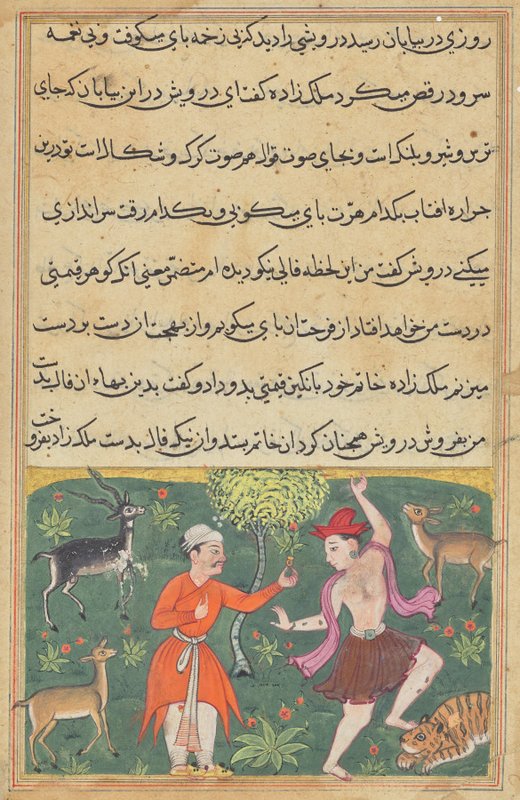
The prince meets a carefree dancing dervish whose good fortune he purchases for his ring, from a Tuti-nama (Tales of a Parrot): Eighteenth Night
Mughal India, court of Akbar (reigned 1556–1605)
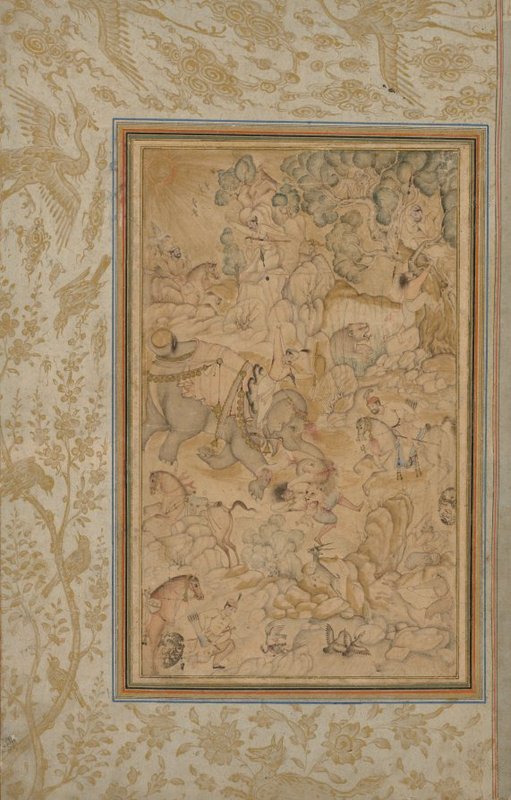
Princes hunting in a rocky landscape
India, Mughal, 16th century
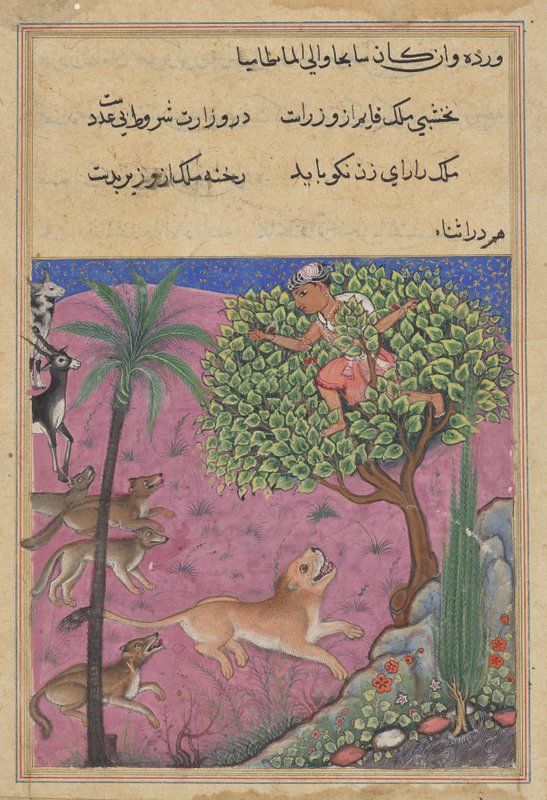
The wolf and the jackal, serving as viziers, instigate the lion who pursues the Brahman up a tree, from a Tuti-nama (Tales of a Parrot): Twenty-first Night
Mughal India, court of Akbar (reigned 1556–1605)
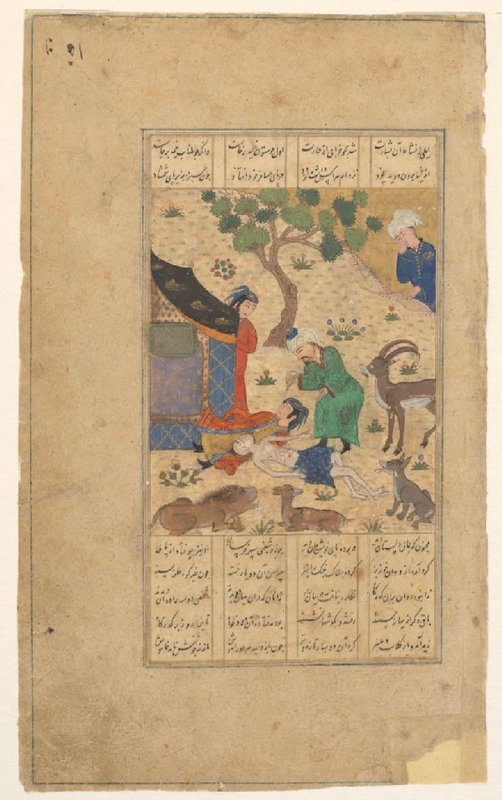
Laila en Mainum
anonymous
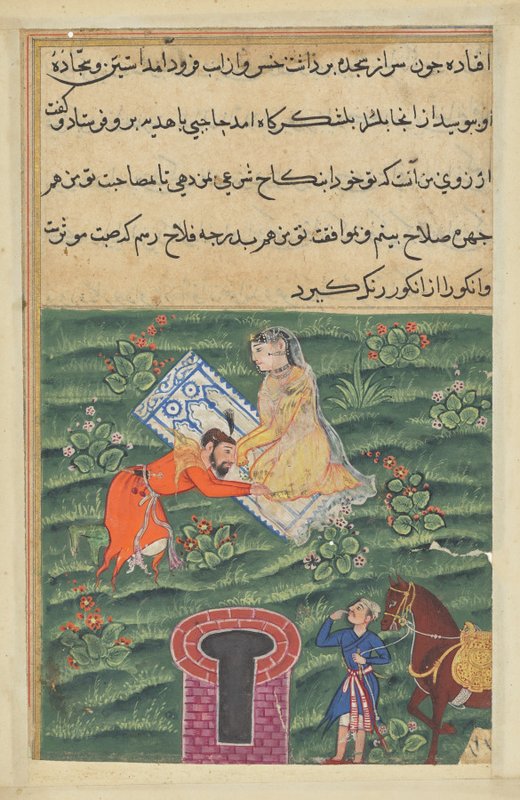
Khusrau, the King of Kings, pays homage to the pious daughter of Khassa, from a Tuti-nama (Tales of a Parrot): Fifty-first Night
Mughal India, court of Akbar (reigned 1556–1605)
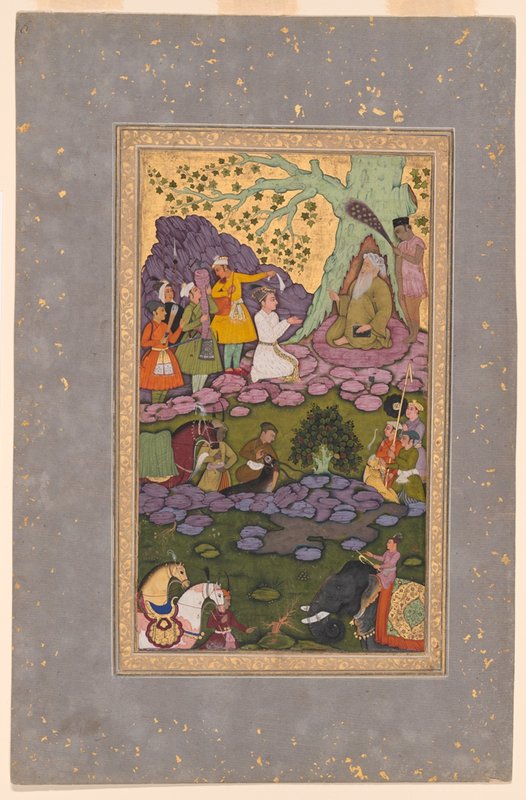
Prince Visiting an Ascetic during a Hunt
Unknown Artist
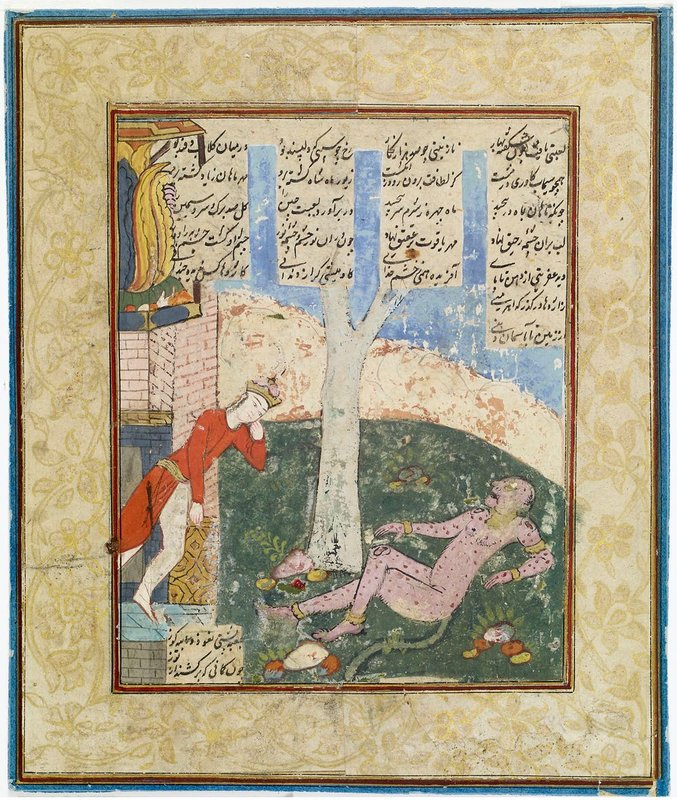
Shahnameh-aihe
Unknown Artist
The third suitor strikes the devotee’s daughter and thus restores her to life, from a Tuti-nama (Tales of a Parrot): Twentieth Night
Mughal India, court of Akbar (reigned 1556–1605)