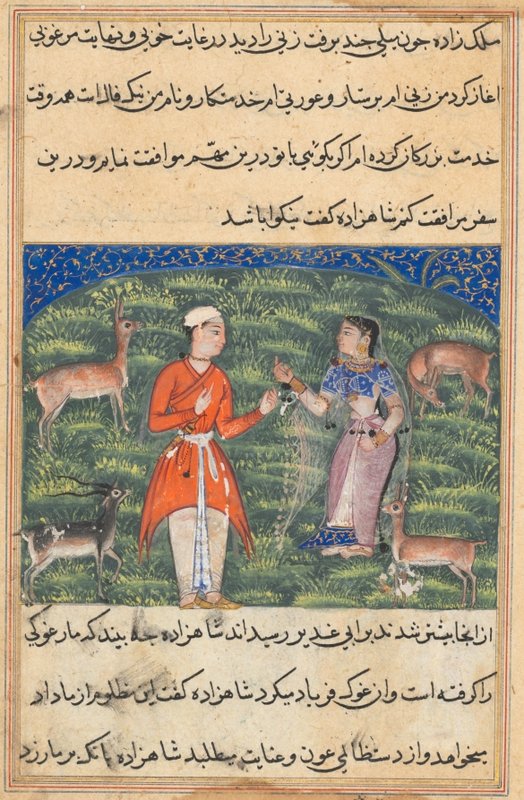
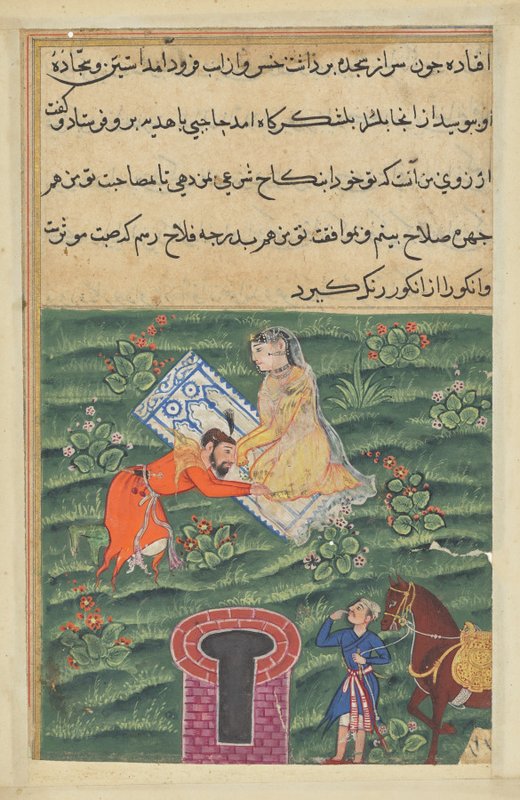
Nikfal, the fortune of the prince in the form of a woman, offers to accompany him, from a Tuti-nama (Tales of a Parrot): Eighteenth Night
Mughal India, court of Akbar (reigned 1556–1605)
1962.279.132.a
About this artwork
Similar artworks
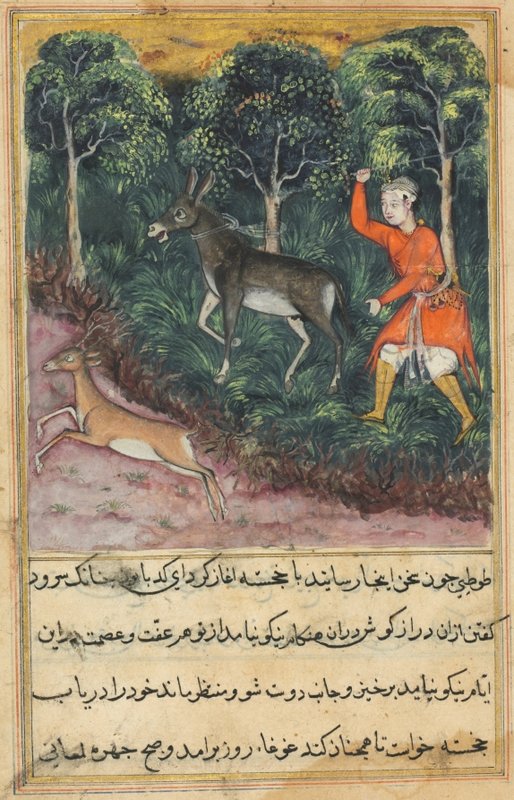
The gardener seizes and beats a donkey who insisted on braying, while the deer, its companion flees to safety, from a Tuti-nama (Tales of a Parrot): Forty-first Night
Mughal India, court of Akbar (reigned 1556–1605)
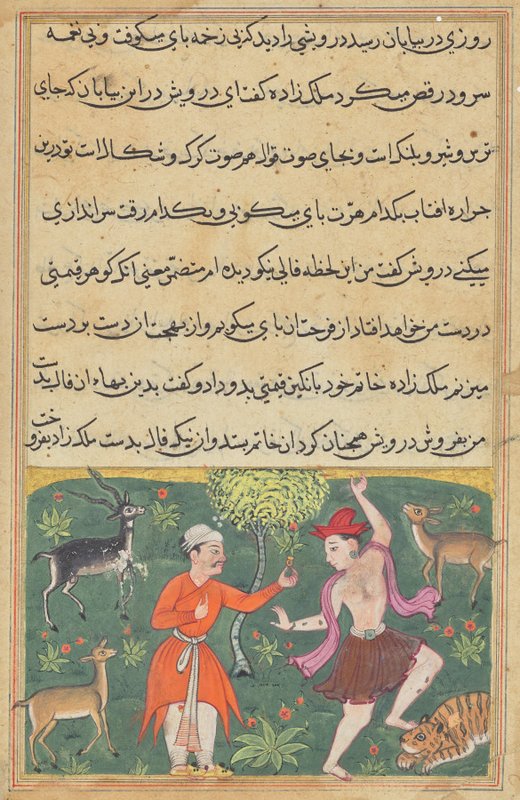
The prince meets a carefree dancing dervish whose good fortune he purchases for his ring, from a Tuti-nama (Tales of a Parrot): Eighteenth Night
Mughal India, court of Akbar (reigned 1556–1605)
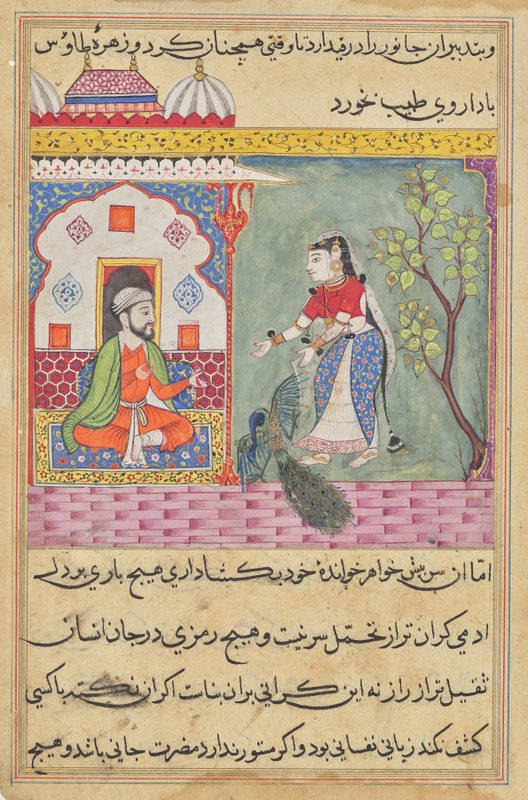
The Brahman’s wife who killed a peacock and ate its gallbladder on the physician’s advice, from a Tuti-nama (Tales of a Parrot): Nineteenth Night
Mughal India, court of Akbar (reigned 1556–1605)
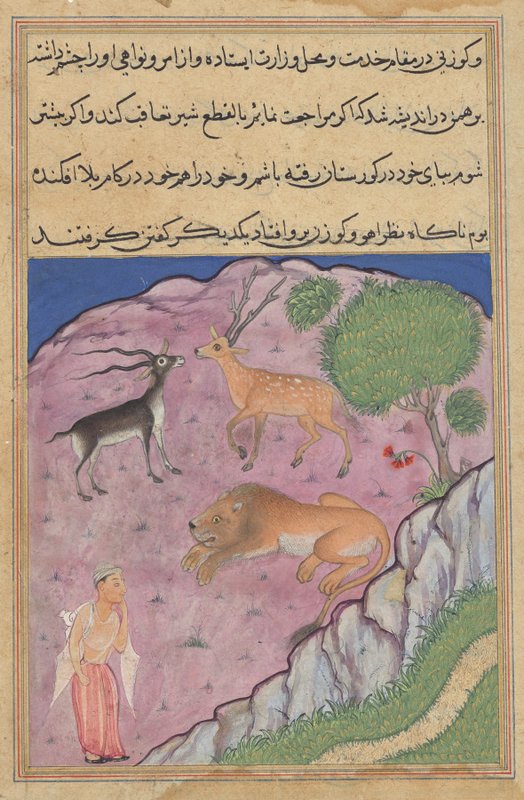
The Brahman comes upon a lion who has a deer and a gazelle as his viziers, from a Tuti-nama (Tales of a Parrot): Twenty-first Night
Mughal India, court of Akbar (reigned 1556–1605)
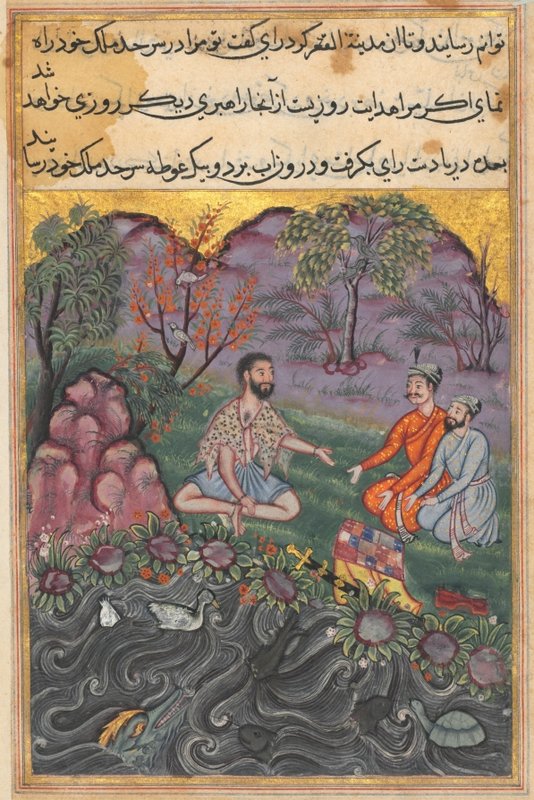
The Raja of Ujjain, who is traveling in the guise of a yogi, meets two brothers who ask him to equitably partition their father’s possession, from a Tuti-nama (Tales of a Parrot): Forty-sixth Night
Mughal India, court of Akbar (reigned 1556–1605)
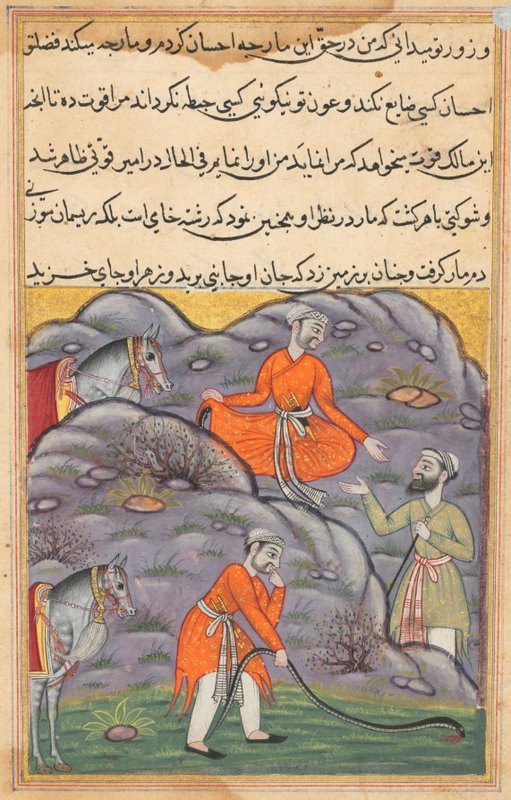
The emir slays the snake after giving it shelter, from a Tuti-nama (Tales of a Parrot): Forty-fifth Night
Mughal India, court of Akbar (reigned 1556–1605)
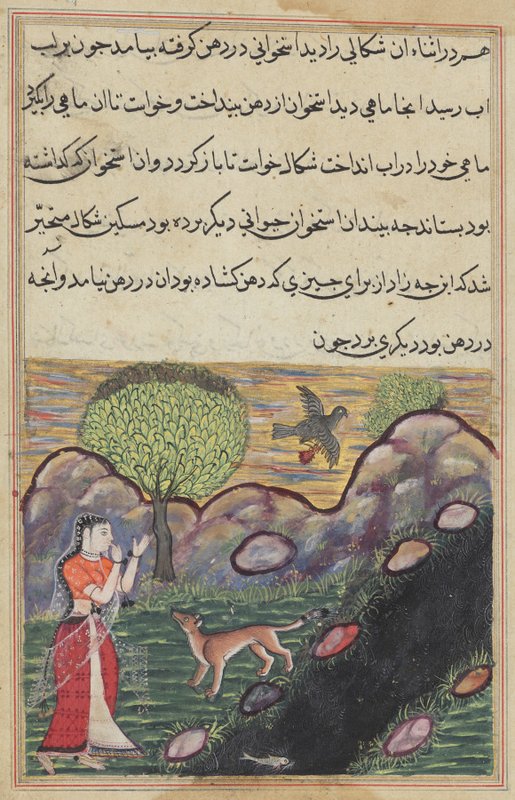
The daughter-in-law of the king of Banaras sees the jackal deprived of its food by a bird, as it unsuccessfully attempts to catch a fish, from a Tuti-nama (Tales of a Parrot): Sixteenth Night
Mughal India, court of Akbar (reigned 1556–1605)
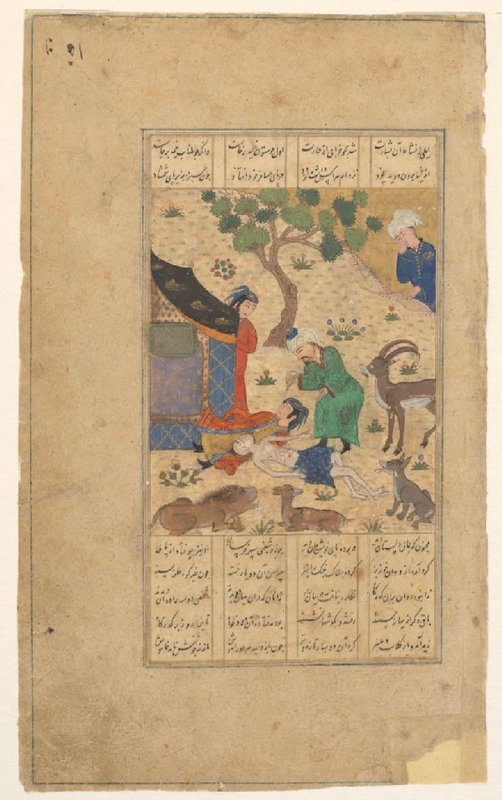
Laila en Mainum
anonymous
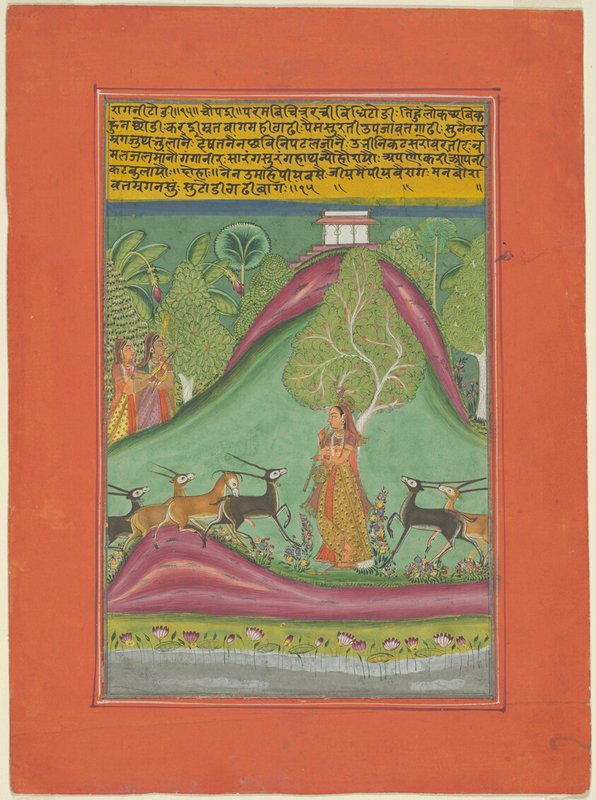
Ragini Todi, Page from a Jaipur Ragamala Set
Unknown Artist
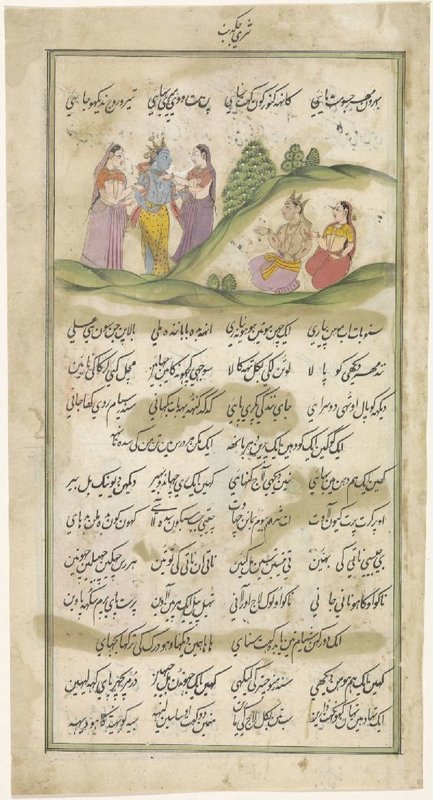
Krishna en de herderinnen, tussen tekst in Nastaliq-schrift
anonymous
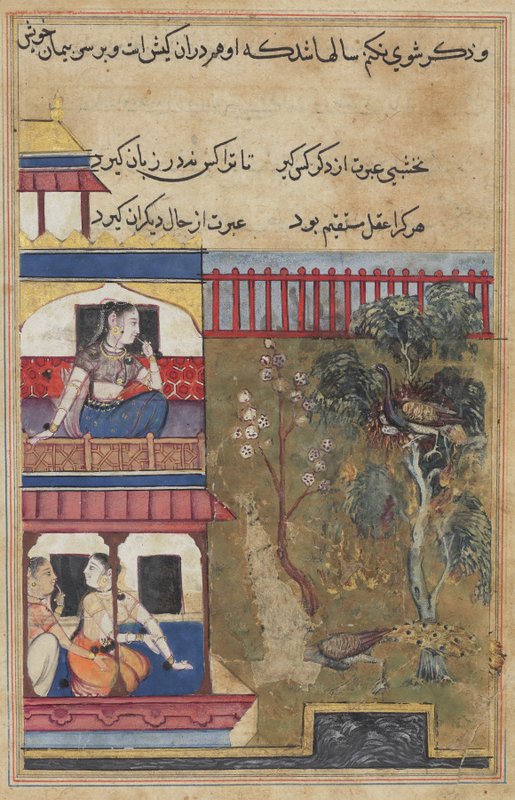
The queen of Rum watches the peahen prefer to burn rather than abandon her eggs while the peacock flees the nest, from a Tuti-nama (Tales of a Parrot): Thirty-ninth Night
Mughal India, court of Akbar (reigned 1556–1605)
Khusrau, the King of Kings, pays homage to the pious daughter of Khassa, from a Tuti-nama (Tales of a Parrot): Fifty-first Night
Mughal India, court of Akbar (reigned 1556–1605)